
In brief
In Monterrey and other Mexican cities, health workers blocked major avenues to protest an 8% wage increase offered by the government, which they say is inadequate. They also demand more personnel, better medication supplies and a larger institutional response from the Mexican Social Security Institute (IMSS). The protests highlight the growing strain on public hospitals and the demand for accountability in Mexico’s health sector.
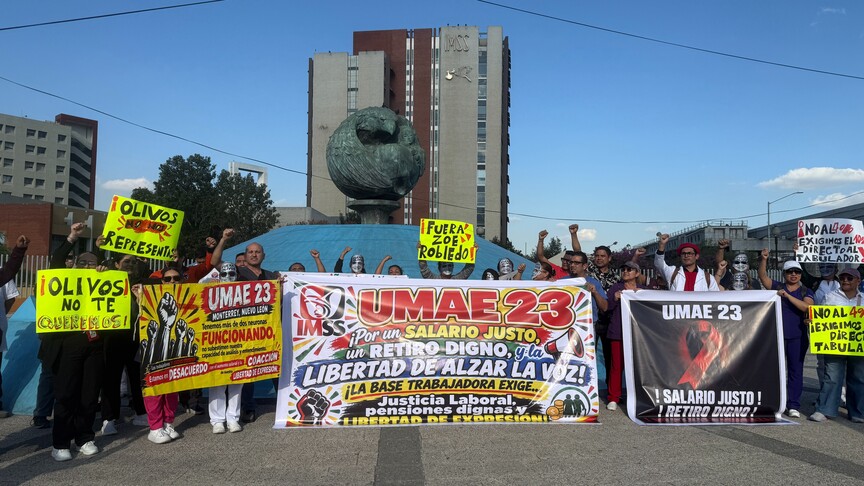
Health workers in Mexico have blocked major avenues in Monterrey and other cities on Saturday after an 8 % wage raise offer from the government fell short of their demands for higher pay, more staff, and an end to chronic shortages of medicines and supplies.
Dozens of doctors, nurses, lab technicians and administrative staff gathered on October 21, chanting slogans such as “The COVID heroes have come out again.” Their blockades brought traffic to a standstill for more than an hour and attracted attention from families of patients, who are also facing shortages in the same public hospitals.
One healthcare worker, Jose Rosales, a specialist in pathology and molecular biochemistry, said the conditions were “reaching a breaking point.” He added that the public health workforce had endured deficiencies in pay, supply shortages and an unappealing retirement system over the years.
"We have reached a breaking point," he told Anadolu. "At this stage, working for the institution is simply not attractive to physicians," he said.
Families affected by the shortages are also speaking out. The mother of a hospitalized woman was told that only paracetamol was available, and she had to buy drugs herself.
"They just tell us there’s a shortage," the mother said. "We are forced to buy medicines for our own families," she added.
Health workers have criticized their union for failing to protect their interests. They say the union has not effectively negotiated for better wages and supplies, leaving them to confront shortages while working under difficult conditions.
In response to the protests, the director of the Mexican Social Security Institute (IMSS), Zoe Robledo, announced a 12‑point emergency plan that will run through February 2027. The plan includes an 8 % wage increase, equipment upgrades, facility maintenance and measures to ensure medication supplies. While the offer of an 8 % increase is part of the plan, many workers say the promises fall short of their demands for a comprehensive solution.
Beyond Monterrey, smaller protests were held in Mexico City and other cities last week. Workers in these locations vowed to continue their demonstrations until their demands are met, indicating that the protest will likely keep gaining momentum.
These protests illuminate a wider crisis in Mexico’s public health system. The chronic shortages of medical supplies, inadequate staffing and insufficient wages threaten patient outcomes and create additional financial burdens for families who must purchase essential drugs themselves.
Public accountability is at the center of the protests. Workers are demanding that the government enforce the policies outlined in the emergency plan and hold the IMSS responsible for maintaining adequate supplies and staff levels. They are also calling for greater transparency and oversight, arguing that without these measures the health system cannot function effectively.
As the protests continue, stakeholders across the public health sector, including government officials, union leaders, and patient advocates, will be watching to see how the government addresses the calls for higher wages, expanded staffing, and a sustained supply of medicines. The stakes remain high, with the potential to reshape how Mexico’s public hospitals operate and how citizens trust the health system.

