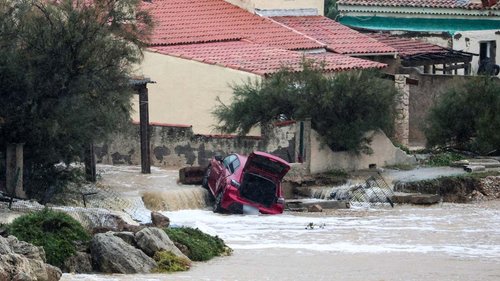
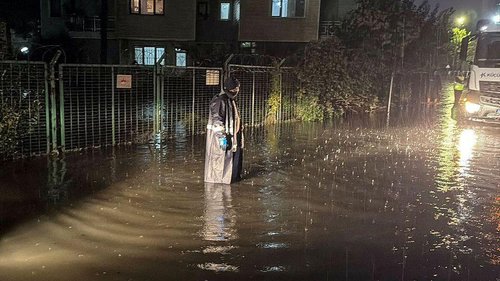
On Sunday, the National Center for Meteorology (NCM) issued a warning for heavy rainfall in the Madinah region, accompanied by strong winds, hail, flash floods, and thunderstorms. According to the Saudi Press Agency, the hazardous weather conditions were expected to begin at 9:00 a.m. and continue until 7:00 p.m., prompting authorities to urge the public to exercise caution and follow safety instructions issued by the relevant authorities.
\u201cThe National Center for Meteorology (NCM) has warned of heavy rainfall in the Madinah Region…
"The National Center for Meteorology (NCM) has warned of heavy rainfall in Madinah Region today, Saturday, accompanied by strong winds, near‑zero horizontal visibility, hail, flash floods, and thunderstorms. The center stated that the weather conditions are expected to begin at 9:00 a.m. and continue until 7:00 p.m., urging everyone to exercise caution and follow safety instructions issued by the relevant authorities."
After the statement, the Saudi Press Agency noted that the warning was accompanied by a call for the public to remain alert to rapidly changing conditions. The statement also highlighted the near‑zero horizontal visibility that could severely affect transportation and road safety across the region.
The warning is part of the National Center for Meteorology's standard protocol for severe weather events in Saudi Arabia. By issuing forewarnings, the center supplies local and regional institutions with the data needed to prepare and coordinate response measures with a range of public services, from emergency medical teams to civil defense units.
In line with standard practice, authorities in the Madinah region published a concise safety guide at the same time. The guide emphasized staying indoors, securing loose outdoor objects, and monitoring continuous updates on the SPA website and via local radio stations. Citizens were urged to be particularly vigilant if they lived in lower‑lying or flood‑prone areas.
Public accountability was reinforced through the public release of the forecast by the National Center for Meteorology. The notification serves as a timely reminder that local officials must act swiftly to disseminate correct information and to enforce protective measures issued by a central agency. The fact that the warning comes directly from a national meteorological institution underscores the role of data‑driven decision-making in protecting the population.
Local municipalities may anticipate disruptions to routine services such as transportation, water supply, and public communications, all of which can be impacted by intense rainfall and associated hazards. Accordingly, city officials have already mobilized contingency plans for possible road closures and evacuation of vulnerable neighborhoods. These measures demonstrate the readiness of civic institutions to respond to natural hazards when guided by reliable meteorological information.
Residents were told that the warning is valid until the following morning unless the National Center for Meteorology issues a correction. The Organization continues to monitor the weather trajectory closely and plans to provide new advisories if the situation changes.
For now, the most important directive remains the same: keep indoors, follow updates, and cooperate with officials. The timely release of the warning aims to reduce the potential impact on safety and to reassure the public that the authorities are monitoring the situation closely.