In brief
King Charles addressed the 56‑state Commonwealth summit in Antigua and Barbuda, condemning the transatlantic slave trade as a "shameful chapter" of history. He chose not to apologise or discuss reparations, a decision that disappointed activists and some Commonwealth leaders. British Prime Minister Andy Burnham and the Antigua and Barbuda Reparations Support Commission offered contrasting views on how Britain should address its legacy.
During the biennial Commonwealth summit in Antigua and Barbuda, King Charles III addressed 56 member states—most of them former British colonies—and condemned the transatlantic slave trade as a "shameful chapter" of history, yet refused to apologise or endorse reparations. His remarks, reported by United Press International and echoed on the BBC and The Guardian, did not cut short the ongoing debate over Britain’s responsibility for the enslavement of more than three million Africans.
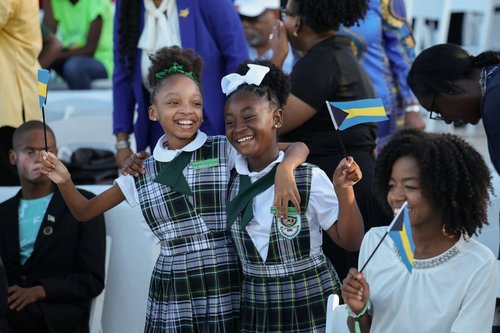
The summit, hosted in the Caribbean island nation of Antigua and Barbuda, has become a key forum for Commonwealth leaders to discuss shared values, development and historical injustices. Present for the ceremony were Prime Ministers, heads of state and senior government officials, many of whom had campaigned for a formal apology or compensation in the years leading to the 2026 event.
King Charles opened the meeting by acknowledging the “deep sorrow and horror” that the legacy of slavery still casts on the islands and on other Commonwealth members. He stated, "We cannot change the actions of those who came before us," adding that the country could, however, "learn from the past". In the same speech he described slavery as "shameful," a statement that was widely reported by UPI and translated by the BBC.
During the summit, British Prime Minister Andy Burnham made a related but distinctly different pronouncement. Burnham noted that the United Kingdom had historically supplied more than 3 million enslaved people to the Americas, a figure that he repeated in the context of Britain’s colonial role. He clarified: "I have been very clear that we do not support reparations, but it is not the case that we do not support countries in the Commonwealth around development, and helping them with debt issues.” Burnham’s remarks, published live by the BBC, were intended to signal that while the UK would not pursue reparations, it would continue to support economic initiatives for former colonies.
In contrast, Dorbrene O’Marde, chair of the Antigua and Barbuda Reparations Support Commission, called the King’s silence an evasion of moral responsibility. She said: "Genuine moral consciousness demands apologies—the acknowledgment of wrong, the acceptance of responsibility and the commitment to pursue reparations." O’Marde’s statement was a direct response to the lack of an apology, emphasised by the Guardian’s coverage of the summit and her remarks.
O’Marde further criticised the King for merely stating that a “shameful chapter of history” filled his heart with horror, arguing that this sentiment is insufficient in the face of ongoing economic disparities stemming from the legacy of slavery. Her comments were captured on the BBC live stream and reported by the Guardian, signalling a widening divide between the King's verbal acknowledgement and the concrete actions demanded by activists.
The stance taken by the British Prime Minister and the contrast with O’Marde’s demands underscores the broader institutional debate within the Commonwealth over how to reconcile with historical injustices. The political leadership in the United Kingdom has been cautious, stressing that financial reparations would be “the wrong answer,” whereas countries like Antigua and Barbuda continue to press for tangible restitution.
At the summit, representatives from other member states, including Canada and the United States—a frequent observer rather than a member—watched the proceedings. The lack of an apology from the King prompted closed‑door discussions among the leaders, reflecting concerns about how punitive measures for historical wrongs could affect Commonwealth relations.
Historically, the UK has played a significant role in the transatlantic slave trade, with records indicating that British merchant ships transported more than 3 million enslaved Africans. In the wake of the King's statements, former colonies are reassessing the effectiveness of diplomatic channels, questioning whether the Commonwealth can enforce accountability for historical injustices.
In response to the debate, the Antiguan government announced that it would convene a special committee to consult on reparations, acknowledging the need to address structural inequities that persist. This decision reflects the civic gravity of the issue—whereability to rectify historical wrongs could influence future elections, judicial reforms and public trust in colonial‑era institutions.
Reactions and implications
In the days following the summit, commentary from civil society organisations and former British officials focused on the perceived gap between King Charles’s measured words and the expectations of his Commonwealth audience. Some analysts noted that the monarchy’s role in politics remains purely ceremonial, arguing that it is therefore inappropriate for the King to expand the remit of policy on global historical debts.
Others contended that the King's absence of an apology perpetuates historical injustices, a view that is supported by the instinctive desire among formerly colonised nations to enshrine restitution in international law. These discussions continue to resonate as countries weigh how to move forward with decolonisation attempts and judicial reforms to address inherited inequalities stemming from slavery.
Overall, the King’s remarks at the 2026 Commonwealth summit highlight a pivotal moment in the civic conversation over accountability. While the monarchy has expressed remorse, the diplomatic and moral responsibilities that remain for Britain and its former colonies grow more pronounced, painting the future of the Commonwealth as one that must hinge on cooperation, historical acknowledgment and the realistic pursuit of reparations and development aid.