In brief
On Saturday, France witnessed its fourth consecutive weekend of protests as more than 140,000 people marched against the escalating cost of living. Interior Minister Laurent Nunez warned of police readiness while riot police deployed tear gas in Paris and Lyon. The demonstrations, originally sparked by student protests over school conditions, have broadened to a broad call for better wages, benefiting a diverse cohort of workers.
On Saturday, more than 140,000 people marched across France in a fourth weekend of demonstrations against an escalating cost of living. Authorities mobilised about 70,000 security personnel to keep the crowds in check, a number that reflects the intensity of the protests ahead of the country’s April presidential election.
While the Interior Ministry counted 46,000 participants in Paris, trade unions estimated that the total nationwide attendance reached 250,000, including an estimated 75,000 in the capital. The divergent figures underline a lack of consensus on the scale of the unrest, a point that a number of union leaders emphasize as evidence of growing support for the movement.
Over the past four weeks, the protests have evolved from a student‑led campaign that began in September over insufferable educational conditions into a national outcry against rising prices, eroding wages and deteriorating purchasing power. Students remain at the forefront, but the ranks now include transport workers, teachers, nurses and even railway employees – a cross‑section that illustrates the pervasiveness of the cost‑of‑living grievance across French society.
"I spoke to one railway worker who told me it was really important to be here today. He said not only was it important to protest against the cost of living, but that it was also important to support young people," said Al Jazeera reporter Natacha Butler.
"I spoke to one railway worker who told me it was really important to be here today. He said not only was it important to protest against the cost of living, but that it was also important to support young people."
A prominent railway worker added that many of the participants felt it was their time to press the government for higher wages and improved working conditions.
Interior Minister Laurant Nunez said the government was “ready and waiting” for those who might engage in rioting or looting.
"Ready and waiting," said the minister, underscoring the state’s seriousness about maintaining public order.
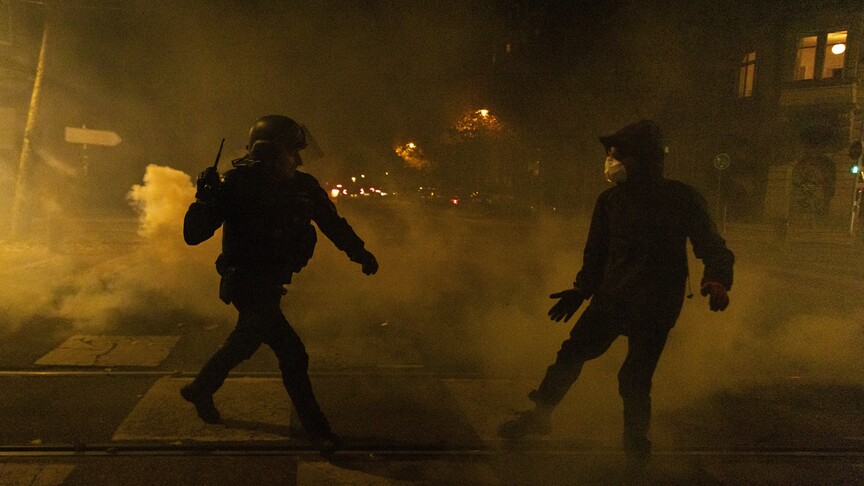
In Paris, security forces harried the largest cluster of demonstrators, and a video posted by the CLPRESS news agency shows police charging at crowds and deploying tear gas. "Footage showed police charging at protesters and using tear gas in an attempt to disperse the crowds," reported a local AFP correspondent. The clashes were further escalated when a police officer was seen striking a protester with a baton.
Paris police also reported that a group of roughly 200 individuals confronted officers as they attempted to arrest a man accused of setting fire to a rubbish bin – a gesture that the security press classified as an attempt to obstruct law enforcement. Simultaneously, in Lyon, riot police fired tear gas to disperse several hundred people who had blocked a road during an unauthorised gathering.
The government’s response is set against a backdrop of heightened political polarization. With the April presidential election looming, tensions between far‑right and far‑left candidates have amplified media attention on the deployment of security forces. Politicians from both camps have used the protests as a backdrop to argue for policy shifts aimed at curbing living costs, while some critics claim that the heavy presence of police risks alienating voters.
Trade unions have expressed frustration at what they describe as a weakened bargaining position following recent reforms, yet the latest numbers hint at a resurgence of collective solidarity. "The trade unions, who’ve been weakened in recent years, really feel there is a sense of momentum," reported Butler. Her observation mirrors union leaders’ insistence that the demonstrations press for higher salaries and better facilities for workers across all sectors.
By targeting a broader audience, the movements have nurtured a multi‑generational coalition that extends beyond the youthful enthusiasm that initially sparked the protests. The spread from school grievances to widespread calls against economic mismanagement illustrates the mobile nature of public dissent – a shift that politics analysts note could reshape upcoming electoral campaigns.
In conclusion, the protests that unfolded across France on Saturday signal a worrying trend in public dissent. They are not only a direct challenge to the governing authorities but also a testament to the enduring demand for equitable economic policy. With electoral politics approaching and the nation’s civic fabric under strain, the unfolding protests present a clear call to the government: address rising costs, lest the APC of French democracy grow ever more fragile.