
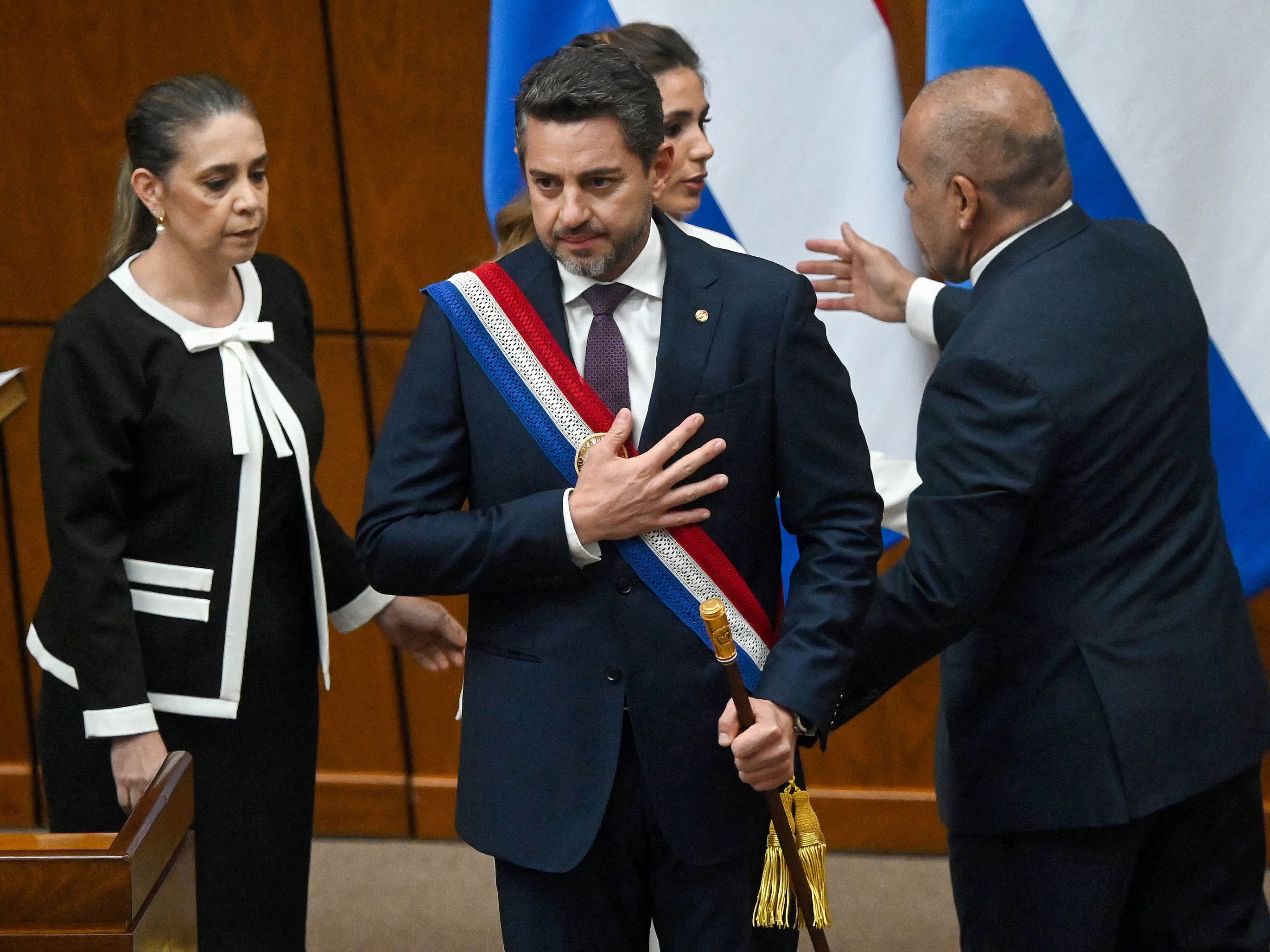
Paraguay’s new president Pedro Alliana was sworn in on Friday night in the capital Asunción, while former President Santiago Peña was placed under house arrest following a unanimous Senate impeachment vote that followed questions about Peña’s past ties to the collapsed digital bank Ueno.
The impeachment vote, which took place roughly an hour before the inauguration, was carried out by the national Senate and was described as unanimous by the chamber’s leadership. Lawmakers cited the former president’s potential influence peddling and links to Ueno, a digital bank that had provided accounts to nearly half of Paraguay’s population before its sudden failure.
In the wake of the bank’s collapse, Paraguay entered a crisis that prompted a rapid investigation into the financial sector. Prosecutors met outside Peña’s residence in Asunción and stated that charges were still under determination but could involve influence peddling. The prosecutor’s office has requested Peña to appear on Saturday morning, a development that underscores the seriousness of the allegations sheiled by the authorities.
Alliana, formerly a vice‑president, secured the presidency in a remarkably swift transition. According to Reuters reports, he was sworn in immediately after the Senate vote, marking a sudden change in leadership that left little time for traditional inauguration ceremonies.
Before Alliana’s oath of office, the Senate convened a special session that addressed Peña’s role in Ueno’s collapse. Lawmakers expressed that the bank’s rapid expansion had severely impacted Paraguay’s formal banking system, leading to massive financial losses for depositors, many of whom held their savings solely in Ueno accounts.
The Ueno incident had far-reaching effects on public confidence. With approximately half of Paraguay’s population holding accounts at the bank, the collapse triggered widespread uncertainty about the safety of savings and the stability of the national financial system.
The prosecutor’s statement that charges may include influence peddling was factored into the discussions within the Senate, where members weighed the legal responsibilities of the former president. The unanimous vote suggests a broad consensus among lawmakers about Peña’s culpability or, at the very least, the seriousness of his alleged involvement.
The House‑of‑Arrest status of Peña, coupled with the state of the financial crisis, illustrates a key intersection of legal institutions and the executive branch. As the prosecutor's office prepares to summon Peña, the judiciary’s role in upholding accountability is highlighted for both current and future leaders.
Paraguay’s political landscape has been shaken by the crisis, with the Senate’s decisive action following a process that began with investigative inquiries. This swift, unanimous removal of the former president reflects public demand for institutional transparency and reforms.
Alliana’s ascension to the presidency brings a new face to the executive office. According to Reuters, he is expected to reassure both domestic and international observers that Paraguay will soon restore stability in a banking environment that had become difficult to trust.
In anticipation of the concluding phase of the investigation, both the Prosecutor’s office and the Senate will likely share more updates. Parlementary documents indicate the government will begin a detailed audit of the Ueno collapse, hoping to extend reforms and restore confidence.
Alliana’s call for a swift recovery resonates with civil society groups concerned about banking non‑performing assets and the security of citizens’ savings. Recent statements from various NGOs have emphasized the need for comprehensive oversight of the digital banking sector moving forward.
The legislative and judicial approaches taken in this case could set a precedent for how Paraguay addresses corruption or financial mismanagement. Observers note that the robust action taken against a sitting president—complete with unanimity in the Senate—may foster greater accountability in future administrations.
In summary, Paraguay’s nation faces crucial institutional shifts: a new president sworn into office, a former president placed under house arrest, and a judiciary mobilizing to apply the law to the financial collapse that shook the bank Ueno. These events highlight continued civic stakes around governance, public accountability, and equitable banking practices.


