
In brief
The Foreign Minister of Qatar proposed the formation of a "Thriving States" bloc to give small nations a collective voice in global peace efforts at the Oxford Union. He highlighted the need for resource pooling, cautioned that minor states often become collateral damage, and noted Doha’s mediation role in the US–Iran tensions. The initiative aims to establish a supply chain of peace and stability without overrelying on great powers.
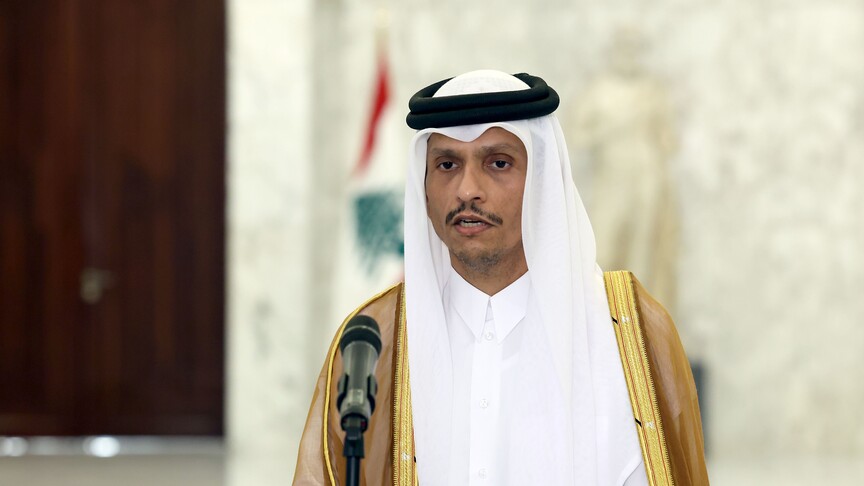
At the Oxford Union on Friday, Qatar’s Foreign Minister Sheikh Mohammed bin Abdulrahman bin Jassim Al Thani declared that a handful of small, agile states could reshape international diplomacy by forming a new coalition he called Thriving States. The proposal was framed as a way for nations whose size is traditionally seen as a limitation to turn it into a strategic advantage for global peace and prosperity.
During his address, Sheikh Mohammed outlined a vision of collective action, warning that “smaller states are increasingly the first casualties in conflicts not of their own making.” He argued that these nations cannot resolve disputes in isolation or replace the influence of great powers, but can instead pool expertise, economic capability, and diplomatic networks to build what he described as a “supply chain of peace and stability” for the world.
"We cannot outsource our stability, nor should we surrender to inaction," he said, adding that history celebrates those who “act to shape it.”
The foreign minister emphasized that the bloc would not seek to replace existing international institutions but rather to complement them. He spoke about the importance of established structures—such as the United Nations and regional organizations—and how the new consortium could function “into a collective, structured and cumulative approach.”
Institutional Impacts and the Role of Small States
Al Thani’s remarks touch directly on the balance of power within global governance. By redefining the role of smaller states, the proposal invites a re‑evaluation of how institutions like the UN Security Council, where permanent membership presently dominates, might incorporate a greater voice from less‑represented nations. The concept also suggests potential reform in the mechanisms for conflict resolution, where rapid, coordinated action from numerous parties could mitigate escalation.
The idea is particularly relevant for countries that frequently find themselves on the sidelines during electoral politics or judicial deliberations concerning foreign policy. Al Thani noted that “what happened with the election may affect their policies in the future, but it does not affect their intentions,” indicating that electoral shifts on small state councils or parliaments may not derail the broader diplomatic agenda he advocates.
Diplomatic Engagements and Peace Efforts
In addition to outlining the bloc, the minister referenced Qatar’s mediation role in the ongoing tension between the United States and Iran. He said Doha has been working with U.S. administration colleagues “with very genuine intentions to find a way to contain the situation and de‑escalate it.” He said that the nation has been successful in preventing the escalation by leveraging “wise voices” within Tehran.
"We will never have a perfect peace deal, but we cannot just wait for this moment of a perfect deal and avoid having a good deal," he said, acknowledging the incremental nature of diplomatic progress.
Al Thani also addressed the pace of diplomacy, saying that while it may not be as fast as it was “a few days ago,” engagement remains continuous: “Our engagement did not stop and will not stop.” This statement underscores a commitment to sustained, proactive diplomacy as integral to the broader supply chain for peace.
The proposal, if adopted, would obligate participating nations to align their diplomatic strategies, which could influence how elections, court decisions on asylum or trade disputes, and other domestic public accountability mechanisms intersect with foreign policy objectives. The framework suggests that small states, through collective bargaining, could secure fairer representation in international economic standards and aid distribution, thereby affecting both domestic and cross‑border political accountability.
Critics of the idea—though not cited in the Anadolu Agency piece—may point out logistical challenges in aligning divergent national interests or potential friction with existing great‑power strategies. Proponents, however, might stress the moral and practical necessity of a coordinated small‑state voice in addressing transnational threats such as terrorism, climate change, and cyber insecurity, which directly affect public accountability and the integrity of electoral or judicial processes worldwide.
At its core, the foreign minister’s vision is a civic initiative that seeks to empower everyday citizens of small states by amplifying their collective voice in shaping global governance. By framing the bloc as a “supply chain of peace,” he draws a parallel to the collaborative logistics models that underlie modern public services—an approach that resonates with a democracy‑driven audience that values transparent, cooperative problem‑solving over unilateral action.


