
In brief
In an Israeli airstrike on a residential apartment in Gaza City, two Palestinians were wounded, marking a fresh violation of a ceasefire. The strike occurred amid broader demolitions and artillery shelling across the Gaza Strip, bringing the total number of Israeli war‑related casualties to 1,574 Palestinians killed and 5,687 wounded, Gaza Health Ministry figures show.
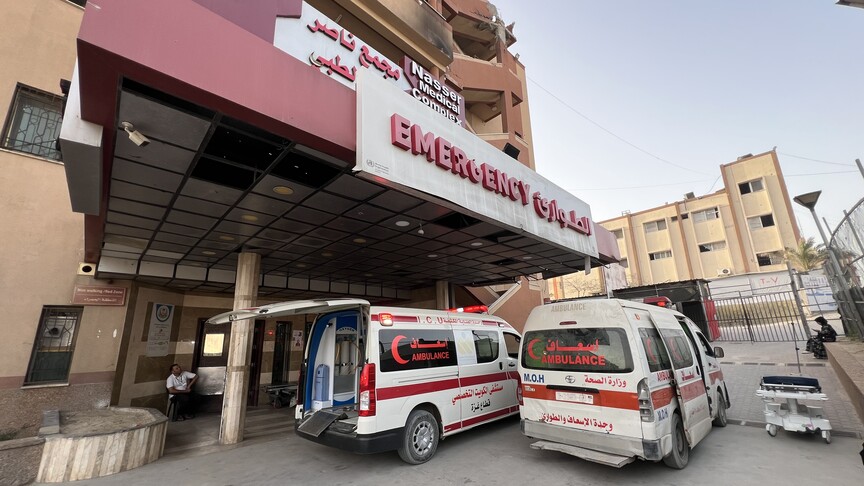
At least two Palestinians were wounded early Friday when an Israeli helicopter launched a missile at a residential apartment building in the Sheikh Radwan neighborhood of Gaza City, medical and local witnesses report, as Israeli forces continue to launch attacks that breach a ceasefire that has held since October 2025.
The strike, which caused minor injuries, illustrates a pattern of covert targeting of civilian housing in Gaza, officials say. Sources describe the apartment as a typical residential structure, with the missile impact damaging the building’s façade and skirting the residents’ living space.
In the same period, the Israeli army carried out extensive demolitions of houses in areas under its control east of Al‑Masdar town, according to eyewitness accounts. The demolitions were accompanied by heavy artillery shelling in the central Gaza Strip, with reports suggesting that artillery crews fired from multiple locations around the perimeter of the target zone.
In the southern part of the strip, Israeli military vehicles opened focused, heavy fire toward tents that housed displaced Palestinians in the Qizan al‑Najjar and Jorat al‑Lut areas, south of Khan Younis. Local sources confirmed that while the gunfire swept the area, there were no casualties recorded from the exchange at that time.
These incidents come on the heels of Gaza’s Health Ministry’s latest statistics, which show that since the re‑establishment of the ceasefire in October 2025, Israeli violations have killed 1,574 Palestinians and wounded 5,687 others. The ministry’s figures are derived from a cumulative tally of cases reported by medical facilities across the Strip.
The conflict has escalated over the past year, with Israeli operations in Gaza since October 2023 claiming the lives of more than 74,000 Palestinians and injuring over 175,000, according to Israeli casualty data. Meanwhile, civilian infrastructure has been destroyed in as much as 90% of the Gaza Strip’s built environment, leaving many residents without basic utilities.
The ceasefire that has been in effect since October of last year was agreed upon by Israel and Palestinian factions, with the intention of halting hostilities and providing relief to civilians. However, the series of attacks reported in early Friday’s events—airstrike, demolition, artillery shelling, and targeted gunfire—have drawn international scrutiny, as they contradict the agreed cessation of hostilities.
For the Palestinian population in Gaza City and surrounding districts, these repeated violations disrupt daily life, limit access to essential services, and heighten fear among residents who live in precariously built shelters. The Sheik Radwan neighborhood, in particular, is densely populated and known for its long‑standing informal housing cluster.
Local aid groups report that the continual demolitions and artillery shelling have destroyed several homes, forcing residents to seek shelter in overcrowded tents or community centers. The psychological toll on children and adolescents, many of whom have lived under artillery fire for months, is an emerging concern for humanitarian organizations.
International bodies such as the United Nations and the International Committee of the Red Cross have called for all parties to respect the civilian nature of the areas struck. These calls come amid growing pressure for a renewed effort to secure a comprehensive ceasefire and to facilitate humanitarian access for medical aid, food, and shelter.
In political circles, Israeli policymakers face increasing scrutiny over their compliance with international law and the legitimacy of their military operations in Gaza. Elections in Israel are closely observed for how security policy will shape parliamentary dynamics, as various opposition parties press for a recalibration of the nation’s approach to the Gaza conflict.
Within Gaza’s own administrative structures, the Health Ministry’s tallies of casualties serve as a barometer of the broader impact of ongoing war violence on public health infrastructure. The ministry also monitors the rate of injuries and fatalities to inform resource allocation for hospitals that are strained to their limits.
From an institutional perspective, the frequent breach of ceasefire agreements raises questions about the legal responsibilities of both the Israeli Defense Forces and Palestinian groups. Courts, both domestic and international, have the potential to hold actors accountable for war crimes or violations of human rights laws. A growing number of file petitions to the International Criminal Court detail claims of deliberate targeting of civilian dwellings.
For ordinary citizens in Gaza, daily life remains marred by uncertainty. Many families face potential displacement as houses are systematically demolished or damaged by shelling. Basic necessities—electricity, water, medical care—are repeatedly disrupted, creating a humanitarian crisis that extends beyond the battlefield.
As Israeli operations persist in the Gaza Strip, each violation of the ceasefire compounds the already dire situation for Palestinians. The numbers cited by the Health Ministry highlight the ongoing scale of injuries and fatalities, revealing that the conflict remains a deadly and disruptive force in the region.
