
In brief
This article delves into how Indian painters have reimagined the birth of Jesus Christ by intertwining local cultural elements with traditional Christian themes, creating a rich tapestry that challenges Western artistic depictions.
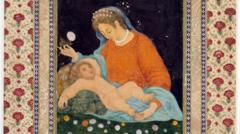
Throughout history, Western artists have dominated the imagery surrounding the birth of Jesus Christ, often dictating the aesthetic concepts applied to this pivotal biblical moment. These portrayals frequently reflect Eurocentric ideals of beauty and creativity, leaving little room for interpretations from outside the Western context. However, Indian artists have embarked on a journey to capture this significant event through their cultural lens, leading to a distinctive body of work that revitalizes the narrative of Christ's birth.The influence of Mughal emperor Akbar, who welcomed Jesuit missionaries to his court in the 17th century and introduced Christian themes to Indian art, laid the groundwork for this rich fusion. As Akbar and his descendants commissioned artworks that incorporated Islamic elements, artists began to depict nativity scenes featuring Indian figures, demonstrating a harmonious coexistence of religions.Historian Neha Vermani highlights a notable painting in which Mughal court artists placed Emperor Jahangir within the nativity scene, symbolizing the rulers’ desire to maintain balance among different faiths within their realms. These artistic interpretations, characterized by vibrant colors and intricate detailing, are steeped in Mughal visual language.Moving into the 20th century, artists like Jamini Roy and Angelo de Fonseca infuse Indian folk aesthetics into Christian narratives. Roy, a pioneer known for merging Bengali folk art with religious themes, portrayed Christ through an indigenous prism, drawing parallels between Jesus and figures from the Santhal tribe, resonating deeply with local audiences.De Fonseca, emerging from Goa, crafted Christian iconography that defies typical Western portrayals. His Marian illustrations feature Indian women adorned in traditional attire, thus embedding Christianity within the cultural fabric of India. According to Rinald D'Souza, through his watercolors, de Fonseca aimed to reclaim Christianity’s image within the Indian subcontinent, reshaping its perception beyond a Western-centric view.As these artists reinterpret biblical tales, they foster a dialogue that transcends cultural boundaries, articulating a shared heritage while celebrating the plurality of artistic expression that defines Indian Christianity today.