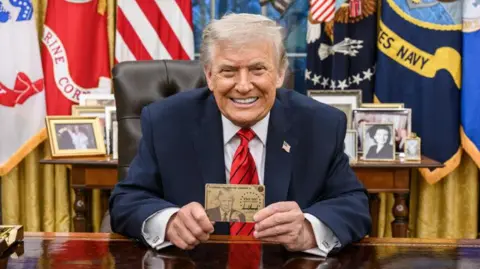
Trump’s recent outburst on social media targeted Powell directly, stating that the Federal Reserve chairman is “always TOO LATE AND WRONG” regarding interest rate adjustments. He criticized Powell for not following the ECB's lead in reducing borrowing costs and cited his belief that lower oil and grocery prices should justify immediate rate cuts. Despite Trump’s claims, the price of eggs has surged to $6.23 per dozen, and independent investigations have found no evidence to support his assertions about tariff revenues positively impacting the U.S. economy.
As Trump leverages public platforms to criticize Powell, the ECB's president, Christine Lagarde, has publicly defended her counterpart at the Federal Reserve, praising their collaborative relationship. This comes amid warnings from Powell about the economic consequences of Trump’s tariffs, which he believes will lead to higher consumer prices and slower growth.
As the Federal Reserve keeps interest rates steady in light of ongoing market fluctuations, Powell indicated a cautious approach moving forward. He reaffirmed the dual mandate of maintaining maximum employment alongside stable prices, expressing awareness of the economic pressures and potential inflation risks associated with Trump's tariffs.
Despite these challenges, Powell maintains confidence in the resilience of the U.S. economy, noting the complexities in responding to both rising inflation and unemployment. As the situation develops, traders remain unsure, balancing between expectations of continued rate cuts and the possibility of hikes depending on economic conditions.
In this volatile economic landscape, the ongoing rhetoric and relationship between national leaders and central bankers will be crucial to watch in the weeks ahead.
As Trump leverages public platforms to criticize Powell, the ECB's president, Christine Lagarde, has publicly defended her counterpart at the Federal Reserve, praising their collaborative relationship. This comes amid warnings from Powell about the economic consequences of Trump’s tariffs, which he believes will lead to higher consumer prices and slower growth.
As the Federal Reserve keeps interest rates steady in light of ongoing market fluctuations, Powell indicated a cautious approach moving forward. He reaffirmed the dual mandate of maintaining maximum employment alongside stable prices, expressing awareness of the economic pressures and potential inflation risks associated with Trump's tariffs.
Despite these challenges, Powell maintains confidence in the resilience of the U.S. economy, noting the complexities in responding to both rising inflation and unemployment. As the situation develops, traders remain unsure, balancing between expectations of continued rate cuts and the possibility of hikes depending on economic conditions.
In this volatile economic landscape, the ongoing rhetoric and relationship between national leaders and central bankers will be crucial to watch in the weeks ahead.