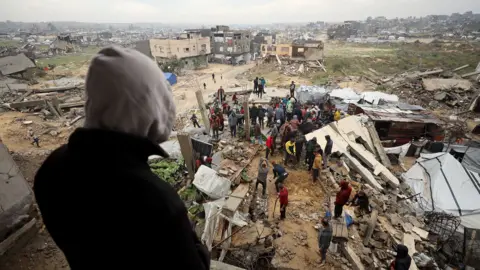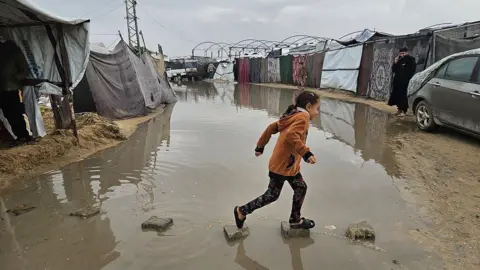
The Israeli military's recent announcement of an expanded "security zone" to include Rafah, a city housing approximately 280,000 residents prior to the renewed warfare, has thrust many civilians into deeper turmoil. Since the onset of military action on March 18 following a collapsed ceasefire, the United Nations reported that around 390,000 Palestinians have been displaced, with Rafah now facing new evacuation orders.
During his visit, Katz emphasized the military's strategy to carve the Gaza Strip into smaller sections to discourage Hamas' activities and compel them to release the remaining hostages. Recently, Israel has also taken control of a significant strip of land along the border with Egypt, which it claims is crucial for preventing weapon smuggling.
Reports suggest that Israeli forces are concentrating on pushing Palestinian civilians towards coastal areas, thereby simplifying operations targeting Hamas in the urban centers. While the Israeli government argues that these measures are necessary for the safety of civilians allegedly used as human shields, the UN has raised concerns about the legality of evacuation orders amid humanitarian crises.
Israeli military units continue to operate in the newly designated areas, reportedly dismantling Hamas infrastructure and targeting its leaders. The ongoing conflict, triggered by a prior cross-border attack on October 7, has claimed over 50,000 lives in Gaza according to health ministry assessments. Analysts anticipate that the situation in Rafah will only exacerbate as military actions continue.
Amidst increasing hostilities, it remains pivotal for international observers to assess the humanitarian implications and potential violations of international law brought about by these military strategies.
The United Nations has voiced disapproval, stating evacuation orders do not align with international legal standards. As tension escalates, local and global communities continue to monitor this evolving situation, underlining the dire need for humanitarian interventions and renewed dialogue.
During his visit, Katz emphasized the military's strategy to carve the Gaza Strip into smaller sections to discourage Hamas' activities and compel them to release the remaining hostages. Recently, Israel has also taken control of a significant strip of land along the border with Egypt, which it claims is crucial for preventing weapon smuggling.
Reports suggest that Israeli forces are concentrating on pushing Palestinian civilians towards coastal areas, thereby simplifying operations targeting Hamas in the urban centers. While the Israeli government argues that these measures are necessary for the safety of civilians allegedly used as human shields, the UN has raised concerns about the legality of evacuation orders amid humanitarian crises.
Israeli military units continue to operate in the newly designated areas, reportedly dismantling Hamas infrastructure and targeting its leaders. The ongoing conflict, triggered by a prior cross-border attack on October 7, has claimed over 50,000 lives in Gaza according to health ministry assessments. Analysts anticipate that the situation in Rafah will only exacerbate as military actions continue.
Amidst increasing hostilities, it remains pivotal for international observers to assess the humanitarian implications and potential violations of international law brought about by these military strategies.
The United Nations has voiced disapproval, stating evacuation orders do not align with international legal standards. As tension escalates, local and global communities continue to monitor this evolving situation, underlining the dire need for humanitarian interventions and renewed dialogue.