Syria Post-Assad: New Leadership Faces Challenges Amid Hopes for Stability
As the year unfolds following the dramatic fall of Bashar al-Assad, Syria finds itself in a period of ambivalence. Ahmed al-Sharaa, previously known for his ties to jihadist factions, now leads as the interim president. Many Syrians feel a weight lifted without the brutal regime of the Assads, yet the shadow of ongoing conflict looms large.
One year ago, the dynamics of power in Syria shifted when a rebel force led by Abu Mohammed al-Jolani emerged, challenging the Assad regime. With Assad now residing in Russia, al-Sharaa's leadership has opened a new chapter for the war-torn nation, but the terrain remains treacherous.
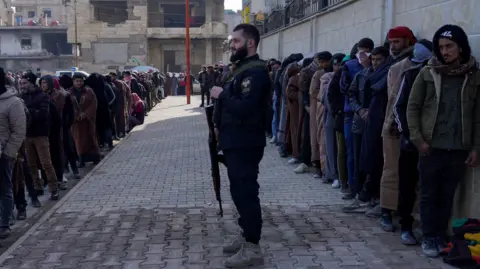
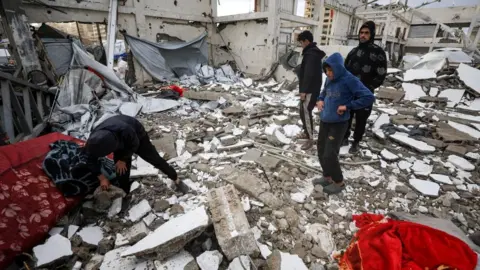
Syria's landscapes are still marred by the scars of war. In cities across the country, residents live among skeletal remains of buildings, and fresh fears of sectarian violence continue to plague communities. Al-Sharaa has attempted to emerge as a unifying leader, signaling a shift from his radical past. Yet, many citizens remain skeptical of the sincerity of his governance.
While al-Sharaa garners international support, especially from the West and Gulf States, he grapples with internal divisions that threaten stability. Areas like the north-east remain under Kurdish control, and discontentments among sectarian groups hint at potential flare-ups. Incidents of violence, particularly against Alawite communities affiliated with the toppled regime, reveal a fragile peace that could unravel at any moment.
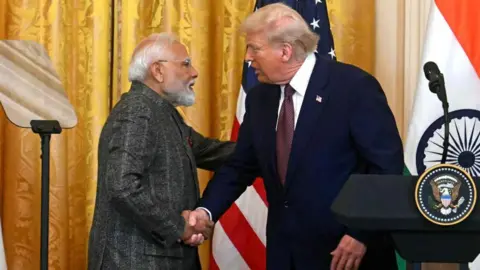
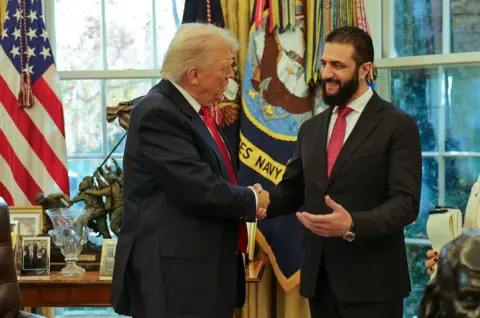
Al-Sharaa's overtures to the West have yielded favorable responses, including a meeting with Donald Trump that saw previous sanctions against his leadership alleviated. In a surprising twist, the interim president is portrayed by international allies as a potential stabilizing force in a historically tumultuous region.
However, the road to recovery is lengthy. A lack of a coherent reconstruction plan hampers efforts to revive war-damaged infrastructure, and many families face daily fears for their safety. Amid a patchwork of governance, the vendors of hope and despair coexist, leaving many wondering what the future holds for Syria.
The real test lies ahead as al-Sharaa must navigate the choppy waters of both domestic unrest and external pressures, raising questions about whether his leadership can yield the stability Serians crave or if the specters of violence and oppression will return to haunt the region once more.