In brief
Houthi‑run Al‑Masirah TV reports that Saudi airstrikes on a market in Al‑Hazm and a fuel station at Al‑Tayseer in Yemen’s northern Al‑Jawf province killed 14 people and wounded 10 more, mostly women and children. The figures are preliminary and unverified, and Saudi Arabia has not responded. The incident occurs amid ongoing cross‑border fighting between the Houthis and Saudi‑backed forces following Yemen’s long‑standing conflict.
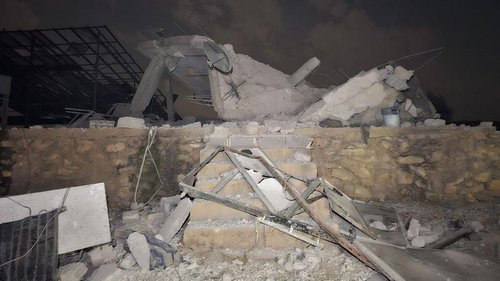
On Wednesday, a Saudi airstrike on a market in Al‑Hazm and a fuel station at Al‑Tayseer in Yemen’s northern Al‑Jawf province killed 14 civilians and wounded 10, according to Houthi‑run Al‑Masirah TV, as reported by Xinhua on October 28 2026. The casualties, many of them women and children, were recorded in preliminary figures that remain unverified and for which Saudi authorities have not yet issued a statement.
Al‑Masirah TV said the airstrikes struck a public market in the provincial capital of Al‑Hazm, then hit the Al‑Tayseer fuel station nearby. It reported that 14 people lost their lives and 10 others sustained injuries, a toll that had risen from an earlier figure of 12. The channel emphasized that the casualty data were preliminary and that independent verification could not be obtained at the time of reporting.
The Houthi channel’s announcement came amid continued cross‑border attacks between the Houthi movement and the Saudi‑led coalition. These assaults have persisted since the 2015 intervention that followed the Houthi seizure of Yemen’s capital, Sanaa, in late 2014. The ongoing hostilities also involve Saudi‑backed Yemeni government forces fighting the Houthis in addition to the coalition’s campaign.
In the absence of an official Saudi response to the report, the incident highlights persistent challenges to public accountability in Yemen’s protracted conflict. The lack of prompt confirmation or clarification from the Saudi authorities underscores an information gap that affects the local population’s ability to assess the reality of the situation on the ground. Similarly, the Houthi‑run outlet’s role in broadcasting casualty figures illustrates how opposing sides rely on their own media channels to shape narratives about the conflict, often before facts can be independently corroborated.
Al‑Jawf province, located in northern Yemen, is one of the many regions where civilians regularly suffer the brunt of cross‑border fighting. Markets and fuel stations are essential community hubs that sustain daily life; when targeted, they disrupt not only immediate safety but also the economic and social fabric of the area. The loss of 14 people, many of whom were women and children, points to the vulnerability of non‑combatants in contested zones and the broader human cost of the Saudi‑backed coalition’s strategy.
Investigation of the incident remains limited. Without Saudi commentary, the numbers reported by Al‑Masirah TV remain provisional. This demonstrates the complexities surrounding conflict reporting where verification mechanisms are weak and the local community faces an environment where public accountability is hampered by conflicting narratives and limited access to reliable information.
The incident fits within a broader pattern of civilian casualties that has been documented across Yemen’s conflict timeline. According to the sequence of events recounted by Xinhua, the conflict began in 2014 when the Houthis seized control of Sanaa and much of northern Yemen, prompting a Saudi‑led intervention in 2015 to support the internationally recognised Yemeni government. Since then, both sides have repeatedly engaged in cross‑border strikes, resulting in frequent civilian tolls such as the one reported from Al‑Jawf on October 28.
While the numbers in this case have not been independently confirmed, the report remains significant for Yemen’s civil communities. It exemplifies how the ongoing hostilities have directly affected ordinary citizens, disrupting essential services and threatening everyday life. The casualty figures—though preliminary—serve as a reminder of the civic stakes at play: the need for transparent accountability, clear communication from involved states, and a reliable chain of verification that can protect public safety and uphold humanitarian standards.
At the heart of the matter lies a scarcity of reliable, corroborated information. Without explicit confirmation from Saudi authorities, the Houthi‑run source’s figures represent one perspective on a contested event. For the Yemeni population, especially those in Al‑Jawf, the lack of immediate, clear communication from the party-state responsible for the strikes creates uncertainty and erodes trust in the institutions that are meant to safeguard citizens’ welfare. The incident is a stark illustration of how civilian populations are caught in the crossfire of power struggles and how vital it is for authorities to maintain transparent, credible channels of information duty to ensure that the civic needs of the affected communities are addressed and that accountability mechanisms are effectively enforced.