The Art of Deception: How Ukraine Uses Decoys in Warfare
In June 2023, a video started spreading on pro-war Russian social media channels, apparently showing a drone destroying a Ukrainian tank in a massive explosion. However, the narrative shifted when Ukrainian forces showed footage of a laughing soldier pointing at burning wreckage, confidently declaring, They've hit my wooden tank! The tank was actually a decoy, part of a larger strategy by Ukrainian forces to deceive Russian troops and protect their real assets.
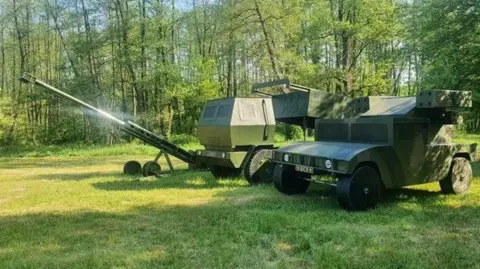
This tactic is not unique to one side; both Ukraine and Russia have turned to decoys to mislead the enemy. From inflatable tanks to flat-packed artillery, these imitations are designed to trick the adversary into misallocating their firepower. It's reported that as much as half the military equipment observed in combat zones could be mere imitations, leading to a significant strategic advantage for the creator.
Innovative Decoys on the Battlefield
Among the most popular decoys employed by the Ukrainian army include models of the British-made M777 howitzers, with over 150 provided by Western allies. Volunteer groups like Na Chasi are instrumental in creating these decoys, producing models that can be assembled quickly on the front line with minimal resources. Their designs not only replicate the look of real artillery pieces but also serve to draw enemy fire, wasting precious weaponry and ammunition.
The functionality of many of these decoys allows for not only simple solider-like representations but also intricate recreations of real military settings, including wheel ruts and supply crates, making them effective at fooling not only the enemy but also commanders who might visit the front lines.
The Impact of Decoys
While Russia utilizes its own set of decoys—often involving cheap imitation drones—the ingenuity of both sides' approaches reflects modern warfare's reliance on deception. Ukrainian air commanders emphasize that up to half of the observed drones might be imitations, intended to trick air defenses into firing at false targets.
Decoys also play a critical role in extending the life expectancy of real military equipment. With resources strained, effective deployment of these false units can lead to fewer losses among actual tanks and howitzers, ultimately shifting the tide of engagements.
The use of decoys is not a novel concept in military history, harkening back to tactics employed in World War II. Yet, as warfare evolves with technology and resources, the net impact of decoys will likewise adapt, underscoring the ongoing necessity for creative strategies within conflict zones.
As wars become more reliant on advanced technologies and warfare automation, traditional tactics, when combined with modern innovations, highlight the enduring principles of strategy—where deception remains a cornerstone of military effectiveness.