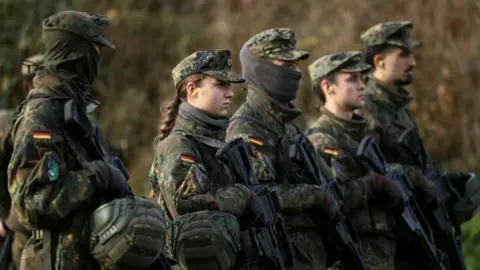
Some of Europe's biggest NATO members are moving to strengthen their professional armies through voluntary national service schemes.
Large conscripted armies were a feature of NATO states during the Cold War but they dwindled in size after the collapse of the Soviet Union.
However, Russia's full-scale invasion of Ukraine in 2022 and the ongoing war there have kindled fears of a possible future Russian attack on NATO.
Here we look at how this new recruitment drive is playing out among NATO's 30 European member states, many of whom still have conscript armies.
Who conscripts?
Conscription is in place for nine of Europe's NATO states: Denmark, Estonia, Finland, Greece, Latvia, Lithuania, Norway, Sweden, and Turkey.
In Turkey, men aged 20 to 41 must do military service for six to twelve months, while Norway conscripts both genders for 12 months.
Croatia plans to reintroduce conscription, making military training mandatory for young men starting next year.
Other NATO members do not enforce conscription but instead rely on professional militaries.
The UK, which is among the top military powers in NATO, employs a professional army and uniquely allows minors to enlist with consent at 16.
Several other nations, including Spain and Italy, maintain fully professional military forces without conscription.
Iceland, however, maintains no regular military forces but has a Coast Guard for defense tasks.
Who is looking for volunteers?
Recently, Belgium invited 17-year-olds to volunteer for military service, offering €2,000 a month to attract recruits.
Belgium's voluntary military service aims to increase army reservists and is set to begin next year.
The Netherlands has also launched a scheme to boost their professional military forces.
Poland, one of NATO's largest militaries, is planning to implement mandatory basic military training for adult men.
Overall, other nations like Bulgaria and Romania have introduced or are planning voluntary military programs to enhance their readiness.
How does Germany plan to build 'Europe's strongest army'?
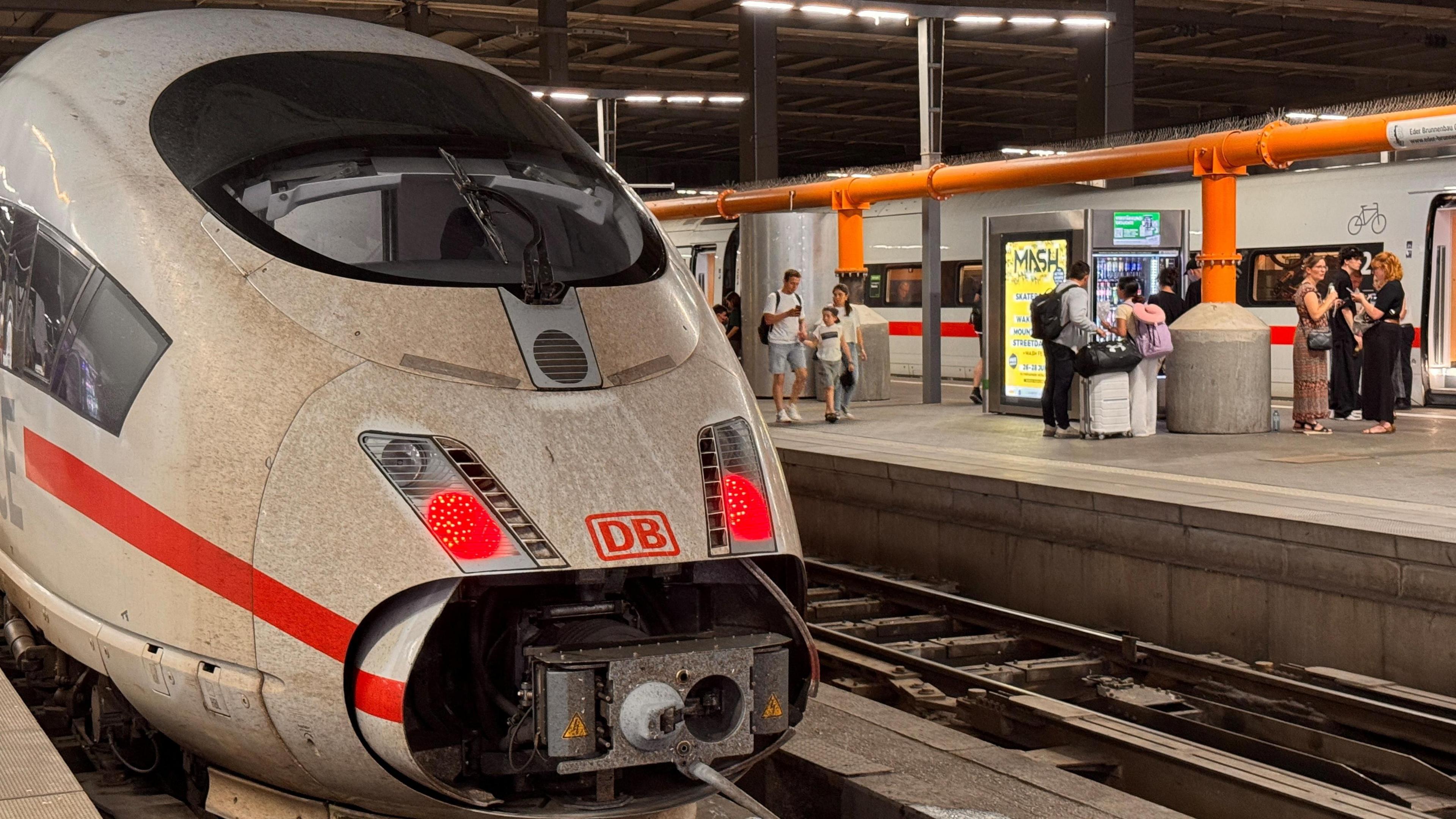
Germany, having ended compulsory service in 2011, is now shifting to a voluntary approach, with plans for potential re-evaluation of compulsory service depending on the security landscape.
The goal is to expand armed forces significantly by 2035.
What are French teenagers being offered?
France, 25 years after abolishing conscription, is introducing a paid volunteer service for young individuals.
This new initiative aims to engage youth in military training while supplementing France's military personnel.
What about the rest of Europe?
Countries like Austria and Cyprus maintain conscription, while many states have opted for professional military systems.
Switzerland requires mandatory service for men, but recently rejected a proposal to include women.