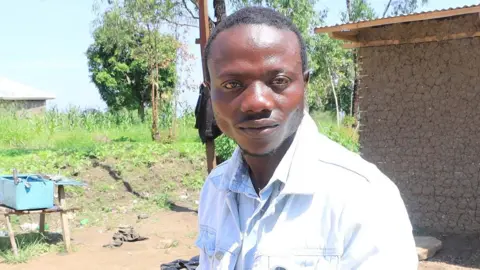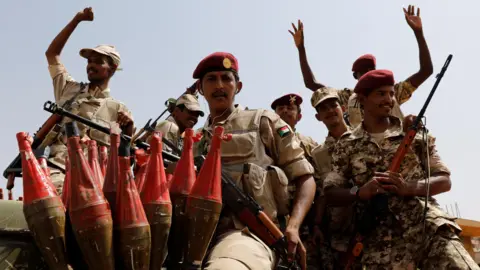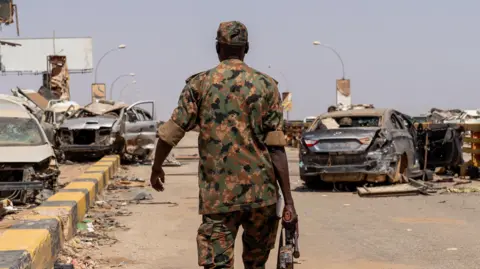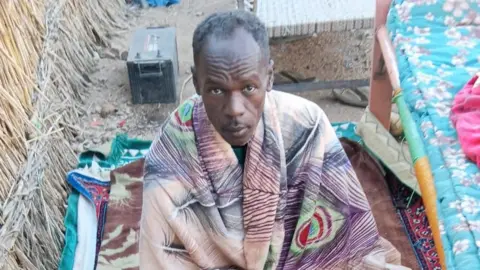
Mohamed Suleiman, a journalist and academic, felt an overwhelming rush of emotion upon hearing his phone ring for the first time in nearly three years since the civil war erupted in Sudan. Trapped in el-Fasher, he endured a communications blackout amidst escalating violence between the army and the Rapid Support Forces (RSF). Tears streamed down his face when he finally received calls and messages, which detailed the loss of colleagues and the fear experienced by friends who thought he had perished.
With every ping of his resurrected phone, Suleiman faced a stark reminder of the grim realities that have engulfed Sudan since the war began on April 15, 2023. The silence was almost as deadly as the violence, he noted, explaining how witnessing systematic killings without the ability to communicate felt suffocating. The RSF's siege of el-Fasher was particularly brutal, culminating in what he described as the 'Day of Judgment on Earth' when they overtook the city.
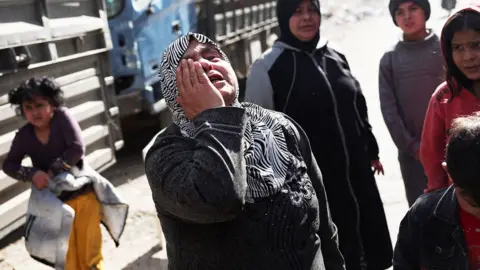
As the conflict continues into its fourth year, millions of Sudanese have been displaced or are trapped within the country, leading to one of the world's gravest humanitarian crises. Suleiman's account is not just about his survival but also serves as a witness to the immense suffering that has characterized the civilian experience.
International diplomatic efforts to resolve the conflict have faltered, leaving the citizens of Sudan to bear the brunt of violence and deprivation. Despite reaching Port Sudan, Suleiman reflects on the harrowing journey to regain his identification and reconnect with the world, emphasizing the bureaucratic struggles that continue to haunt those displaced by war. As he bears witness to the tragedy, he feels a responsibility to share these stories and ensure that the harsh realities are not forgotten.
The struggle in Sudan is not merely a chapter in history; it is a live account that reminds us of the resilience in the face of unimaginable suffering and the urgent need for a collective global response to humanitarian crises.