In brief
The Austrian government has introduced a ban on traditional Muslim headscarves in schools for girls under 14, a move that its supporters claim protects girls from oppression but one that critics say stokes anti‑Muslim sentiment and may violate constitutional neutrality. The law follows a 2020 court decision that overturned a previous ban and brings teachers into the regulatory fold, with repeat violations subject to fines up to €800. Protests, legal challenges from the Islamic community, and political debates have already erupted, mirroring debates in France and other European nations about religious symbols in public education.

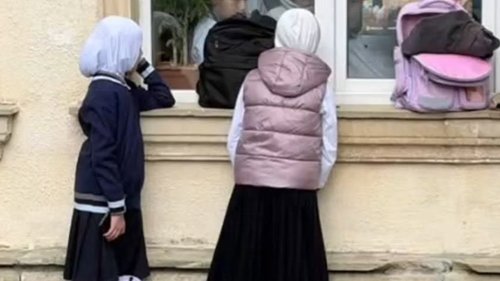
At the start of the new school year, Austrian lawmakers enacted a ban on traditional Muslim head coverings—such as hijabs and burkas—for girls aged 14 and under. The measure applies to both public and private schools nationwide.
Integration Minister Claudia Bauer, a member of the conservative People's Party (ÖVP), described the ban as a way to protect girls from “oppression and control from early childhood.” She framed the scholarship as a clear commitment to gender equality.
Critics argue that the ban stokes anti‑Muslim sentiment and violates the country's principle of religious neutrality. The Islamic Community in Austria (IGGÖ) has condemned the measure as an unjustified restriction of religious freedom, pledging to support legal challenges in the Constitutional Court.
The ban follows a 2020 Court ruling that struck down an earlier headline‑scarf limitation, citing its incompatibility with Austria’s secular neutrality. Under the new law, teachers must handle violations by engaging in discussions with students and parents; repeated violations may lead to fines of up to €800.

The ban has sparked protests from students and families, including an 11‑year‑old who raised a banner reading “my headscarf, my decision” in February. Tensions are rising as teachers express concerns about being forced to act as enforcers.
Opposition parties have joined the debate. The Green Party’s Sigi Maurer labeled the enforcement strategy as a new conflict for teachers, while the far‑right Freedom Party (FPÖ) demands an even stricter prohibition, calling for a ban on all head coverings in schools for students and teachers alike.
Notably, Austria’s stance differs from France’s long‑standing, broad ban on conspicuous religious symbols in schools; the Austrian law targets specifically those worn by Muslim women. Similar bans on full‑face veils exist across Europe, including Belgium and Denmark.