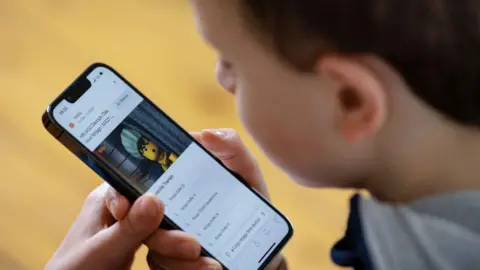
Austria has announced plans to ban social media for children aged under 14, becoming the latest country to consider introducing restrictions for children online. It follows lengthy negotiations within the conservative-led three-party coalition government, but it is not yet clear how or when the ban will be implemented.
Announcing the plans, Vice-Chancellor Andreas Babler of the Social Democrats stated that the government could not stand by while social media made children addicted and often ill. He emphasized the political responsibility to protect children, asserting that the digital landscape should be governed by the same safety norms that exist for alcohol and tobacco: There must be clear rules in the digital world too.
In future, Babler indicated that children under 14 would be shielded from addictive algorithms, mirroring existing protections in other information sectors.
The push for greater social media scrutiny aligns with a growing concern among various nations regarding the content children are exposed to online. Recent developments include a landmark US case where social media companies were found to have intentionally designed algorithms contributing to youth addiction and mental health decline.
Austria joins countries like Australia, which introduced a similar ban for under-16s, and France, where the lower house passed a ban for under-15s. Meanwhile, the UK is reportedly consulting on restricting access for those under 16.
Austrian Education Minister Christoph Wiederkehr reiterated the harmful nature of social media, stressing that users must learn to engage with these platforms responsibly. The state secretary for digitalization, Alexander Pröll, mentioned that a draft bill outlining the ban's framework is anticipated by the end of June.
The bill will likely include mechanisms for verifying user age when accessing social media platforms. Babler noted that Austria could rely on an EU-wide system if it were functional, otherwise, a national system would be established.
As the conversation around children and social media evolves, political analyst Thomas Hofer remarked that the proposed ban appears to resonate well with public sentiment, especially among parents. He noted that within turbulent times, such measures give the impression of government action on pressing issues.
The coalition's proposed ban coincides with significant reforms in secondary education, including expanded lessons in democracy and technology, while reducing Latin instruction, reflecting broader educational shifts.