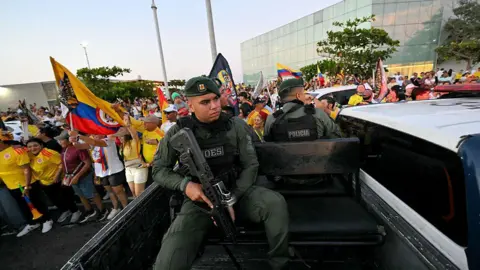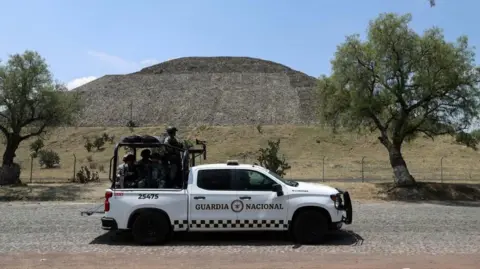
With growing fears that the militant Islamist insurgency that has engulfed large parts of West Africa is spreading, security has been dominating the campaign trail in Benin - a once-largely peaceful nation.
Sunday's presidential election comes about four months after outgoing President Patrice Talon survived a coup attempt, when Nigeria - the regional superpower - sent warplanes to bombard mutinous soldiers who had attempted to overthrow him.
Nigeria's intervention prevented Benin from going down the path of several other regional states - including Niger, Burkina Faso and Mali - where the military seized power in recent years as disillusionment grew over the failure of civilian governments to beat back the militants allied with al-Qaeda or the Islamic State (IS) group.
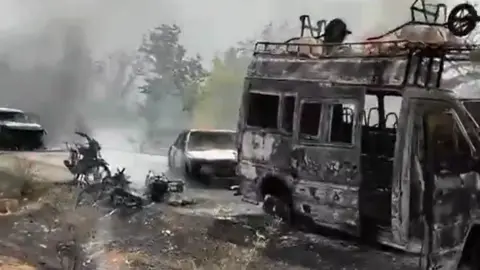
The threat posed to Benin by the insurgents was highlighted by the fact that an al-Qaeda affiliate, known by the initials JNIM, killed 15 soldiers last month in an attack on a military base in Kofouno, near the border with Niger.
It signalled the continuation of a trend witnessed last year, when 28 of Benin's soldiers were killed in January in an attack in the W National Park, which stretches into Niger and Burkina Faso, and another 54 three months later in the same park - making it the highest death toll suffered by the military at the hands of the insurgents.
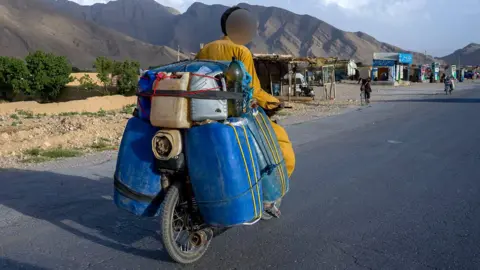
The forests are dense and the region's porous borders make it easy for the militants to set up bases and to move across countries without being detected by the security forces.
Violence monitoring group Acled says a sharp increase in attacks on the borderlands between Niger, Benin and Nigeria has also been recorded, turning remote transit corridors into active conflict zones. As attacks intensified, at least 1,000 people were killed in these border areas in 2025, more than double the number from 2024, according to Acled.
In an attempt to allay the fears of voters, Finance Minister Romuald Wadagni, 49, launched his campaign in Kandi, a strategic trading hub near the border with Niger and Nigeria, and then travelled to other parts of the north, including Banikoara and Ségbana, two localities deeply affected by attacks.
Wadagni pledged that the safety of every resident will be a daily priority if he takes office. Meanwhile, his sole rival, Paul Hounkpè, 56, also emphasizes the importance of regional cooperation against the growing insurgency.
Regardless of who wins, most people in Benin expect a smooth transfer of power and hope that the next leader will have greater success in improving relations with neighboring states and containing the insurgency that has caused havoc in the region.