Bondi Beach is almost unrecognisable. The sun is out but the surf is empty. The usually heaving main street is hushed.
Helicopters track overhead. Forensic investigators - bright blue figures in the distance - comb over the crime scene from Sunday afternoon when two gunmen opened fire at an event marking the Jewish festival of Hannukah, killing at least 15 people and injuring more than 40 others.
Beach chairs, crumpled towels, wads of clothing, a pair of children's sandals lie in a neat pile at the edge of the sand - all the things people left behind as they fled what police are calling Australia's deadliest terror attack.
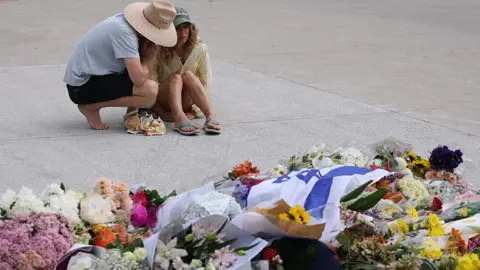
Nearby, a wall of floral tributes has begun to grow over the footpath. Milling around are shocked locals. Hands cover trembling lips. Sunglasses do their best to hide puffy eyes.
I've grown up in fear my whole life, 22-year-old Jess tells the BBC. As a Jew, this felt inevitable, she adds.
That is the overriding sentiment here today – this is shocking for such a safe country and yet predictable for one that has been grappling with rising antisemitism.
Our innocence is over, you know? says Yvonne Harber who was at Bondi on Monday to mourn the previous day's horror.
I think we will be forever changed, a bit like Port Arthur, she adds, referring to the massacre in 1996 – Australia's worst – which prompted sweeping, pioneering gun reform.
More than 24 hours on, the Jewish community is still locating the missing and counting the dead.
Among them is a prominent local Rabbi, Eli Schlanger, who only a month ago had welcomed his fifth child.
His brother-in-law Rabbi Mendel Kastel told reporters after a sleepless night: The family broke. They are falling apart...her best friend, [they] both lost their husbands.
The youngest victim is a 10-year-old named Matilda, whose only crime was being Jewish, says Alex Ryvchin, co-CEO of the Executive Council of Australian Jewry, the primary body for the Jewish community here.
A man who I knew well, in his 90s, survived the Holocaust in the Soviet Union, only to be slaughtered standing next to his wife at a Hannukah event on Bondi Beach.
Mr. Ryvchin says he is somehow both numb and distraught. It's our worst fear, but it's also something that was outside the realm of possibilities.
His organisation has been warning about a spike in recorded antisemitism incidents since Hamas's October 7, 2023, attack on Israel and the subsequent war in Gaza. But authorities didn't heed the alarm.
I know these people. They get up every morning to try to keep Australians safe. That's all they wanna do. But they failed, and they will know it better than anybody today.
From the moment news of this attack broke, leaders including Prime Minister Anthony Albanese, New South Wales premier Chris Minns, and the state's Police Commissioner Mal Lanyon have been fielding questions about why this wasn't prevented.
There have been a spate of antisemitic incidents in Australia recently. A synagogue was set on fire in Melbourne, a Jewish MP's office was vandalised, and a car was torched in Sydney.
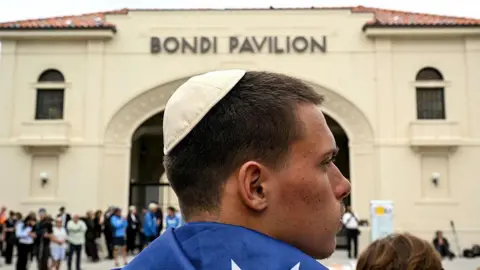
Gathering with others at the Bondi Pavillion, Prime Minister Albanese acknowledged the tragedy as an act of pure evil - an act of terror and antisemitism.
Amidst the grief, the community's resilience is evident as hundreds line up to donate blood, eager to help those affected.
As Australians come together in solidarity, expressions of concern about gun control reforms echo in the wake of such violence.