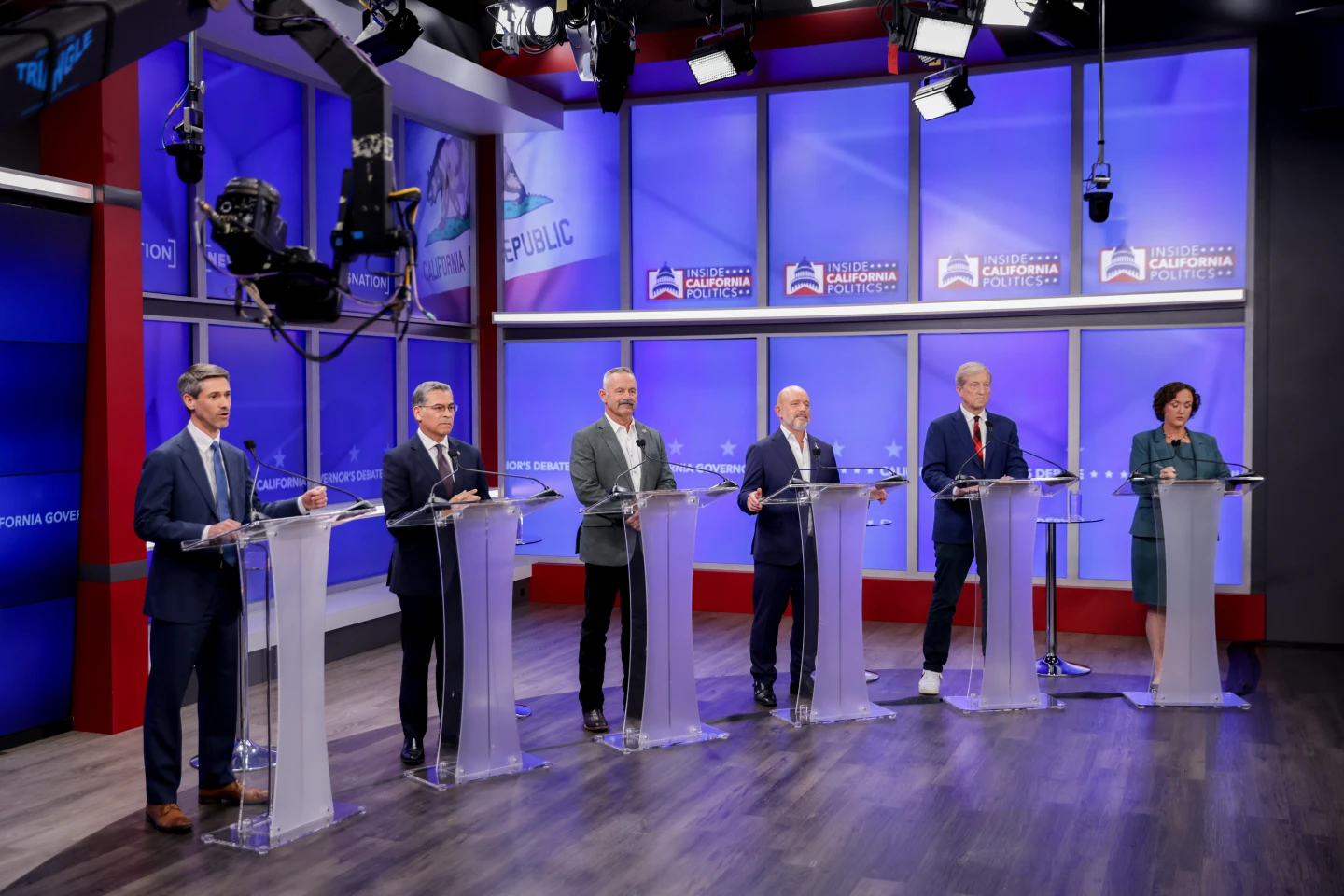
In a heated debate this past Wednesday, candidates vying to become California's next governor showcased not only their political platforms but also the sharp divides between Democratic and Republican approaches to pressing state issues. With more than 50 candidates registered for the June 2 primary, this debate marked a pivotal moment as contenders sought to distinguish themselves ahead of mail ballots going out next month.
The event featured leading figures from both parties, notably conservative commentator Steve Hilton and Riverside County Sheriff Chad Bianco representing Republicans, alongside notable Democrats like former Congresswoman Katie Porter and billionaire Tom Steyer.
The debate spanned 90 minutes, during which candidates tackled subjects such as homelessness, housing policies, and the state’s high tax rates, each blaming the other party for California’s long-standing struggles. While Democrats rallied around their achievements under outgoing Governor Gavin Newsom, Republicans criticized these as insufficient, claiming billions in taxpayer dollars have failed to yield substantial improvements in addressing homelessness.
“Everything has taken us in the wrong direction,” Hilton claimed, with Bianco adding the state’s efforts have been a “dismal failure.”
Social media and its use among minors also stirred poignant discussions. While Steyer and Becerra advocated for banning social media for children under 16, other candidates offered a range of opinions, indicating that the candidacy had leaders willing to engage in nuanced discussions about digital safety and parental choice.
Moreover, candidates found themselves grappling with questions regarding wealth and ethical investments. Steyer, often criticized for his financial background in private prisons, defended his record by highlighting his contributions to low-income housing. Amid rising scrutiny, he stated, “I'm the billionaire who wants to tax other billionaires.”
This debate showed California’s unique primary landscape, where candidates from different parties appear on the same ballot, creating potential for an unprecedented outcome should Republicans advance to the general election. The state has not seen a Republican governor in over a decade, and with ongoing conversations around critical social issues, the dynamics of this race are ever-evolving. The stakes are undeniably high as candidates work to capture the Democratic base while fending off Republican challengers.
Ultimately, this debate not only illustrated the complex political climate in California but also laid the groundwork for what promises to be a fiercely contested gubernatorial race in the coming months.