
In brief
In southern Louisiana, crawfish farmers like Josh Courville and rice farmer Christian Richard are grappling with the impacts of invasive apple snails and delphacids, insects threatening their crops. The apple snails, which multiply rapidly, have prompted adjustments in farming practices. Experts warn that climate change could exacerbate the situation, making pest management increasingly difficult for farmers.
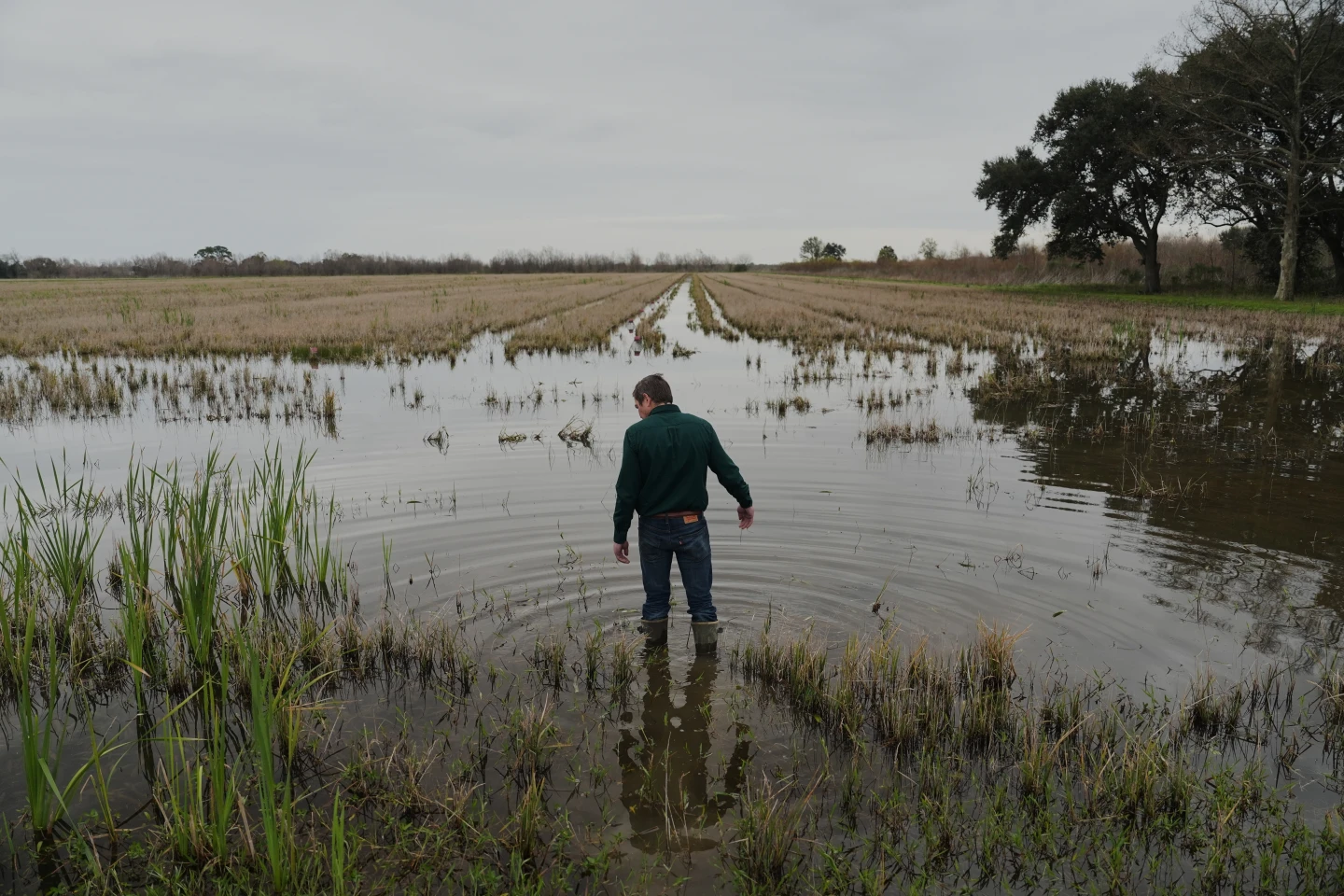
KAPLAN, La. — In the crawfish fields of southern Louisiana, farmers like Josh Courville are experiencing more than just their standard catch. Along with their prized crustaceans, they’re pulling up invasive apple snails, a species that has become a major nuisance. For every crawfish collected, three or four snails are clogging traps and rolling onto sorting tables.
Apple snails, which can grow to the size of a baseball, are not just resilient against various environmental conditions; they also lay thousands of bright pink eggs every month. Courville describes their impact as ‘disheartening,’ as they have little control over the infestation and its consequences for their harvests.
The challenge for rice and crawfish farmers such as Courville and Christian Richard is compounded by another pest: tiny delphacids. While not visible at a glance, these insects are capable of devastating rice crops by feeding on sap and carrying viruses. Their resurgence has led to fears of lower yields and heightened production costs for farmers already facing difficult market conditions.
As Richard noted, the presence of these invasive species poses a significant financial risk, pushing their operational costs to new heights. With harvest time for rice coinciding with the snails’ peak feeding periods, strategies like pre-planting dry fields have emerged, though this approach has become increasingly expensive and logistically complex.
Meanwhile, researchers continue to investigate a variety of potential solutions, but the looming threat of climate change complicates predictions about pest outbreaks. Experts suggest that a warmer climate may facilitate the spread of pests across new territories, further challenging agricultural practices.
Amidst these difficulties, Louisianans are beginning to fear the crippling economic impacts the invasive snails and delphacids might have not only on their individual farms but on the broader agricultural economy, ultimately leading to increased prices for consumers as supply dwindles.

