In brief
Following a thwarted Russian drone attack on Leipzig Airport, EU Commission President Ursula von der Leyen and NATO Secretary‑General Mark Rutte declared Russia’s actions increasingly reckless. Germany’s investigation linked the incident to Russian operatives, prompting Berlin to close the Russian consulate and cultural centre in Bonn. The EU and NATO announced plans to raise sanctions, expand defence aid to Ukraine, and coordinate deeper pressure on Russia, while German authorities reported a spate of sabotage incidents threatening critical infrastructure.
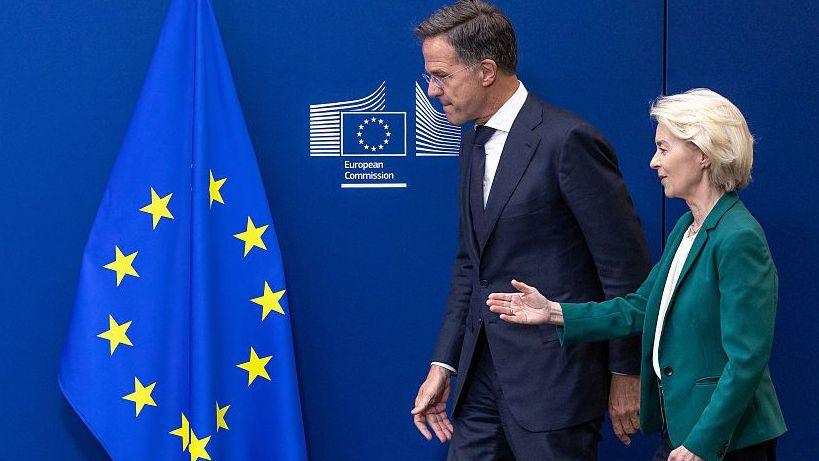
In a coordinated statement in Brussels, EU Commission President Ursula von der Leyen and NATO Secretary‑General Mark Rutte condemned the failed Russian drone strike on Leipzig Airport as a new escalation on EU soil. Von der Leyen described the incident as “military‑grade material carried out by Russian operatives,” and urged a faster, stronger response to what she called Russia’s recklessness.
German authorities confirmed a link between the drone and Russian operatives, noting that the drone carried explosives and had been intercepted by a robotic system at the airport. Two suspects were named: a Belarusian with a Russian passport who entered on a tourist visa, and a dual‑passport individual who travelled via Berlin two days before the attack.
In retaliation, Berlin ordered the closure of the Russian consulate in Bonn and the Russian House cultural institution, widely viewed as a Kremlin propaganda outlet. The Russian Foreign Ministry warned of a potential “mirror‑image” move and criticised the German measures as counter‑productive.
The EU response went beyond diplomatic protests. EU foreign ministers, gathered in Wicklow, threatened to tighten sanctions against Russia’s “shadow fleet” of oil‑laden ships that evade EU pressure. France’s Foreign Minister Jean‑Noël Barrot and ministers from Belgium and the Netherlands summoned Russian ambassadors to press the issue.
Meanwhile, a series of sabotage incidents were reported in Germany over the past 24 hours, including attacks on electricity substations in east and west Germany. Authorities are investigating both foreign state sabotage and domestic left‑wing extremism as potential culprits.
At the same time, Poland’s Prime Minister Donald Tusk pinpointed deliberate arson at a Polish drone factory as another hostile act. In response, the EU pledged further financial assistance to Ukraine and hinted at deeper sanctions, with the European Commission already allotting a €90bn loan to Kyiv.
Mark Rutte stressed the rising threat of drones and missiles along the alliance’s eastern flank, adding that “malign activities targeting our territory directly” would be met with escalated pressure. The EU and NATO pledged that this pressure would continue until Russia stops its war against Ukraine.