In brief
Gen. Oleksandr Syrskyi, Ukraine’s former commander‑in‑chief, argues that Russia’s offensive has been stalled, citing steep casualty figures and Ukraine’s superior use of drones and unmanned systems. Fired in the summer after a clash with Defence Minister Mykhailo Fedorov, Syrskyi challenges claims that he withheld support for modern tech, insisting he pushed for drones and vehicles that now inflict 80% of Russian losses. He disputes accusations that his troops were ordered to hold ground too stubbornly, noting that the broader context of Russian troop superiority and logistical imbalances shaped battlefield outcomes. Syrskyi highlights the 2024 Kursk incursion as a strategic diversion that bought Ukraine time, and calls on Europe to abandon false hopes that Russian aggression will stay confined to Ukraine.
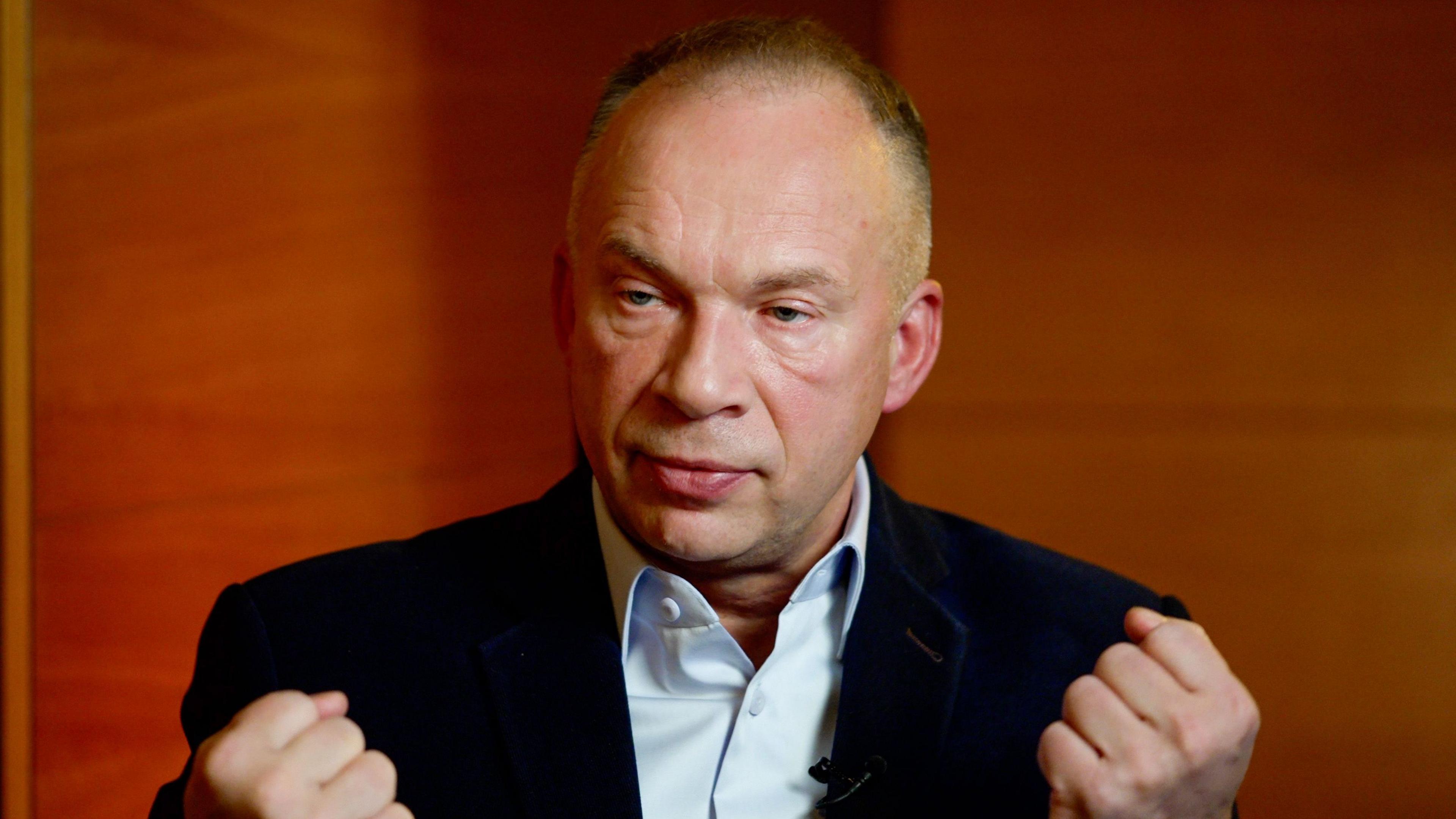
Gen. Oleksandr Syrskyi, Ukraine’s former commander‑in‑chief, told the BBC that the war had reached a “stalemate” because Russian forces had taken “severe losses” due to Ukrainian tactics, technology and sheer numbers.
Syrskyi — who was dismissed in the summer after a public spat with Defence Minister Mykhailo Fedorov — said that Russia’s overall losses outnumbered Ukraine’s by a factor of six and, when counting only dead soldiers, by eleven. He cited estimates from UK intelligence and the Center for Strategic and International Studies that place Russian fatalities at roughly half‑a‑million since 2022 and Ukrainian casualties around 150,000.
The commander rebuffed claims that Ukrainian troops were kept in place too long, noting instead that Russian troops outnumbered Ukraine’s by 2.5‑to‑1 in 2025 and that artillery and jet superiority favoured Moscow 18‑to‑1. He sees the “killing power” of drones as the decisive element, with drones now accounting for about 80 % of Russian losses.
Syrskyi also detailed Russia’s 2024 Kursk incursion – a deep strike into Russian territory that ended in a “necessary retreat” the following spring. He argues that the operation disrupted Russian offensives and forced Moscow to divert troops, giving Ukraine breathing room to recover in the east and south.
Looking ahead, he warns that the war will increasingly hinge on robotics, autonomous systems and artificial intelligence. While he notes that “ordinary weapons now receive AI‑based control systems”, he asserts the human operator will ultimately remain essential on the battlefield.
Syrskyi urged European allies to abandon the illusion that the conflict will stay within Ukraine’s borders, urging them to prepare for a broader confrontation. He warns that a lull is unlikely, and that a shift in Russia’s strategy could soon affect the wider region.