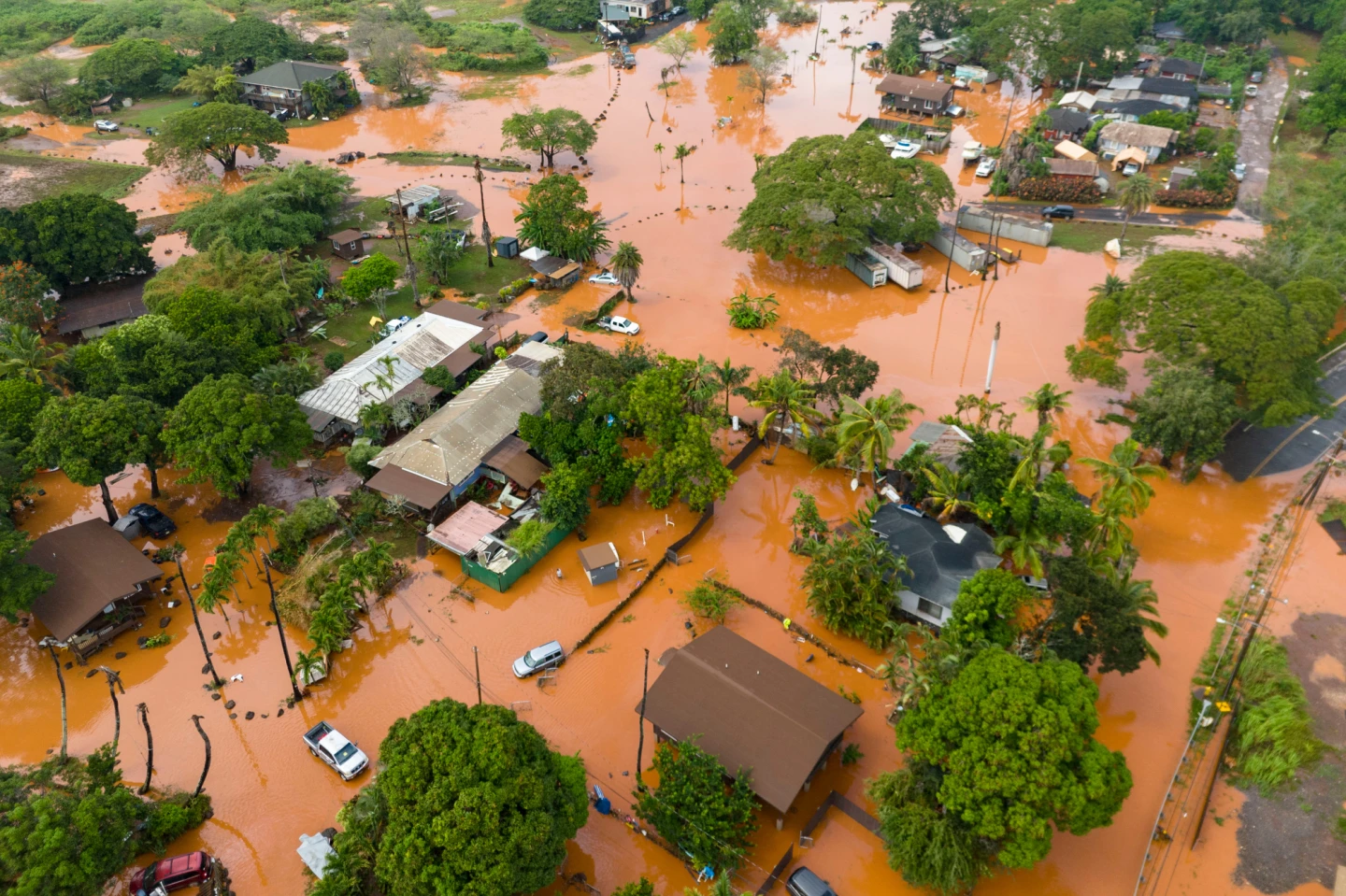
HONOLULU (AP) — Hawaii endured its most severe flooding in over two decades, overwhelming communities as torrential rains hit the islands, already saturated from recent storms. Emergency officials reported that upwards of 5,500 individuals had been evacuated from their homes on the North Shore of Oahu as flash flood warnings are issued, with more rain predicted throughout the weekend.
Gov. Josh Green warned Friday that the economic impact from the flooding could surpass $1 billion, encompassing damages to critical infrastructure including airports, schools, and healthcare facilities. This is going to have a very serious consequence for us as a state, Green asserted at a press briefing.
The National Weather Service had placed the majority of the state under a flood watch, with specific warnings in Haleiwa and Waialua.
As of now, there were no reports of fatalities or individuals unaccounted for; however, approximately ten people were hospitalized due to hypothermia. Search and rescue operations were significantly impacted by unauthorized drone use, complicating efforts to reach those stranded.
In a facilitated evacuation effort, National Guard members successfully airlifted 72 children and adults from a spring break camp when authorities deemed it unsafe for them to remain on elevated ground.
The Worst Flooding Since 2004
Districts throughout Oahu saw unprecedented flood damage, with Honolulu Mayor Rick Blangiardi indicating that the impact is still being assessed. Some homes were outright damaged while local infrastructure faced immense deterioration.
Officials attributed the destruction to the extreme volume of rain on already-soaked earth, with parts of Oahu measuring up to 16 inches of rain within a day. Following these conditions, threats increased concerning the structural integrity of the century-old Wahiawa dam.
Water levels reached alarming heights, prompting officials to regard it as “at risk of imminent failure.” If the dam were to fail, the consequences could be catastrophic, projected to lead to loss of life.
The state aims to acquire and repair the aging dam: discussions around its safety issues have persisted alongside attempts to hand it over to the state. With the rainy season still active, residents such as Waialua's Kathleen Pahinui remain apprehensive, pleading for safety with ongoing rainfall predicted.
Just pray for us, she stated. We understand there’s more rain coming. Experts also noted the increasing intensity and frequency of heavy rains in Hawaii, exacerbated by climate change.
Hawaii continues to monitor and assess the safety of its aging dams, with unyielding conditions leading to multiple flood watches being placed across the islands as recovery from this disaster begins.