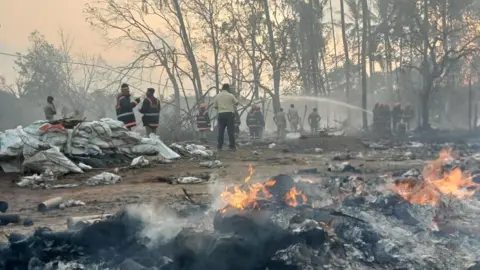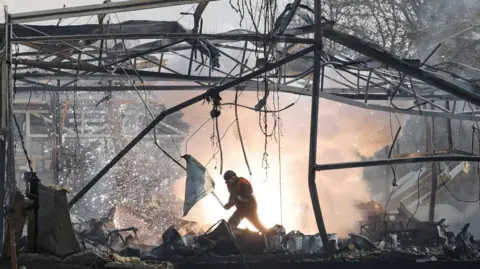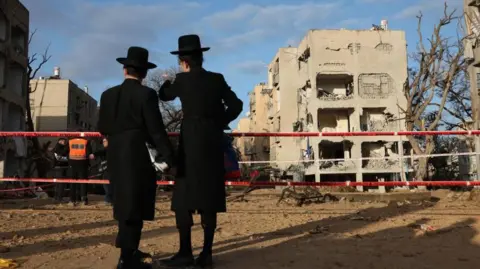
Israel's health ministry reports that 180 individuals have been injured in missile strikes on two southern towns, Arad and Dimona, both located near a nuclear research facility. The ministry specifies that 116 injuries were reported in Arad and another 64 in Dimona, with some victims sustaining serious injuries as ballistic missiles struck the towns.
The International Atomic Energy Agency (IAEA) confirmed that they are not aware of any damage to the nuclear site located about 13km from Dimona.
Iranian state media indicated that the missile strikes were retaliation for a recent attack on Iran’s Natanz nuclear facility. On the following day, at least seven more individuals were injured in an attack targeting Tel Aviv.
According to the Israeli Air Force, Iran has launched nearly 400 missiles at Israel since the US-Israeli attack on Iran on February 28, with 92% being intercepted. Local residents described the blasts as terrifying, and paramedics reported seeing numerous children with severe injuries from debris within damaged buildings.
Ahmadiel Ben Yehuda, a resident in Dimona, expressed shock at the destruction, noting that many homes suffered structural damage, including collapsed ceilings. As Prime Minister Benjamin Netanyahu and President Isaac Herzog inspected the impact zones, discussions began about the effectiveness of Israel's air defenses, which are under scrutiny following the breach.
Despite the ongoing conflict and heavy bombardments, Israeli public sentiment may be hardening, with citizens showing increasing resilience in the face of repeated threats. The government remains focused on eliminating Iran’s nuclear capabilities through military action while emphasizing national security strategies.
The International Atomic Energy Agency (IAEA) confirmed that they are not aware of any damage to the nuclear site located about 13km from Dimona.
Iranian state media indicated that the missile strikes were retaliation for a recent attack on Iran’s Natanz nuclear facility. On the following day, at least seven more individuals were injured in an attack targeting Tel Aviv.
According to the Israeli Air Force, Iran has launched nearly 400 missiles at Israel since the US-Israeli attack on Iran on February 28, with 92% being intercepted. Local residents described the blasts as terrifying, and paramedics reported seeing numerous children with severe injuries from debris within damaged buildings.
Ahmadiel Ben Yehuda, a resident in Dimona, expressed shock at the destruction, noting that many homes suffered structural damage, including collapsed ceilings. As Prime Minister Benjamin Netanyahu and President Isaac Herzog inspected the impact zones, discussions began about the effectiveness of Israel's air defenses, which are under scrutiny following the breach.
Despite the ongoing conflict and heavy bombardments, Israeli public sentiment may be hardening, with citizens showing increasing resilience in the face of repeated threats. The government remains focused on eliminating Iran’s nuclear capabilities through military action while emphasizing national security strategies.