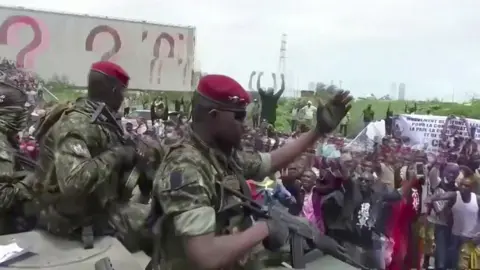
From the moment he seized power in September 2021, Guinea's Mamadi Doumbouya struck an imposing figure. Just 36 years old at the time, the broad-shouldered colonel captivated attention with military fatigues, mirrored sunglasses, and a red beret. Doumbouya, a relatively unknown member of an elite army unit, declared the government of ousted President Alpha Condé had neglected democratic principles and citizens' rights.
Now, after more than four years as interim president, Doumbouya is preparing to be sworn in as the elected head of state on Saturday following an election in December where he won 87% of the vote against a severely depleted field.
Critics like ex-Prime Minister Cellou Dalein Diallo, now in exile, have described the electoral process as a charade, alleging fabricated results. While Doumbouya seemingly enjoys popular support, many question his commitment to democracy, especially given bans on political parties, that activists have disappeared, and the closure of media outlets.
In a visual shift from his military past, Doumbouya has adopted a more relaxed public persona, appearing in tracksuits and traditional attire during public events, further emphasizing his desire to appear as a man of action for the people. Analysts suggest this change is systematic, distancing himself from a military image and trying to present his administration as inclusive of civilians.
However, the cynicism remains; many observers are skeptical about whether Doumbouya has genuinely transitioned to civilian leadership, particularly in light of political repression observed under his regime. The fate of missing activists raises critical human rights concerns, and self-censorship among journalists has reportedly increased.
Yet, despite the challenges, Doumbouya remains popular in Guinea. Polls indicate growing trust in his leadership, increased from 46% in 2022 to 53% in 2024. Doumbouya’s primary focus appears to be on establishing a national narrative promising sovereignty and economic control, particularly centered around the country's rich mineral resources.
The anticipation surrounding Doumbouya's presidency hinges on his government’s handling of key issues, such as the multi-billion-dollar Simandou iron-ore project, expected to transform Guinea's economic landscape. Success in this venture could solidify Doumbouya's standing as a local hero, yet failure could undermine his leadership.
As he takes the oath of office, Doumbouya will need to balance public expectations and political realities while demonstrating a commitment to genuinely improving the lives of Guineans.