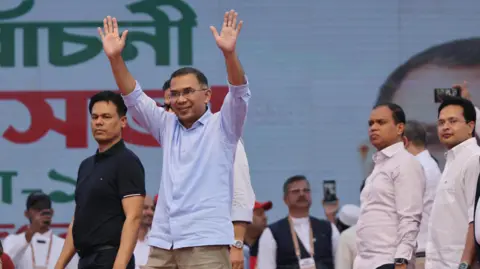
Just over two years ago, when Sheikh Hasina won an election widely condemned as rigged in her favour, it was hard to imagine her 15-year grip on power being broken so suddenly, or that a rival party that had been virtually written off would make such a resounding comeback. But this is another flip-flop in Bangladeshi politics, with Tarique Rahman formally leading the Bangladesh Nationalist Party (BNP) for the first time in a highly competitive election.
Rahman returns to Bangladesh after 17 years of self-imposed exile following the death of his mother, Khaleda Zia, and has faced accusations of corruption. At 60, he is largely seen as untested, but some believe his outsider status might garner support as people crave change. Political scientist Navine Murshid noted, That he doesn't have prior experience probably works for him, because people are willing to give change a chance.
The new administration's priority will be to restore democracy and rebuild institutions that have suffered under Hasina's rule. Senior BNP leader Amir Khasru Mahmud Chowdhury emphasized the need to bring democratic and financial institutions back in order. Yet skepticism lingers, as Bangladeshi history is fraught with broken promises after leaders attain power.
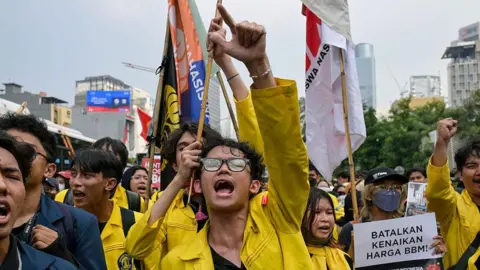
The youth, emboldened by the July 2024 uprising that deposed Hasina, demand tangible changes. As 19-year-old Tazin Ahmed states, The stepping down of the previous prime minister was not the victory. When our country runs smoothly without any corruption, and the economy becomes good, that will be our main victory.
In a landscape where violence marred Hasina's tenure, the newly elected government must decisively address law and order, revive the economy, and ensure job growth for the large youthful population. With the former ruling party's absence casting a shadow on the credibility of the election, Rahman's administration faces a critical test amidst a changing political map. The Islamist Jamaat-e-Islami party is making a notable return, while fresh faces from the National Citizens Party highlight the shift in public sentiment.
All eyes are now on how Rahman can navigate these challenges and fulfill the promises made to the people of Bangladesh.
Rahman returns to Bangladesh after 17 years of self-imposed exile following the death of his mother, Khaleda Zia, and has faced accusations of corruption. At 60, he is largely seen as untested, but some believe his outsider status might garner support as people crave change. Political scientist Navine Murshid noted, That he doesn't have prior experience probably works for him, because people are willing to give change a chance.
The new administration's priority will be to restore democracy and rebuild institutions that have suffered under Hasina's rule. Senior BNP leader Amir Khasru Mahmud Chowdhury emphasized the need to bring democratic and financial institutions back in order. Yet skepticism lingers, as Bangladeshi history is fraught with broken promises after leaders attain power.
The youth, emboldened by the July 2024 uprising that deposed Hasina, demand tangible changes. As 19-year-old Tazin Ahmed states, The stepping down of the previous prime minister was not the victory. When our country runs smoothly without any corruption, and the economy becomes good, that will be our main victory.
In a landscape where violence marred Hasina's tenure, the newly elected government must decisively address law and order, revive the economy, and ensure job growth for the large youthful population. With the former ruling party's absence casting a shadow on the credibility of the election, Rahman's administration faces a critical test amidst a changing political map. The Islamist Jamaat-e-Islami party is making a notable return, while fresh faces from the National Citizens Party highlight the shift in public sentiment.
All eyes are now on how Rahman can navigate these challenges and fulfill the promises made to the people of Bangladesh.