Nearly a year after it passed the Legislature, Gov. Greg Gianforte signed a bill defining sex as binary, based on a person’s reproductive system. This move amends a wide range of sections in Montana law to include new definitions of ‘male’, ‘female’, ‘sex’, and ‘gender’.
Senate Bill 437 mirrors a previous law declared unconstitutional due to ambiguities and equal protections violations. Critics question this latest version’s implications for transgender and nonbinary individuals.
What does Senate Bill 437 say?
The new law categorizes individuals as male or female based on their reproductive anatomy, outlining a female as an individual with reproductive capabilities related to ova and a male based on sperm-use for fertilization.
Significant to note, this bill excludes references to chromosomal definitions of sex and tightly links gender to sex, thereby removing the allowance for gender identity complexities.
Changes and Implications
The legislation’s application spans over 60 sections of state law, influencing areas such as marriage, anti-discrimination policies, and governmental representation. Notably, individuals seeking identification documents will now have to declare their sex as defined by the bill.
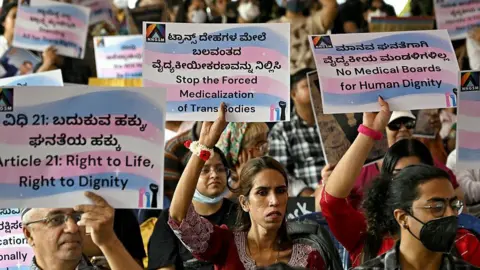
Opponents, including Representative Zooey Zephyr, a transgender woman, have voiced concerns about the discriminatory effects of the bill and the potential for increased risks faced by trans individuals in public spaces.
Support and Opposition
The bill saw majority support from Republicans in the Legislature, claiming a need for clear definitions in gender-related legislation. Supporters argue that the law reinforces biological reality, while opponents frame it as retrogressive, discriminatory, and unnecessary.
With legal challenges anticipated, both sides brace for a continued debate over sex and gender definitions within Montana law.
What’s Next?
After the signing, activists are preparing for legal actions similar to previous challenges against the 2023 law. Both supporters and adversaries alike anticipate that the courts will play a central role in determining the future of this controversial legislation.