Yabloko, Russia’s sole registered party that has consistently opposed the war in Ukraine, was barred by a Moscow court from participating in the upcoming parliamentary elections.
The ruling followed a lawsuit filed by the pro‑Kremlin nationalist party Rodina, which accused Yabloko of supporting extremist ideologies and misusing copyrighted Soviet songs on its website. Court documents also cited alleged foreign financial backing from Germany and the United States.
While the Central Electoral Commission had previously approved Yabloko’s candidate list in late July, several party leaders, including deputy chairmen and deputy head Maxim Kruglov, had already been disqualified or imprisoned, limiting the party’s electoral viability.
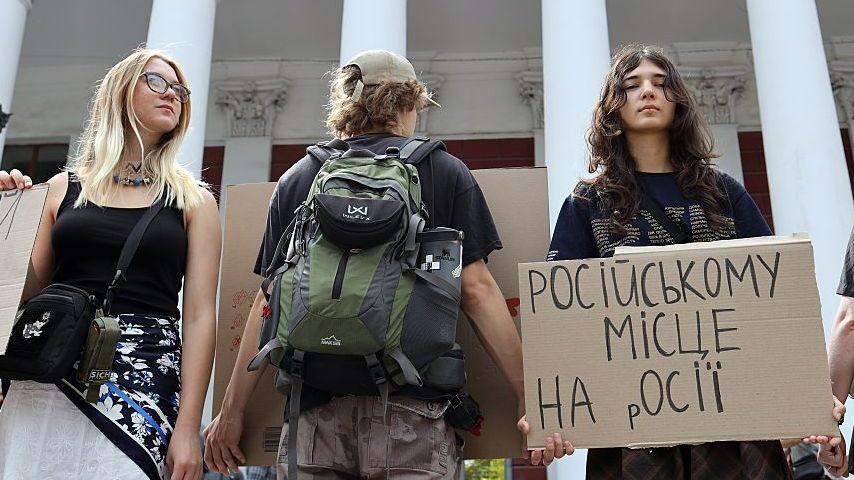
Outside the courthouse, hundreds of young Russians gathered, chanting “Russia” and “Yabloko” while waving apples, a symbol of the party’s name. Social media videos captured the crowd’s reaction when the verdict was announced, with chants of “Shame!” echoing through the streets.
The court’s decision comes amid widespread restrictions on public dissent, stricter wartime censorship, and a concerted effort by the Kremlin to stifle opposition voices. By denying Yabloko a ballot place, the regime has removed the only prominent anti‑war platform from the electoral arena, potentially driving down voter turnout among those opposed to the Kremlin’s war policies.
With only ten political parties participating in the election, all of which either endorse the war or do not openly criticize it, Yabloko’s exclusion signals a tightening of control over political dissent. Independent election observers report reduced ability to monitor the process, further raising concerns about the democratic integrity of the upcoming vote.
For Russians seeking a voice in the federal assembly, the court’s ruling means the electoral field has become one‑sided, leaving concerns about political representation, civic engagement, and the continuation of the Kremlin’s war narrative. The next election may therefore lack a legitimate opposition option, a scenario the Kremlin seems prepared to accept to maintain its dominance.