Myanmar has denied committing genocide against the Rohingya people, asserting that The Gambia has failed to provide sufficient proof as it began its defense at the UN's top court.
Ko Ko Hlaing, a representative for the Myanmar government, informed judges at the International Court of Justice (ICJ) that the allegations were unsubstantiated.
Earlier in the proceedings, Dawda Jallow, The Gambia's foreign minister, stated that Myanmar aims to erase the minority Muslim population through genocidal policies.
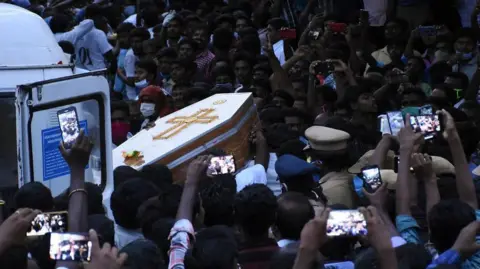
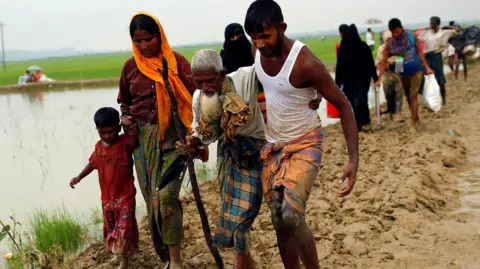
Since an army crackdown in 2017, thousands of Rohingya have been killed and more than 700,000 have fled to Bangladesh.
A UN report issued in the following year called for the investigation of senior military figures in Myanmar for genocide and other crimes against humanity. Myanmar, under military control since 2021, has consistently rejected these claims, framing its operations as targeted against militant threats.
Hlaing contended that the military actions were necessary counter-terrorism responses, justifying the operations as a means to counter insurgent threats in Rakhine state where the majority of Rohingya reside.
The Gambia launched its case in 2019, responding to what it described as a moral responsibility shaped by its own military governance experience. The complaint highlights years of systemic persecution against the Rohingya, culminating in a military crackdown characterized by indiscriminate violence against civilians.
The case has formed a coalition of 57 nations, part of the Organisation of Islamic Cooperation, backing The Gambia's allegations. Over a million Rohingya live in refugee camps in Bangladesh, among the largest in the world.
Hlaing emphasized the importance of the court's decision, expressing that a genocide finding would have a lasting impact on Myanmar's reputation. The court has minutes set aside for hearing witness testimonies, including accounts from Rohingya survivors, although these will be closed to media.
A verdict is anticipated by the end of 2026, promising to establish a significant precedent in international genocide law.
The UN Genocide Convention defines genocide as acts committed with the intent to destroy, fully or partially, a national, ethnical, racial, or religious group.