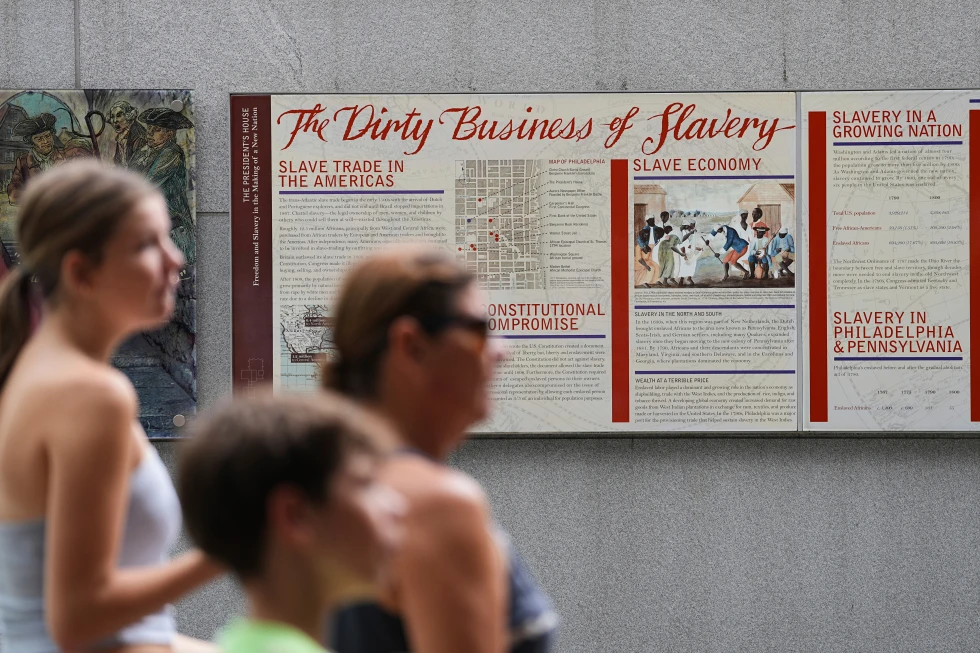
PHILADELPHIA (AP) — The National Park Service has removed an exhibit on slavery at Philadelphia’s Independence National Historical Park in response to President Donald Trump’s executive order aimed at 'restoring truth and sanity to American history' in displays at the nation’s museums, parks, and landmarks.
Crews undertook the removal of the exhibit at the President’s House Site on Thursday, which had included the names and biographical details of the nine enslaved individuals who lived and worked in the residence of President George Washington. Previous information panels discussed Washington’s use of slave labor, emphasizing that he 'knew and trusted' the people he enslaved.
In an effort to contest the permanent removal of these panels, the city of Philadelphia has filed a lawsuit against the Department of the Interior and Secretary Doug Burgum, along with acting National Park Service Director Jessica Bowron.
Last year, Trump directed a review of interpretive materials at National Park Service sites to ensure they reflect 'accuracy, honesty, and alignment with shared national values.' In a statement, Interior Department spokesperson Elizabeth Peace elaborated that following the review, the Park Service is taking action to adjust or eliminate materials in line with the presidential order.
Critics assert that these actions confirm long-standing suspicions about the Trump administration's intent to erase disquieting elements of American history, dismissing the initiative as an assault on historical integrity.
Trump's executive order, signed last March, accused the Biden administration of propagating a 'corrosive ideology' at historic sites. The order criticized previous training initiatives for National Park rangers that promoted ongoing discussions about institutional racism and the need to re-evaluate U.S. history through a critical lens.
At Independence National Historical Park, the site of the declaration that 'all men are created equal,' the previous administration had reportedly forced training that encouraged rangers to examine their racial identities and its influence on their presentation of history to visitors.