DENVER (AP) — Donald Trump lost his bid for reelection in 2020. However, for more than five years, he has been attempting to persuade the American public otherwise by falsely claiming that the election was rife with fraud.
Now that he has resumed the presidency, Trump is mobilizing the federal government to validate these baseless assertions.
On Wednesday, the FBI executed a search warrant at the election headquarters of Fulton County, Georgia, predominantly covering Atlanta, seeking ballots from the 2020 election. This followed Trump's earlier comments in a speech at the World Economic Forum in Davos, Switzerland, hinting that legal charges concerning the election might be forthcoming.
“The man has obsessions, as do a fair number of people, but he’s the only one who has the full power of the United States behind him,” stated Rick Hasen, a law professor at UCLA.
Hasen and many others argue that Trump's use of the FBI to pursue his fixation with the 2020 election exemplifies a pattern of the president transforming the federal government into his personal tool for vengeance.
Senator Jon Ossoff, a Georgia Democrat, criticized the search, likening it to the recent immigration crackdown in Minnesota, a move seen as retaliatory toward the state’s governor, who opposed Trump in the 2024 elections.
“From Minnesota to Georgia, on display to the whole world, is a President spiraling out of control, wielding federal law enforcement as an unaccountable instrument of personal power and revenge,” Ossoff remarked in a statement.
This development occurs as election officials nationwide gear up for the midterms in 2026, while Trump encounters challenges in maintaining his party's congressional control. Observing that Trump had previously considered using military force to seize voting machines after his defeat, some express concerns he may be laying the foundation for similar actions in the upcoming elections.
“Georgia’s a blueprint,” commented Kristin Nabers from the left-leaning group All Voting Is Local. “If they can get away with taking election materials here, what’s to stop them from taking election materials or machines from some other state after they lose?”
Georgia has been pivotal in Trump’s fixation on the 2020 result. He notoriously urged Georgia’s Republican Secretary of State Brad Raffensperger on January 2, 2021, to “find” 11,780 additional votes—a request Raffensperger rejected, noting that multiple reviews confirmed Joe Biden's narrow victory in the state.
Those reviews, often led by Republicans, affirm Biden's win not only in Georgia, but also in key battleground states like Michigan, Wisconsin, and Nevada. Trump’s numerous lawsuits contesting the results ultimately failed, with even his then-attorney general asserting no evidence of widespread fraud existed.
His allies, who echo his false claims, have faced defamation suits, including former New York Mayor Rudy Giuliani, who settled with two Georgia election workers for $148 million after being found liable for defamation.
Voting machine companies have launched their own defamation lawsuits against some conservative media outlets that propagated unsubstantiated allegations regarding their devices. Notably, Fox News agreed to pay $787 million to settle a case after a judge ruled the allegations were unequivocally false.
Trump's attempts to sway Georgia’s election process have even led to a now-failed prosecution by Fulton County DA Fani Willis, which collapsed amid conflict-of-interest allegations. Trump has since counter-sued Willis.
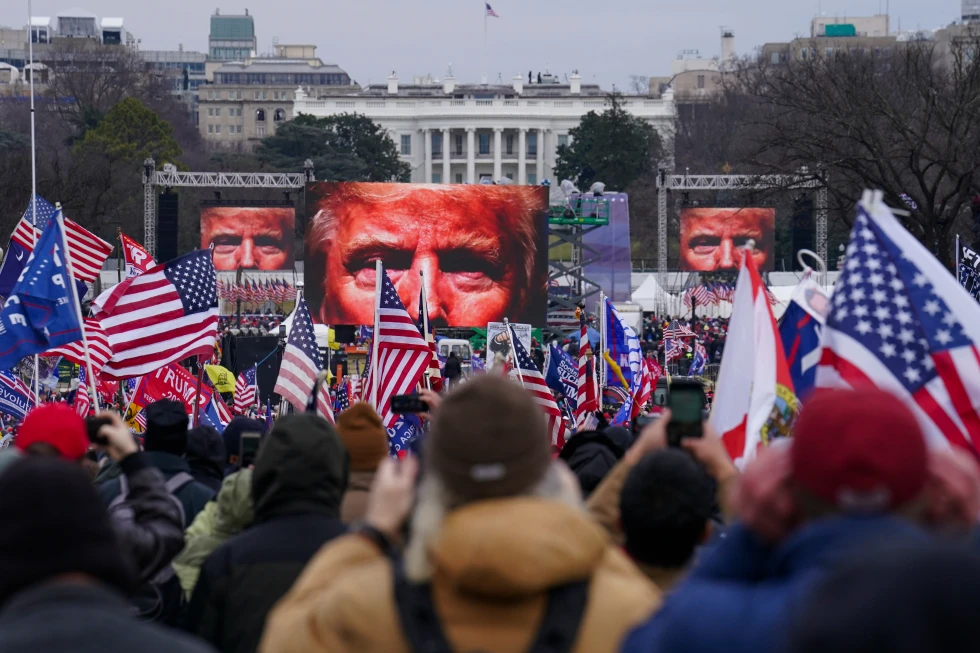
On his first day back in office, Trump rewarded several individuals who aided his efforts to overturn the election results with pardons or reduced sentences for approximately 1,500 people charged during the January 6, 2021, Capitol insurrection. He later signed an executive order attempting to dictate state election systems and voting protocols, which courts have repeatedly blocked, affirming that the Constitution assigns such control to states or, in some cases, Congress.
Additionally, Trump has suggested wanting to criminally charge lawmakers involved in the House committee investigating the January 6 attack, claiming that pardons issued by Biden are legally invalid. He has also targeted former cybersecurity officials who assured the public that the 2020 election was secure.
Despite a tumultuous year filled with pressing global issues, Trump has consistently reverted to discussions about the 2020 election, making unsubstantiated claims of rigging and deceit by Democrats, even going so far as to establish a White House plaque indicating Biden assumed office after “the most corrupt election ever.”
David Becker, a former DOJ voting rights attorney, remains doubtful that the FBI's search in Georgia will result in successful legal action. According to him, Trump’s ongoing demands for charges against various individuals have languished in court.
“So much this administration has done is to make claims in social media rather than go to court,” Becker noted. “I suspect this is more about poisoning the well for 2026.”