PITTSBURGH (AP) — In a whirlwind few weeks this spring, the Pittsburgh media landscape faced a potential demise before witnessing an unexpected revival.
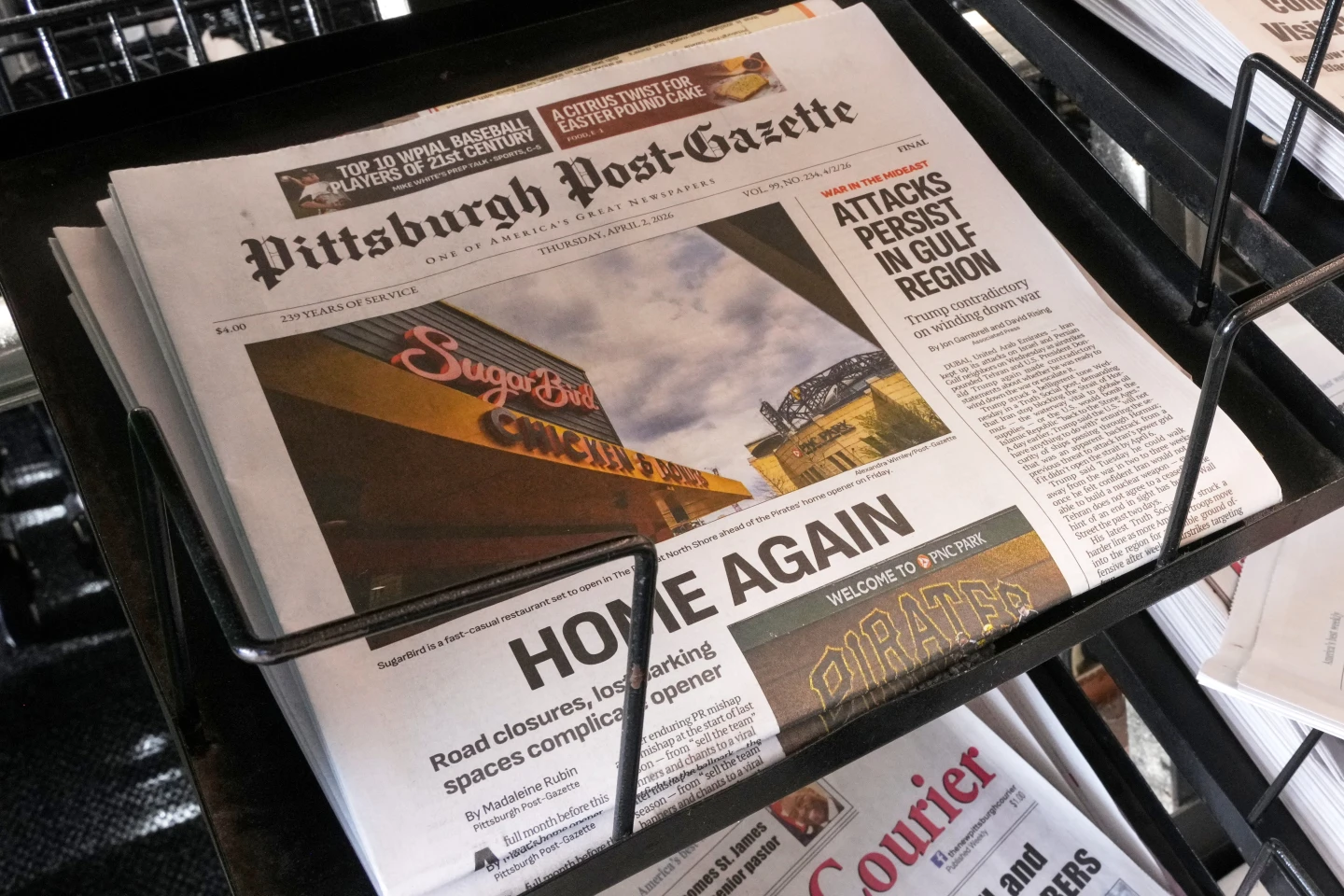
Last week, the owners of the historic Pittsburgh Post-Gazette revealed plans to sell the newspaper to a nonprofit foundation dedicated to its continuity, avoiding a closure that would have left Pittsburgh without a city-based newspaper as of May 3. The Post-Gazette, which has roots extending back to before the U.S. Constitution, has been a staple of the community for generations.
Earlier in the spring, the Pittsburgh City Paper, an alternative publication that announced its closure on New Year’s Day, re-emerged under new leadership. Its resolve to continue providing in-depth reporting on local news and culture signifies a hopeful turn for journalism in the Steel City.
These developments come amid a larger trend where local news outlets nationwide are grappling with staff reductions and closures. ”It’s human nature that sometimes you have to be shaken a bit to realize what’s important in your life,” remarked Halle Stockton, co-executive director and editor-in-chief of the digital news platform Public Source.
The Legacy of the Post-Gazette
The Pittsburgh Gazette, established in 1786, underwent numerous transformations and name changes throughout its history. It acquired the name Post-Gazette after merging with another publication in 1927. For over a century, it has been regarded as the city's newspaper of record.
Its investigative reporting gained significant recognition, winning a Pulitzer Prize in 2019 for its coverage of the Tree of Life synagogue shooting. Despite labor disputes and challenges faced in recent years, the Post-Gazette’s legacy as a crucial information source for the community remains.
In response to rumors regarding its future, Kevin Acklin, former president of the Penguins hockey team and advisor to Pittsburgh's mayor, remarked on the importance of the Post-Gazette: “It really is the paper of record for this city.” Nevertheless, the ownership transition could signal a fresh start.
A New Hope for Civic Journalism
When Block Communications announced its decision to sell the Post-Gazette to a nonprofit last week, many feared it might fall into the grasp of a hedge fund known for under-resourcing newspapers. Instead, the Venetoulis Institute for Local Journalism, previously noted for its work with The Baltimore Banner, stepped in with promises of revitalization and investment.
Stewart Bainum Jr., the benefactor behind the Venetoulis Institute, intends to allocate $30 million over five years to both the Post-Gazette and The Baltimore Banner, indicating a commitment to sustaining local journalism.
Meanwhile, the Pittsburgh Tribune-Review has also made strides by reintroducing a Sunday print edition this May and hiring additional journalists to enhance coverage across various sectors including business and education.
Pittsburgh's news ecosystem shows signs of collaboration between previously competitive outlets, fostering a sense of community. Stockton's Public Source has begun engaging with residents regarding their news needs, signaling a shift toward more inclusive and responsive journalism.
A testimonial from journalism students highlights a generational shift in media consumption, underlining the ongoing challenges for traditional news outlets in securing relevance. As they experiment with new formats and cooperative models, newsroom leaders are looking ahead to reinvent local journalism in Pittsburgh.