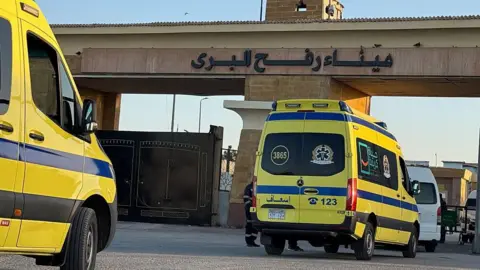
Rafah Crossing Reopens: A Lifeline for Gaza Amid Ongoing Struggles
The Rafah border crossing between Gaza and Egypt reopened on Monday, allowing for the movement of sick and wounded Palestinians seeking medical treatment. This marks the first significant opening since the Israeli military captured the Gazan side in May 2024.
Despite the opening, only a few individuals crossed on the first day, with reports indicating that five patients and some companions were permitted to enter Egypt, leaving many frustrated with the limited passage available. Approximately 20,000 sick and injured Palestinians are currently awaiting transference to facilities in Egypt.
The reopening was initially expected to coincide with U.S. President Donald Trump’s ceasefire plan, which began in October 2025, but was delayed until the recovery of the last Israeli hostage’s body. This delay exacerbated the humanitarian situation for many who view the crossing as a vital lifeline.
Local consciousness reflects a glimmer of hope, yet many express concerns about the stringent security checks imposed by Israeli authorities and the small number of people allowed to cross daily. Only 50 patients accompanied by relatives will be allowed to exit each day, a number that appears inadequate for the pressing needs within Gaza.
On Monday, it was reported that 38 individuals were unable to cross due to security clearance issues, prompting complaints that the delays were a result of excessive checks rather than legitimate security concerns.
The crossing is now under the supervision of the European Union Border Assistance Mission, alongside local Palestinian staff, while Israeli forces conduct remote security screenings.
For families like that of Sabrine al-Da'ma and her daughter, Rawa, the reopening is critical. Rawa, suffering from kidney disease, requires surgical intervention that necessitates traveling abroad. Her mother is keen to contribute one of her own kidneys for a transplant. The urgency of their situation highlights the human cost behind the bureaucratic exchanges at the border.
Meanwhile, other local students are finding themselves disenfranchised amid these initiatives, with many like Maha Ali expressing despair over their interrupted educational pursuits due to the ongoing conflict. Ali has sought to pursue a master's degree but has been denied passage under stringent regulations.
The director of the technocratic committee responsible for Gaza's governance, Ali Shaath, heralds the reopening as the potential beginning of a long-reconnecting process for the shattered hopes of Gaza's residents, while European officials echo the sentiment, labeling the move as a positive step in international peace efforts.
Foreign officials from the UK and EU emphasized the ongoing need for humanitarian aid to flow freely and for the removal of obstacles limiting essential supplies to the beleaguered population of Gaza. The complexity of the situation remains a challenging concern amidst the opening of the Rafah crossing.
}