The recent sanctions imposed by the US Treasury on Antal Rogan, a prominent member of Prime Minister Viktor Orban's Fidesz party and head of the Cabinet office, signify a serious diplomatic rift between the NATO allies. As one of the key architects of what the US describes as a “corrupt system,” Rogan's influence has drawn particular scrutiny amid deteriorating relations prompted by Russia's ongoing aggression in Ukraine.
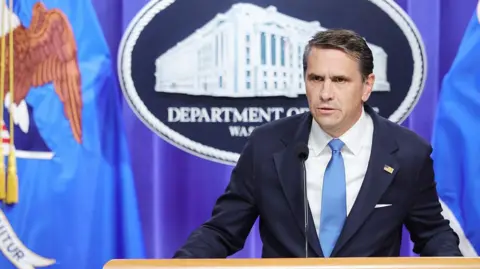
In a statement delivered by the outgoing US Ambassador to Hungary, David Pressman, Rogan was identified as a significant player in fostering corruption within the Hungarian government. Pressman characterized the sanctions as a justified response to what he portrayed as a threat to Hungary's sovereignty—a sentiment that provoked a swift rebuttal from Hungarian Foreign Minister Peter Szijjarto, who alleged that the ambassador was acting out of personal vendetta.
With a change in US administration looming under president-elect Donald Trump, who is known for his favorable view of Orban, questions arise about whether these sanctions will remain in place. The new administration's approach could reflect a shift in US foreign policy concerning Hungary, particularly as concerns about the country’s reliability with sensitive information have emerged due to its close ties with Russia.
Additionally, within Hungary's ruling Fidesz party, some members have privately expressed discontent with Rogan's lifestyle and the level of authority he wields, indicating deeper unresolved tensions within the party despite its public solidarity.
In a statement delivered by the outgoing US Ambassador to Hungary, David Pressman, Rogan was identified as a significant player in fostering corruption within the Hungarian government. Pressman characterized the sanctions as a justified response to what he portrayed as a threat to Hungary's sovereignty—a sentiment that provoked a swift rebuttal from Hungarian Foreign Minister Peter Szijjarto, who alleged that the ambassador was acting out of personal vendetta.
With a change in US administration looming under president-elect Donald Trump, who is known for his favorable view of Orban, questions arise about whether these sanctions will remain in place. The new administration's approach could reflect a shift in US foreign policy concerning Hungary, particularly as concerns about the country’s reliability with sensitive information have emerged due to its close ties with Russia.
Additionally, within Hungary's ruling Fidesz party, some members have privately expressed discontent with Rogan's lifestyle and the level of authority he wields, indicating deeper unresolved tensions within the party despite its public solidarity.