In brief
In the wake of a tragic midair collision over Washington, D.C., which killed 67 people, Senators Ted Cruz and Maria Cantwell are urging the removal of provisions in a defense bill that would allow military aircraft to operate without disclosing their locations. They plan to propose the ROTOR Act, aimed at enhancing aviation safety by requiring all military and civilian aircraft to continuously broadcast their positions. This push comes as key stakeholders, including victims’ families and various transportation authorities, express concerns about potential safety setbacks.
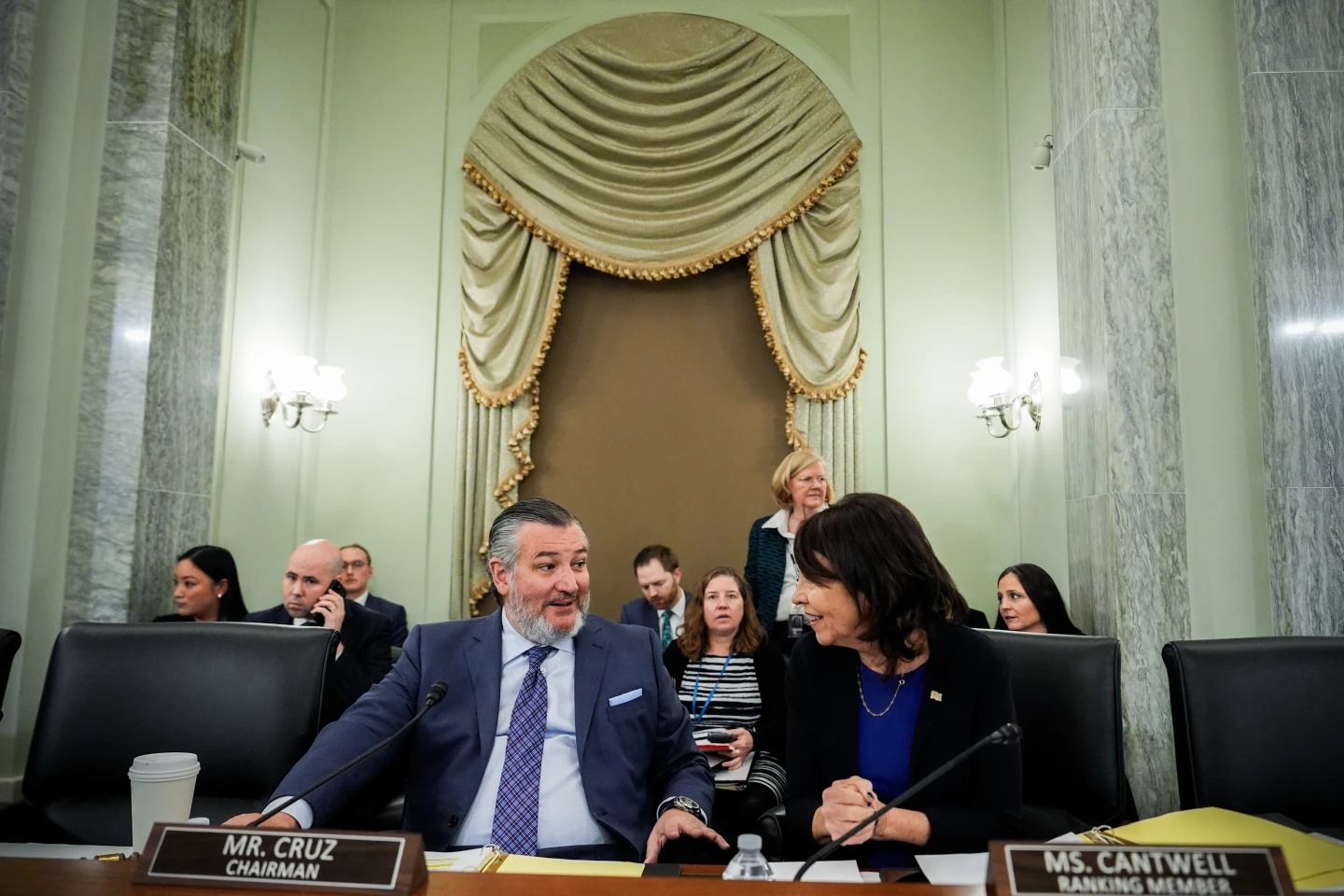
WASHINGTON (AP) — In response to a devastating midair collision in January that led to the tragic death of 67 individuals, Republican Senator Ted Cruz is advocating for legislative measures to ensure military flights operate with greater safety protocols. Cruz, alongside Democratic Senator Maria Cantwell, held a press conference on Monday, expressing their desire to amend the current defense bill that allows military aircraft an exemption from broadcasting their location, which they argue could increase the risk of future accidents.
During the press event, both senators were joined by families of the crash victims, who voiced their opposition to the defense provisions permitting military craft to revert to prior operational conditions that they believe compromise air safety. Cruz stressed the importance of reinstituting these restrictions ahead of the looming government funding deadline, stating, I’m seeking a vote on the ROTOR Act as part of any appropriations measure before the current continuing resolution expires. The ROTOR Act emphasizes the need for transparency and oversight regarding rotorcraft operations.
The senators' concerns highlight a growing debate on air safety, particularly in the congested airspace over the nation’s capital. The Federal Aviation Administration (FAA) implemented broadcasting requirements for all aircraft in March, yet the new provisions could potentially undermine those advancements.
Cruz and Cantwell’s push has garnered support from numerous stakeholders, including the White House, the FAA, and various transportation unions, who fear that repealing existing air safety measures could set a dangerous precedent.
National Transportation Safety Board Chair Jennifer Homendy, alongside various industry leaders, has openly criticized the defense bill for its lack of stringent safety requirements, noting it would revert progress made under previous administrations to safeguard air travel near Washington D.C. The NTSB's final report on the January crash is anticipated next year and will provide more insights into flight safety concerns in the region.
As legislators evaluate the defense bill, the duo aims to insert their proposed ROTOR Act into the funding package, raising hopes for improved aviation safety regulations and protecting against future tragedies.