In brief
On Thursday night and early Friday morning, observers around the world felt the pull of a near‑total lunar eclipse that turned the Moon into a blood‑red spectacle. The event, known as a Blood Moon, is a rare alignment of the Sun, Earth and Moon that casts a halo of reddish light across our celestial neighbour. Millions of astronomers and casual sky‑watchers could spot the phenomenon in real time, a chance that only a handful of places on Earth can experience each year. The eclipse follows a spectacular solar eclipse that took place only weeks earlier, the most significant such event in nearly three decades. The ancient and modern scientific communities now celebrate this celestial ballet while also reflecting on what it tells us about the remarkable dance between Earth, Moon and Sun.
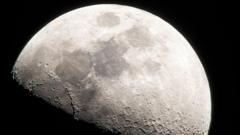
On Thursday night and the early hours of Friday, the Moon traversed the Earth’s shadow, turning the otherwise bright sphere into a deep, blood‑red orb. The phenomenon—known as a near‑total lunar eclipse, or a Blood Moon—caught the attention of stargazers worldwide, from the latitudes of remote islands to the urban centres of major cities.
A near‑total eclipse occurs when the Moon passes through most of the Earth’s umbral shadow. That darkening, combined with Rayleigh scattering of the Sun’s light through the Earth’s atmosphere, stains the lunar surface with a reddish‑brown hue. In 2026, local observers recorded the Moon’s red glow against clear skies and, in places with darker horizons, felt a subtle aurora‑like glow that painted the night.
For many, the visibility of the Blood Moon felt like a moment of cosmic grace that bridged the everyday with the unfathomable scale of the cosmos. Tourists in the Caribbean, astronomers in Australia, and even families in the United Kingdom all reported an instant of awe as the sky’s hue changed.
The 2026 eclipse follows closely a remarkable solar eclipse that occurred just weeks earlier, the most significant of its kind in nearly thirty years. That event drew millions of eyeballs to the continent, breaking record viewership figures for a terrestrial solar event. In combination, the two eclipses illustrate the powerful ways Earth’s position relative to the Sun and Moon can create spectacular visual displays.
Scientists remain intrigued by the precise mechanics of the alignment: the geometry of the Moon’s orbit, the tilt of Earth’s axis, and the atmospheric conditions that amplify the reddish tint. Educational programs and citizen science projects encourage people to record observations and share data, ensuring that the public remains engaged in scientific discovery.
For additional details on the event and related scientific explanations, see our full feature article at BBC News astronomy.