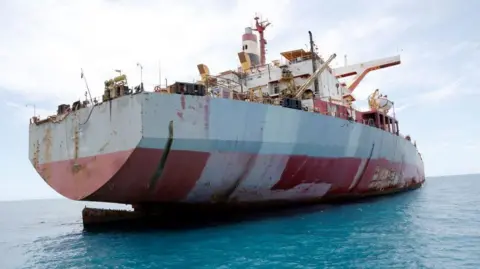
The Rise of Abandoned Oil Tankers and Its Human Cost
Over the past year, there has been a significant increase in the number of oil tankers and other commercial ships abandoned by their owners around the world. This surge raises pressing questions regarding the reasons behind it and the human toll on the affected merchant sailors.
Interviewing a senior deck officer on one such abandoned tanker off the coast of China, who wished to remain anonymous, revealed stark conditions. 'We had a shortage of meat, grain, fish, simple things for survival,' he conveyed. 'The crew was hungry, the crew was angry, and we tried to survive only day-by-day.'
The abandoned tanker, carrying nearly 750,000 barrels of Russian crude oil valued at around $50 million, was reportedly left to drift in December after the crew stopped receiving pay. Despite the lack of support, global unions like the International Transport Workers' Federation (ITF) intervened to supply essentials and ensure some wages were paid, yet many like Ivan remain stuck at sea.
Data from the ITF indicates a grievous shift from 20 abandoned ships in 2016 to 410 in 2025, leaving over 6,223 seafarers vulnerable. A notable factor contributing to this trend is geopolitical instability affecting supply chains along with rising freight costs stemming from various global conflicts, including the aftermath of the COVID-19 pandemic.
Increasingly, 'shadow fleets'—often aging vessels owned by untraceable entities—are central to this crisis. Many of them operate under flags of convenience, providing lax regulations that can lead to hazardous conditions for crews. These shadow ships frequently carry oil from sanctioned countries like Russia and Iran, navigating the complexities of international trade laws.
Notably, the plight of seafarers on these ships worsened when Russia's invasion of Ukraine triggered sanctions limiting oil prices and driving many shipping operators towards instability. The perils of abandonment are exacerbating the already precarious lives of maritime workers, who often face hunger and neglect.
Despite the ITF’s efforts, the challenges remain daunting. Last year, seafarers were owed a staggering $25.8 million in unpaid wages, with the ITF recovering two-thirds of that amount. Nationals from India were among the most affected, prompting the Indian government to blacklist foreign vessels accused of abandoning crews.
As the situation unfolds, questions linger about future protections for seafarers and the ethical responsibilities of maritime ship owners and flag states in ensuring safer working conditions. Ivan's experience serves as a stark warning: the need for greater accountability and international cooperation in maritime law is crucial to prevent further tragedies in the shadowy world of abandoned oil tankers.