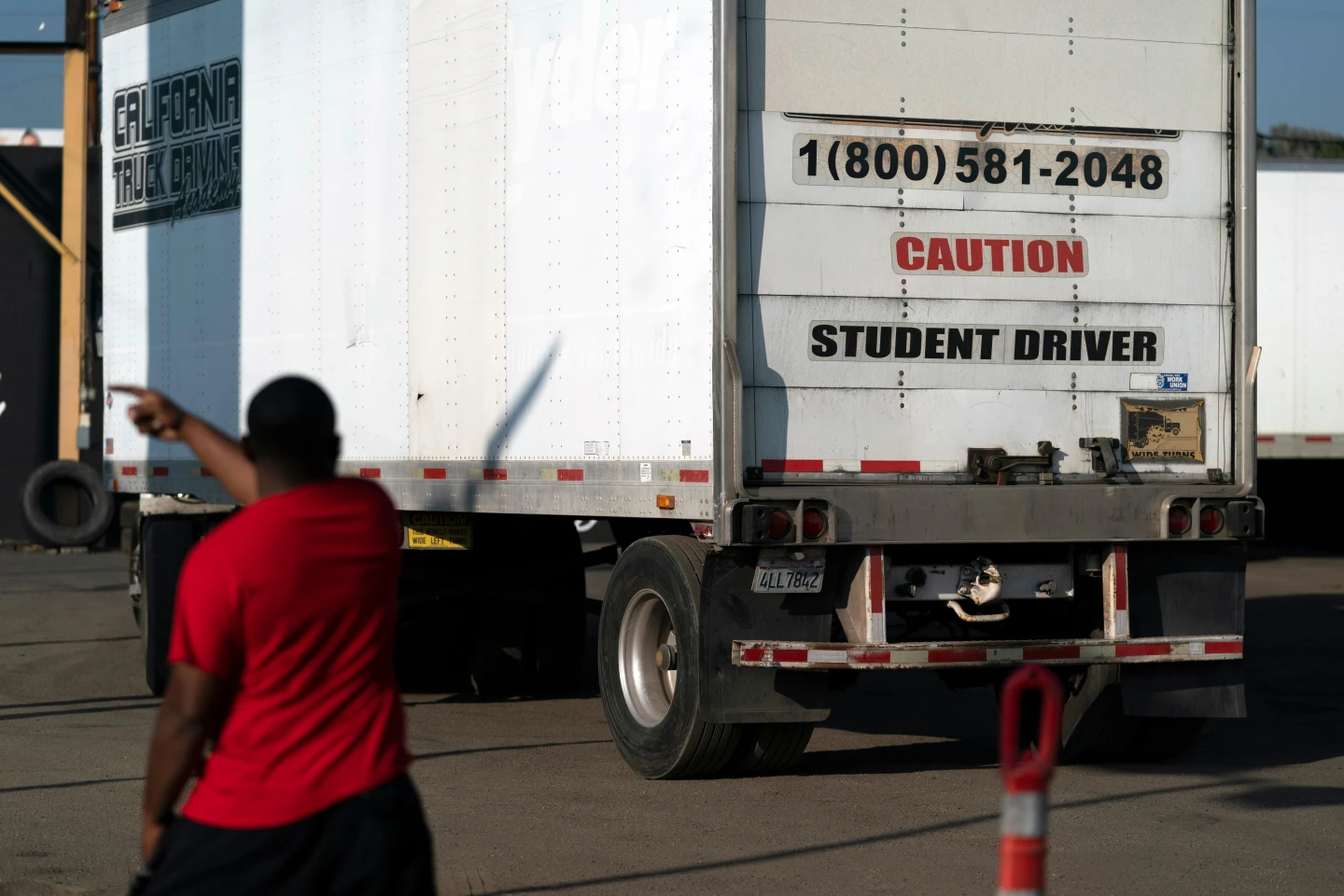
The Trump administration’s latest move to enforce standards for commercial truck drivers by flagging nearly half of the driving schools as noncompliant is expected to have minimal disruption, say industry experts. However, heightened scrutiny on immigrant drivers is raising significant concerns.
Most reputable truck driving schools remain unaffected, as many flagged institutions were already inactive. This suggests that the shift towards stricter training standards will be gradual, taking effect as licenses come up for renewal. Despite current economic uncertainties leading to a 10% drop in shipments, the industry reports a surplus of drivers, complicating the search for qualified and clean-record drivers.
The administration's focus on stringent standards intensified after an accident linked to an undocumented immigrant truck driver that resulted in three fatalities. Amidst the ongoing investigation, the Transportation Secretary Sean Duffy emphasized the need for stricter licensing procedures for noncitizen drivers.
A court ruling has temporarily halted some of the new regulations, yet Duffy is pressing states like California, Pennsylvania, and Minnesota to address compliance issues or risk losing federal funding. The pressure has already resulted in California revoking approximately 17,000 trucking licenses.
Concerns Among Immigrant Drivers
Trucking company owner Dave Atwal reported that many of his immigrant drivers feel unsafe traveling to states where they might face harassment. Consequently, he has experienced a significant reduction in workforce. Similarly, Blair Robbins from EisnerAmper predicts that the trucking industry is poised to handle the changes, although challenges may arise related to hiring new drivers.
Risk of Safer Standards
Proponents of stricter regulations argue that they will enhance road safety by ensuring that only competent individuals operate heavy vehicles. Dane Rogers, CEO of Western Pacific Truck School, noted that established driving schools should have no problem adhering to these new standards.
Still, the potential decertification of nearly half of the nation's trucking schools could create longer wait times for aspiring drivers. This includes those from diverse backgrounds, many of whom struggle with language barriers in training environments.