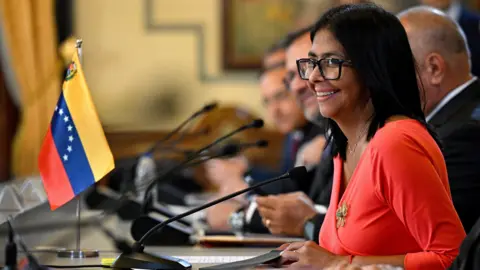
Human rights groups in Venezuela have criticised interim President Delcy Rodríguez for saying a scheme to release political prisoners was coming to an end, having been in place for just nine weeks.
Nearly 500 political prisoners have been released under the amnesty law brought in by the country's National Assembly, a rights group called Foro Penal stated, but many more are thought to still be imprisoned.
The group asserted that Rodríguez lacked the authority to terminate the releases, while watchdog Provea characterized the move as arbitrary and unconstitutional.
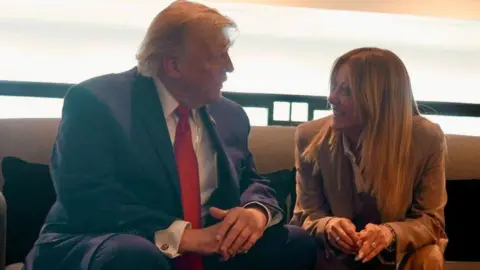
Despite being a lieutenant of former President Nicolás Maduro, Rodríguez has garnered the support of Donald Trump since U.S. forces detained Maduro in January.
Trump's administration surprisingly backed Rodríguez over opposition leader María Corina Machado, noting that the release of political prisoners — including Machado's aides — was a significant concession to the U.S. by her interim government.
The president of the National Assembly, Jorge Rodríguez, who is Delcy's brother and initially announced the amnesty law, indicated that 1,557 political prisoners had applied for amnesty, with plans for the legislation to eventually cover 11,000 individuals.
Foro Penal reported that as of April 20, 473 people it identifies as political prisoners had been released, while over 500 are believed to remain incarcerated.
During a meeting of justice officials in Caracas on Friday, Delcy Rodríguez claimed that 8,616 individuals had benefited from the amnesty law, which she deemed very successful in scope and the number of beneficiaries.
She stated for cases not addressed by the law, there are other avenues through which they can be managed.
Following Rodríguez's remarks, Foro Penal vice-president Gonzalo Himiob noted that only a new legislative act or referendum could undo the amnesty law, which lacks an expiration date.
Himiob added, The bodies of the administration of justice, which are part of the same repressive system that necessitated the amnesty, never truly maintained either the will or capacity to apply the amnesty law while adhering to its purpose or principles.
His statements were echoed by Provea, which remarked that halting the release of political prisoners does not aid in the process of coexistence and peace that has been promoted.
In their statement, they emphasized that, notwithstanding its limitations, the Amnesty Law represents a critical initial step in dismantling the oppressive framework that has constrained the rights of the Venezuelan populace in recent years.
The Justice, Encounter and Pardon group described the announcement as a serious assault on the rule of law.
They lamented that their initial concern has been corroborated: the law became a tool of political rhetoric rather than a legitimate means of restoring freedom to political prisoners.
Maduro's administration has leveraged the detention of political prisoners to quell dissent and silence critics over the years.
Rodríguez, who previously served as Maduro's vice-president, has attempted to portray her interim government as more open to political dissent while seeking favor from the U.S.
Recently, Washington lifted sanctions on her, citing progress in promoting stability, supporting economic recovery, and advancing political reconciliation.
Trump's decision to marginalize opposition leader Machado in favor of Rodríguez appears to be a choice for stability over democracy in the short term.
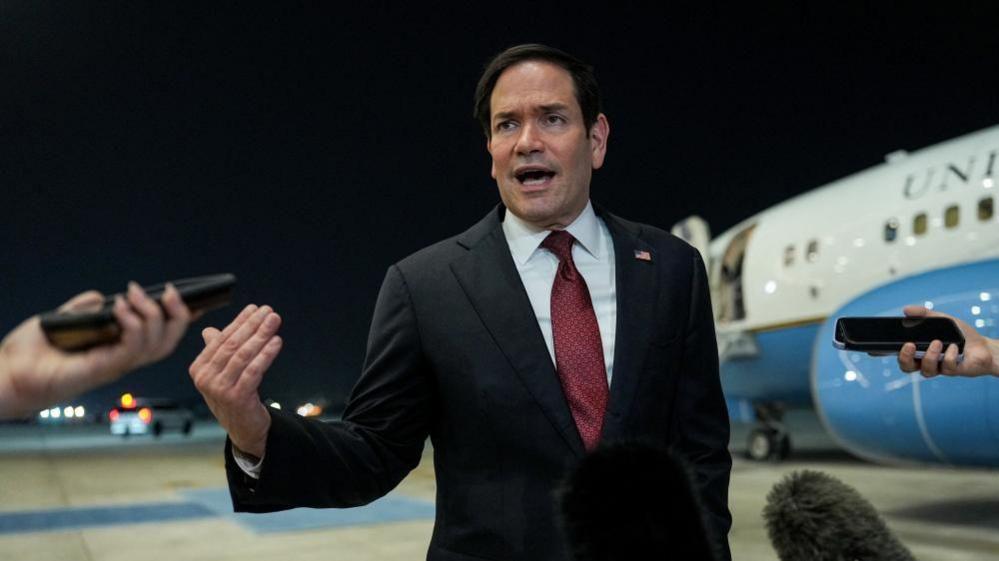
US Secretary of State Marco Rubio described the current situation in Venezuela as a transition phase leading to free and fair elections.
Machado stated she would take the lead in the South American country when the time is right.
However, detractors of the interim administration have expressed disappointment over the lack of discussions regarding democratic elections since Maduro was seized by U.S. forces and brought to New York to face drug trafficking charges.