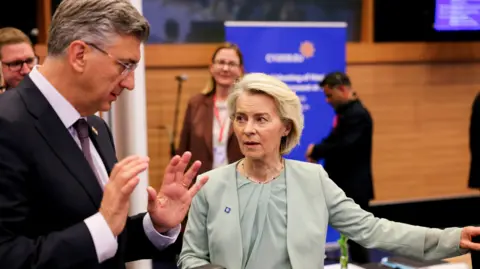
It's become a running joke in EU circles — that every time leaders gather, they find themselves confronted with yet another crisis. This latest episode unfolded during a recent summit in Cyprus, originally convened to discuss pressing issues such as the new EU budget, but instead dominated by growing tensions stemming from the US-Israel campaign against Iran.
The situation escalated Friday morning when leaked emails from the US Pentagon indicated potential punitive measures against NATO allies perceived to be insufficiently supportive of US military actions, singling out Spain. The correspondence hinted at the possibility of suspending Spain from NATO, prompting Spanish Prime Minister Pedro Sanchez to assure the press of Spain’s commitment to its NATO obligations amid concerns over the implications.
Fellow EU leaders quickly rallied to Spain's defense. Dutch Prime Minister Rob Jetten reaffirmed Spain's position in NATO, insisting that the European nations were actively reinforcing the alliance in ways beneficial to US interests. High-ranking officials from Germany echoed this sentiment, dismissing any notion of expelling Spain from NATO.
Sanchez himself took a stand against US military operations, which he openly deemed illegal under international law, previously denying the US permission to utilize Spanish military bases for operations against Iran. This refusal has reportedly drawn ire from the Trump administration, which has hinted at trade sanctions.
New tensions arose from Trump's criticisms of NATO's effectiveness, with the accusation that European nations, including Spain, have strayed from their defense commitments. This claim raised eyebrows particularly among Eastern European nations wary of Russian aggression, who question whether the US would fully honor Article 5 of NATO’s founding treaty in a crisis.
As discussions continued in Cyprus regarding the unpaid commitments to NATO and threats like those outlined in the leaked Pentagon emails, it became clear that the EU is facing a complex balancing act between maintaining unity in NATO while navigating the pressures emanating from the US government.
With historical ties strained and the geopolitical landscape shifting, European leaders are now contemplating the EU's mutual defense clause as a possible alternative support mechanism during times of difficulty, all while striving to preserve the transatlantic alliance against growing global uncertainties.
The situation escalated Friday morning when leaked emails from the US Pentagon indicated potential punitive measures against NATO allies perceived to be insufficiently supportive of US military actions, singling out Spain. The correspondence hinted at the possibility of suspending Spain from NATO, prompting Spanish Prime Minister Pedro Sanchez to assure the press of Spain’s commitment to its NATO obligations amid concerns over the implications.
Fellow EU leaders quickly rallied to Spain's defense. Dutch Prime Minister Rob Jetten reaffirmed Spain's position in NATO, insisting that the European nations were actively reinforcing the alliance in ways beneficial to US interests. High-ranking officials from Germany echoed this sentiment, dismissing any notion of expelling Spain from NATO.
Sanchez himself took a stand against US military operations, which he openly deemed illegal under international law, previously denying the US permission to utilize Spanish military bases for operations against Iran. This refusal has reportedly drawn ire from the Trump administration, which has hinted at trade sanctions.
New tensions arose from Trump's criticisms of NATO's effectiveness, with the accusation that European nations, including Spain, have strayed from their defense commitments. This claim raised eyebrows particularly among Eastern European nations wary of Russian aggression, who question whether the US would fully honor Article 5 of NATO’s founding treaty in a crisis.
As discussions continued in Cyprus regarding the unpaid commitments to NATO and threats like those outlined in the leaked Pentagon emails, it became clear that the EU is facing a complex balancing act between maintaining unity in NATO while navigating the pressures emanating from the US government.
With historical ties strained and the geopolitical landscape shifting, European leaders are now contemplating the EU's mutual defense clause as a possible alternative support mechanism during times of difficulty, all while striving to preserve the transatlantic alliance against growing global uncertainties.