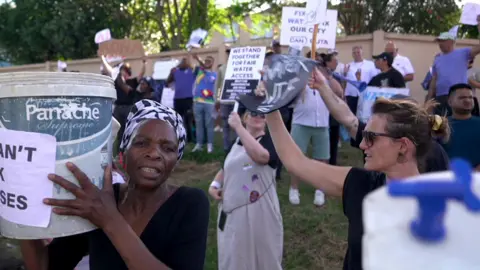
In the Johannesburg suburb of Greenside, a large group of protesters of all ages and backgrounds are waving placards and banging empty plastic bottles together.
We want water, we want water! they chant.
Northern Johannesburg is known for its plush leafy suburbs. But after years of intermittent water shortages, residents say they are fed up. Some have had no running water for over a month.
Our pipes have been bone dry with no water coming through at all, says Colin Regesky, who lives in Green Hill. It's not very healthy because everyone can get sick with no running water. And also, according to the constitution, it's our right to have water.
Another protester, Jenny Gillies, has lived in Melville for 40 years. I am here today because it is an actual disgrace, she says. We are reduced to begging and protesting for water.
The municipality has resorted to paying for tankers to deliver drinking water to residents. The local opposition Democratic Alliance has accused criminal syndicates known as water mafias of monopolizing the water tanker industry – but didn't provide any evidence to the BBC that this was happening.
Water mafias are people that get tenders to do work for the municipality, explains Dr. Ferrial Adam, executive director of Watercan.
Last year, South African President Cyril Ramaphosa urged law enforcement and local governments to put an end to criminal gangs running water tankers.
Dr. Adam emphasizes that the main reason for the outages is a lack of investment in South Africa's water infrastructure, but water mafias exacerbate the issue.
As the situation escalates, residents demand immediate governmental intervention, urging authorities to restore clean water supply and eliminate criminal exploitation amidst this essential resource crisis.