In brief
The Asian Development Bank forecast $104.5 billion in financing commitments for the Asia‑Pacific region between 2027 and 2029, including $81.6 billion for sovereign operations and $22.8 billion for non‑sovereign operations. The outlook aims to meet growing demand amid economic uncertainty, disaster risks and rapid technological change. The projections represent a strategic effort to support governments and private businesses in the region.
According to a release on Monday, the Asian Development Bank (ADB) announced that it expects to allocate $104.5 billion in financing commitments to the Asia–Pacific region between 2027 and 2029. The forecast, quoted by Xinhua, breaks the total into $81.6 billion for sovereign operations and $22.8 billion for non‑sovereign operations.
The sovereign portion of the commitment is aimed primarily at supporting governments. ADB said that the money would help member states implement policies that address the region’s growing economic uncertainty and the increasing frequency of natural disasters that can strain public finances.
Non‑sovereign financing, on the other hand, is earmarked for private businesses. This tranche is expected to encourage investment in technology, infrastructure and industrial development, areas that ADB identifies as crucial for sustaining long‑term growth in the region.
ADB’s projections are presented in its first Strategic Business Outlook, a document that also introduces sensitivity testing of different economic and operating conditions. The approach allows ADB to examine how variations in macro‑economic parameters could affect the bank’s ability to meet funding targets.
The outlook was framed as a response to “rising demand amid economic uncertainty, rising disaster risks, and rapid technological change.” Accordingly, the bank is repositioning itself to deliver timely, flexible financial assistance to both public and private entities that may be impacted by volatility.
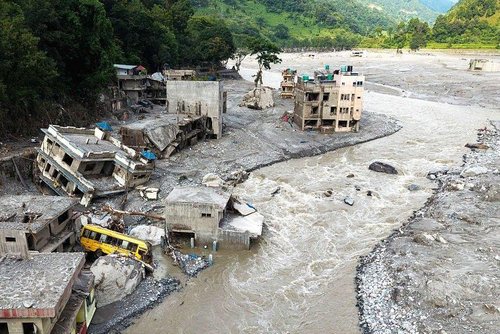
The announcement comes amid a period of escalating climate‑related threats across the Pacific. ADB officials reported that a rising number of typhoons, earthquakes and flood events have put pressure on national budgets, requiring additional funding for mitigation and recovery efforts.
In terms of the technological dimension, ADB highlighted that digital transformation and innovation are core to regional competitiveness. Financing earmarked for private sector projects is intended to support the adoption of new technologies that can enhance productivity and resilience.
From a civic standpoint, the allocation of sovereign funds underscores ADB’s ongoing role in aiding member governments to strengthen public accountability mechanisms. The loan and grant disbursements will be monitored through ADB’s internal oversight processes and, once implemented, will be subject to national audit requirements.
Private‑sector financing, while geared toward business growth, also carries implications for public service delivery. ADB’s support of infrastructure projects can improve connectivity, health and education services in underserved communities, potentially reducing inequality across the region.
ADB’s strategic business outlook is therefore positioned to influence how both public institutions and private firms plan their budgets and investment strategies over the next few years. The allocation of $104.5 billion will affect multiple stakeholders, from national governments to local entrepreneurs, and will shape the region’s economic trajectory as it navigates uncertainty, disaster risk and technological change.