In brief
Nearly 100 % of Nepal’s electricity comes from hydropower, which also generates a large export income. The recent floods killed more than 1 300 people and damaged 12 hydropower plants, wiping out over 10 % of the country’s generation capacity. Experts argue that the country’s reliance on mountainous hydro projects makes it vulnerable to climate‑driven disasters, and call for a diversification into solar and wind, along with stronger early‑warning systems. International lenders and insurers are now reassessing the risks, with policy makers urged to rethink Nepal’s energy strategy.
Hydropower’s Fragile Glow
Almost 100 % of Nepal’s electricity is generated through hydropower, a sector that not only powers the nation but also earns nearly $200 million annually by exporting clean energy to India and Bangladesh. This dependence has made Nepal both a renewable energy leader in South Asia and a vulnerable target of climate‑related disasters.
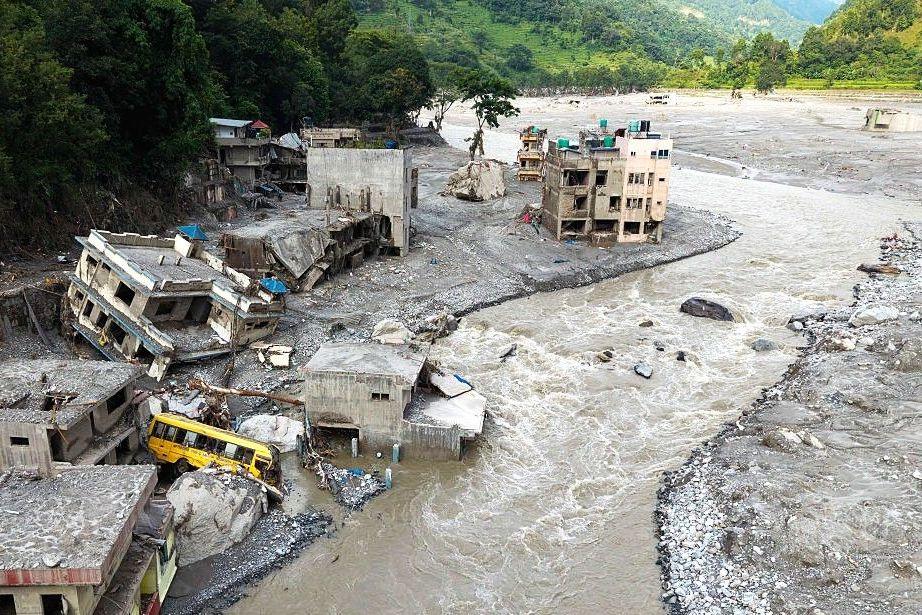
Last week’s flash floods, which claimed more than 1 300 lives and left thousands missing, destroyed entire villages along the Trishuli River basin and heavily damaged 12 hydropower plants. The events knocked out more than 10 % of the country’s total power‑generation capacity, raising questions about the long‑term viability of a hydro‑centric grid.
The Nepal Electricity Authority, which owns half of the damaged facilities, has assured households that supply remains adequate. Yet its spokesman Rajan Dhakal admitted that “the time has come for a rethink of our hydropower policy” in light of increasingly frequent climate‑related disasters.
All Our Eggs in One Basket
Experts warn that over‑reliance on mountain hydro projects exposes Nepal to “climate risks,” with the glaciers and mountains that fuel the industry succumbing to global warming. Kushal Gurung, founder of WindPower Nepal, argues that the country should “seriously embrace other alternatives such as solar and wind.”
Research from a German aid agency indicates the solar potential in Nepal could be ten times larger than that of hydropower. Meanwhile, Puspa Sharma of the National University of Singapore points out that while diversified energy portfolios are possible, the benefits of hydropower in terms of competitive advantage remain significant.
Financial Fallout and International Response
Large-scale hydropower projects such as the Upper Trishuli‑1 ($647 million) and the Upper Trishuli 3A, funded respectively by the Asian Development Bank, International Finance Corporation, and China’s Export‑Import Bank, have suffered severe damage. The tragedy has highlighted the need for stricter risk assessment by international lenders, as highlighted by South Asia Network on Dams, Rivers & People coordinator Himanshu Thakkar.
Insurers have already paid out around $40 million for flood‑related damage to privately owned plants over the past three years, and premiums are rising, making operation increasingly unfeasible. This financial pressure underscores the urgency of rethinking Nepal’s infrastructure strategy.
Climate Diplomacy and Future Planning
Manjeet Dhakal, a member of Nepal’s UN climate delegation, calls for shared data, joint assessment, and early‑warning systems. He stresses that “Ironically, our hydropower industry is an attempt to reduce our already minimal emissions… We cannot, and should not, be made to respond to these risks alone.”