
In brief
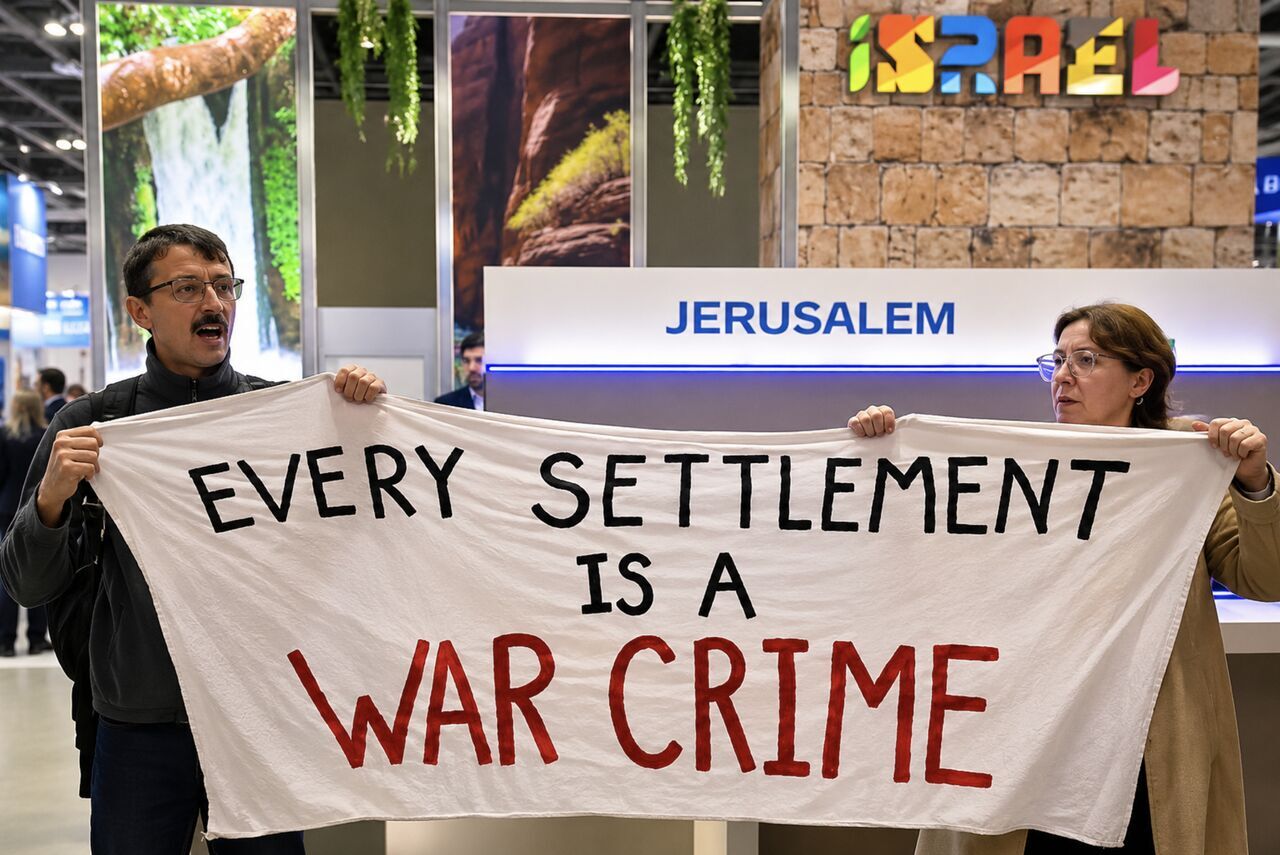
At the World Travel Market in London, anti‑war activists staged a protest outside the Israeli pavilion, accusing it of promoting tourism in illegally occupied Palestinian territories and violating UK commitments. The Palestine Solidarity Campaign urged Foreign Secretary Ed Miliband to reaffirm a promise to ban such promotions, while fifteen MPs wrote to the government over the same issue. The event highlights ongoing tensions over Israeli enterprise participation in UK tourism trade shows and raises questions about public accountability and international law.
The World Travel Market, a major international tourism event held each year in London, became a focal point for protest on Tuesday when a group of anti‑war activists gathered outside the Israeli pavilion. Organised by the Palestine Solidarity Campaign, the demonstrators accused the pavilion of promoting tourism in what they described as illegally occupied Palestinian territories, and of violating commitments announced by the British government.
According to a report by Iran’s news agency IRNA, the protest was held at the London expo on the day of the event’s opening and was aimed specifically at Israeli settlement enterprise participation. The campaign’s statement that the Israeli pavilion was “promoting tourism in the illegally occupied Palestinian territories” was directed at Foreign Secretary Ed Miliband, who had previously pledged to ban the promotion of illegal Israeli settlements within the UK.
The UK government’s response to the protest, as reflected in a Facebook post by MiddleEastEye, shows that the issue has already drawn parliamentary attention. The post, which reported that fifteen Members of Parliament had written to the British government about an “illegal Israeli Real Estate Event” that advertised the sale of land in occupied Palestinian territory at the World Travel Market, underscores that the protest was not an isolated gesture but part of a growing parliamentary campaign to hold the government accountable for the presence of Israeli settlement enterprises in UK events.
Activists and MPs point out that the promotion of such enterprises violates the commitments Britain has made in line with international law and UN resolutions regarding the status of the occupied territories. In her statement, the Palestine Solidarity Campaign urged the government to “honour the promises to ban such promotions and to reaffirm the UK’s commitment to the rights of the Palestinian people.”
The call to action coincides with the final day of the World Travel Market, making it a high‑profile moment to raise public awareness of alleged violations. While the Israeli delegation at the expo has not responded publicly to the protest, the event adds to a series of reporting that has called for a comprehensive review of the country’s policy towards Israeli settlement enterprises in the UK, particularly regarding contracts listed with UK tour operators.
In addition to the protest, several Labour MPs wrote to the Foreign Office, requesting clarification on the government’s campaign to uphold the territorial dispute. They cited the event’s real‑estate promotion and demanded that the government explain how it intended to fulfill the earlier commitment to ban such promotion within the UK.
On the diplomatic front, the protest has forced British officials to address the question of how the UK’s international obligations are applied in domestic settings. The Foreign Secretary’s promise to ban promotional material for Israeli settlements faces a direct challenge in the context of the expo, a public forum attended by millions of global tourists and industry leaders.
For local stakeholders, the protest points to a broader issue of representation. The region’s Palestinian communities, who are denied free movement in a territory they claim for their homeland, stand to be directly affected by how the UK negotiates its policy over Israeli settlement enterprise participation and public tourism promotion.
Members of the public who observe the protest and the subsequent government response are witnessing a pivotal moment in the intersection of international law, domestic politics, and the tourism industry. Whether the UK government will adhere to its previous pledge remains to be seen, but the protest has succeeded in bringing the debate to the public arena, aside from the minds of MPs who have already raised the issue.
The event also reflects a growing tendency for civil society to use public spaces in the UK to confront corporate and governmental support for contested settlements. In the context of the ongoing Israeli‑Palestinian conflict, such protests serve to keep the topic alive in public discourse while demanding structural accountability from the UK authorities over how the international community’s finance flows into disputed areas.
A clear narrative emerges from the protest: Israel’s presence at the World Travel Market is more than a trade delegation; it is an act of promotion for settlement expansion that could be viewed as a breach of international law. The exchange calls on the UK government to honour its own claim to provide a coherent stance regarding the promotion of settlements - a promise it was found to be in conflict with the reality at the expo.
Going forward, the protest will likely shape public opinion and could lead to stricter oversight of Israeli entities within UK events. The findings presented by the Palestine Solidarity Campaign, combined with the parliamentary letter, signal that this issue will remain in public and political conversation beyond the conclusion of the World Travel Market.


