In brief
Israel’s latest election results show no single bloc securing the 61 seats needed for a majority. Netanyahu’s right‑wing coalition is projected to win 53 seats, the opposition 48, and Arab parties a record 19 seats. The outcome hinges on the final double‑envelope ballots and coalition negotiations, while market uncertainty underscores the civic stakes for voters and institutions.
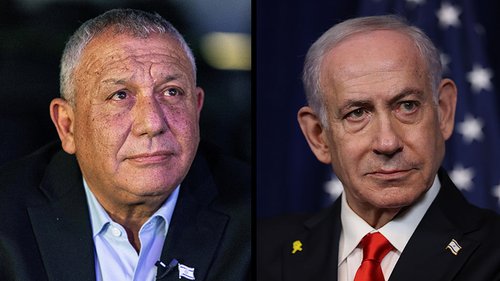
On Wednesday October 31, the counting of votes in Israel’s 2026 parliamentary election made clear that no party or coalition has secured the 61 seats required to control the 120‑member Knesset. Prime Minister Benjamin Netanyahu’s right‑wing bloc is projected to obtain 53 seats, a 15‑seat drop from the previous parliament, while the opposition led by former military chief Gadi Eisenkot is expected to win 48 seats. The Arab‑dominated Joint List and Ra’am are on track for a record 19 seats.
The 2026 election saw turnout reach 77.7% of eligible voters, the highest rate since 1999. Both Jewish‑majority and Palestinian‑citizen voters participated at historic levels: estimates indicate that roughly 80% of Israel’s 5 million Palestinian citizens cast ballots, while overall participation exceeded 7 million votes.
More than five million votes have been counted, but roughly 500,000 special double‑envelope ballots remain to be tallied. These ballots, cast by soldiers, diplomats and others away from their registered polling stations, could still shift the balance of seats in the final tally by a margin of a few points.
Coalition Negotiations
The next steps will involve President Isaac Herzog calling on party leaders to decide who will serve as prime minister. The chosen candidate will have 28 days – with a possible 14‑day extension – to form a governing coalition that can command a majority. Failing that, the mandate may pass to another member of parliament; if no coalition forms, the Knesset could be dissolved, prompting a fresh election while the current cabinet remains a caretaker.
In statements released after the preliminary results, Gadi Eisenkot tweeted that the absence of a majority signals “complete distrust in Netanyahu and the government of Oct. 7 … If these are the final results, this is a victory for the statist‑Zionist majority in Israel.”
Netanyahu addressed his supporters on the same day, saying that his right‑wing bloc “holds a decisive majority among the Jewish and Zionist public” and that he would “establish a strong, right‑wing, national government.”
Mansour Abbas, leader of the Ra’am party, told Israel’s Channel 12 that “with the numbers we have now, there is no government.”
Economic Fallout
Israeli stocks fell sharply on Thursday amid the uncertainty. The Tel Aviv Stock Exchange’s benchmark TA‑35 closed down 1.81%, the TA‑125 fell 2.46%, and the TA‑90 dropped 4.47%.
Gad Lior, a senior analyst at Yedioth Ahronoth, said the sell‑off was driven by political uncertainty and concerns that another Netanyahu‑led government might again struggle to address economic challenges, particularly the high cost of living. He added that fears of a renewed war with Iran also weighed on investor sentiment.
The shekel weakened against the dollar, falling 1.62% to 3.128 shekels per dollar.
For citizens, the results mean prolonged negotiation time before a new government is sworn in, potentially delaying policy decisions on security, welfare and economic reform.
Arab parties now hold a crucial bargaining position: either bloc will need their support to reach a majority, bringing issues of minority rights, resource allocation and representation to the forefront of governance. The election outcome therefore has significant civic implications for the political accountability of the state, the balance between the Jewish majority and Arab minority, and the future direction of Israeli policy.