In brief
The U.N. General Assembly approved a resolution to lift the U.S. embargo against Cuba with 130 votes in favor, 17 against and 25 abstentions— a drop of 35 supporting votes from 2025. While Cuba declared the measure a triumph against Washington’s blackmail, U.S. officials blamed Cuban delegates’ conduct and criticized Havana's policies. African, European, and Latin American leaders voiced support or warned against U.S. coercion, underscoring the wider civic stakes for nations and the Cuban population.
On Wednesday, the United Nations General Assembly approved a resolution to lift the U.S. embargo against Cuba with 130 votes in favor, 17 against and 25 abstentions, a number that fell 35 supports from the 165 votes that rallied the country in 2025. The vote marked the 34th time the world has called for the end of Washington’s long‑standing blockade, but the Cuban government said it was a victory for its people and a repudiation of U.S. pressure.
Bruno Rodríguez Parrilla, Cuba’s foreign minister and head of the delegation, said the resolution was a "new victory" against U.S. sanctions and accused Washington of waging an "economic war" that ‘turns basic needs into political weapons.’ He insisted that the embargo “restricts access to fuel, medicine and food” and that its “consequences fall on people, limit their fundamental human rights, affect third countries and turn the population's essential needs into instruments of political coercion.”
President Miguel Diaz‑Canel echoed this sentiment in a post on X, calling the result a “victory for truth over lies and blackmail” and warning that the blockade had caused “nearly 179 billion U.S. dollars in economic losses.” He praised the international community’s overwhelming backing as a triumph against Washington’s “crudest pressure and blackmail” to change the vote.
The U.S. response, however, was sharply different. Washington said the overturning of the embargo was a result of Cuban delegates’ conduct and internal policy, decrying the resolution as a continuation of the sanctions. While no direct quotes were provided, U.S. officials were quoted in the press as blaming Havana for the outcome and criticizing the delegation’s behavior in the General Assembly.
European and Latin American nations split between new support and dives in vote shares. Argentina, Colombia, Costa Rica, Ecuador and Paraguay moved from.
support to opposition; Chile, Peru and Honduras changed from backing the resolution to abstention; and Costa Rica and Ecuador, which had abstained last year, now opposed it. Brazil, Mexico, Uruguay, Nicaragua and Panama remained supportive, while Germany, Italy and Latvia abstained where they had earlier voted in favor.
Before the vote, African voices rallied behind Cuba. Pan‑Africanist scholar Fortune Madondo urged African states to unite against U.S. pressure, calling Washington’s tactics “blackmail” and warning that “today, Cuba needs our vote; tomorrow, it could be any of the 54 African states.” He highlighted the historical parallels to apartheid and pointed to the existing sanctions against Zimbabwe as evidence of U.S. coercion. Madondo called on African leaders to “speak with a single voice” in the General Assembly to defend the Cuban people from a “hostile and inhumane policy.”
In Italy, the National Italy‑Cuba Friendship Association (ANAIC) wrote to Foreign Minister Antonio Tajani urging a favorable vote. It pointed out the Italian tradition of opposing Washington’s sanctions, noting that previous Italian governments, even under Silvio Berlusconi, took a stand against the embargo in global forums. The letter framed Italy’s historic solidarity with Cuba as rooted in shared cultural and friendship ties and urged the ministry to resist the influence of U.S. senator Marco Rubio, labeling him a political opportunist.
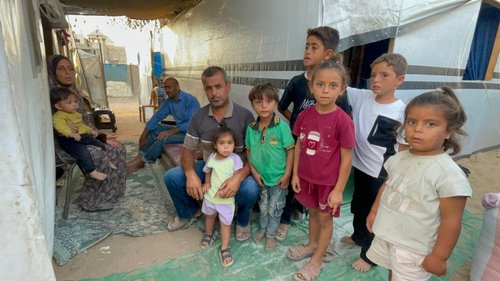
Italian scholar Luciano Vasapollo reinforced the call for solidarity in a feature published by *Faro di Roma*. He argued that the embargo’s economic, financial and commercial restrictions hinder the Cuban population’s access to essential goods, “raising costs for families, public services and institutions.” He used a case from the radio program *Criterio Compartido* to illustrate how an individual Cuban mother received in‑home support and a wheelchair for a child with a disability amid the embargo’s hardships. Vasapollo noted that as of September, 883,000 Cubans were listed as living in vulnerable conditions, a figure he connected to the blockade’s impact on basic human needs.
From the Holy See, Cuba’s ambassador Leyde Rodriguez condemned the U.S. policy as “genocidal” and cited a report that the embargo had caused $8.083 billion in damages between March 2025 and February 2026, a 7 percent rise over the previous year’s peak. He also highlighted cumulative losses of $178.7 billion over decades of the blockade and warned that the energy siege, equated to a naval blockade, is a form of collective punishment against the Cuban nation.
The UN resolution, titled “Necessity of ending the economic, commercial and financial blockade imposed by the United States of America against Cuba,” was adopted after bipartisan debates in the General Assembly. It delivered a moral and legal endorsement to the Cuban population, recognizing the embargo’s strain on everyday life—fuel shortages, limited medicine, higher prices, and restricted international exchange. The result also signals a continued shift in international institutions, as the United Nations moves to replace an almost six‑decade sanction regime with a framework that allows for a more equitable global trade and human‑rights environment.
For Cuban citizens, the vote offers a glimmer of relief as they anticipate potential easing of restrictions on fuel, medicine and food, and a lifting of financial and economic barriers that have hindered growth and social development. The international community’s stance, however, is complicated by political pressure and solidarity movements from other nations, both in the Western Hemisphere and beyond, illustrating the ongoing interplay between government policy, public accountability and the everyday lives of ordinary people caught in geopolitical disputes.