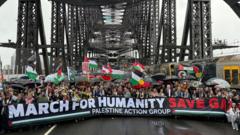
Jakarta police on Sunday announced that five parking sites would be set around the National Monument (Monas) in central Jakarta to prepare for a mass rally supporting Palestine Solidarity Month 2026. The rally, slated to begin at 5:30 a.m. and finish at noon on Monas’ South Plaza, will see thousands of participants converge on the heart of the city, prompting authorities to map out thorough traffic and parking solutions.
In a statement released by Jakarta Police Public Relations Chief Budi Hermanto, the ministry said it would urge participants to make use of the designated sites and heed officers’ instructions in order to keep the rally orderly. “We urge participants to use the designated parking areas and follow officers’ instructions to ensure an orderly event,” Hermanto said. The statement was made to a local news outlet and aimed to clarify arrangements amid widespread interest in the protest’s logistics.
The five parking locations include the Southeast Monas area, which will accommodate 50 buses; Gambir Station, where police will allow up to 400 cars and 200 motorcycles; Istiqlal Mosque, which is slated for 600 cars; IRTI, a spot with 100 cars and 150 motorcycles; and Danareksa Building, which will provide parking for 600 cars. Those numbers were found in official figures released by the Traffic Management Center (TMC) of Jakarta police traffic directorate.
According to the TMC, the time allocation for the rally is from 5:30 a.m. to noon. The center’s data also details the Car‑Free Day that will run concurrently from 5:30 a.m. to 10 a.m. in the surrounding streets, a measure intended to reduce congestion around the monument during the morning rush.
Hermanto noted the city’s intent to minimize disruption to daily routines for residents working near Monas. “Traffic arrangements were designed to facilitate the rally while minimizing disruption to daily activities around Monas,” he said in the same statement. The strategy includes limiting vehicular inflow to designated zones and controlling outflow channels, while encouraging individual commuters to adjust schedules on Car‑Free Day.
Officials highlighted that the arrangement seeks to preserve public spaces for everyone, while preventing chaotic traffic patterns that could arise from the high density of participants traveling to the rally. “We urge participants and road users to respect one another, stay safe, and work together to keep public spaces comfortable for everyone,” Hermanto added. The council's emphasis underscores the civic responsibility of both protestors and commuters in maintaining orderly use of common areas.
This event takes place under a broader national context, with Jakarta’s modern administrative bodies and police command overseeing public demonstrations and ensuring public order. The city’s traffic directorate has a history of coordinating large mass movements—including religious marches, cultural festivals, and political rallies—while balancing citizen mobility and security.
Police authorities have repeatedly indicated that protection of public safety is a priority, especially for rallies that attract international attention, such as the Palestine Solidarity rally. The national television voice of Jakarta Police has often remarked that “the safety of participants, ordinary citizens, and public infrastructure remains the top priority.”
With the careful traffic dispatch, the police plan to keep emergency routes open for ambulances and emergency vehicles, ensuring that medical help and law enforcement can still arrive at any required point without hindrance.
Jakarta’s residents anticipate an increase in foot traffic and possible road closures, prompting civic groups to advise commuters about alternative routes. Community activists are urging citizens to adapt, noting that the arrival of protesters may temporarily alter local commercial activity patterns, especially around the National Monument’s immediate vicinity.
Stakeholders in the local business sector cite concerns about the effect of limited vehicular access on small shopkeepers and vendors. An unofficial statement circulated among neighborhood business owners expressed a desire for continued open commerce during the rally, as many depend on the daily footfall around Monas for revenue.
The City Council’s planning committee has been briefed on the traffic flow projections, aiming to foster a balance between civic capital provisioning and maintaining adequate urban mobility. The committee’s meeting minutes, which are publicly available, highlighted that maintaining the cathedral of civic spaces—like the Monas plaza—requires constant collaboration between civic organizers and law enforcement agencies.
Notably, the Car‑Free Day will allow for a reallocation of the road space to pedestrians, making the area more open for community events. This policy is part of Jakarta’s longer strategy to reduce high traffic congestion during peak operational hours and to promote alternative modes of transportation, such as walking, cycling, and public transit.
The Police Public Relations Alert also stated that participants, regardless of their motives or affiliations, should respect the city’s laws and exercise courtesy in their transit behavior. The police's points are reflective of the broader civic ethics that encourage less conflict and more cooperation in public events.
As the day approaches, the public will watch how coordinated traffic measures, parking relocations, and civic cooperation shape the overall participation of the population in the Palestine Solidarity rally. The outcome may set a precedent for future civic demonstrations in Jakarta, illustrating how official protocols can minimize inconvenience to residents and maintain overall city safety.
In summary, Jakarta’s careful planning—demonstrated through five distinct parking zones and a Car‑Free Day coordinated by the Traffic Management Center—aims to preserve the safety and convenience of both participants and everyday citizens during the Palestine Solidarity Month event. The city’s adherence to structured civic measures is a clear example of public accountability and collective responsibility in a democratic society.