
In brief
The Saudi‑U.S. partnership was spotlighted by a phone conversation that week to address the Houthi militia’s aggressive attacks on Saudi territory. The discussion underscored a continued effort to de‑escalate Yemen’s conflict while acknowledging the broader regional security fallout. In response, the U.S. mission in Riyadh issued a travel warning warning American travelers of potential attacks on airports and flight disruptions.
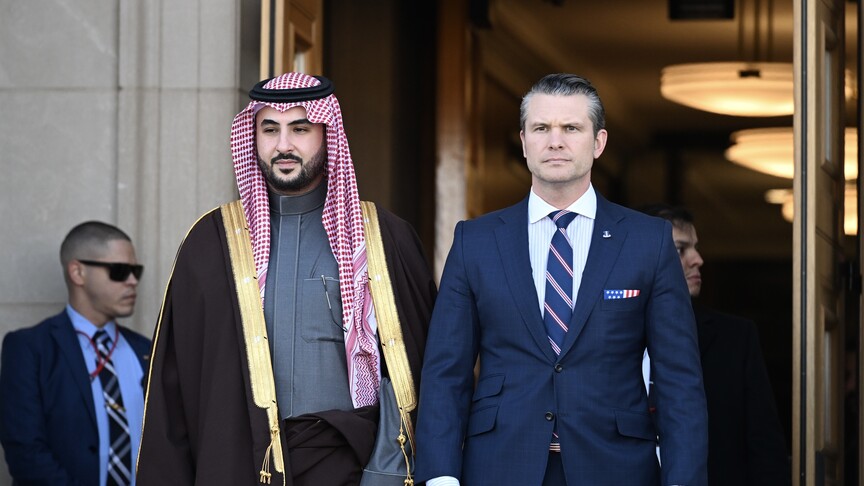
On November 3, 2026, Saudi Defense Minister Prince Khalid bin Salman and U.S. Defense Secretary Pete Hegseth spoke by phone to review strategic defense cooperation amid rising regional tensions and ongoing attacks by Yemen’s Houthi group against Saudi territory. The call came as the Saudi‑led coalition, which has opposed the Houthis since March 2015, faces increasing hostilities from the Iranian‑backed militia.
Prince Khalid said the discussion covered the broader regional security picture, revealing a joint concern for “efforts to de‑escalate tensions in the region” while acknowledging the “continued Houthi terrorist attacks against the Kingdom.” His comments on the U.S. social‑media platform X were part of a public announcement by Saudi authorities.”
U.S. officials echoed the emphasis on de‑escalation. The U.S. mission in Saudi Arabia, citing the situation’s rapid escalation, warned American citizens of potential security threats to civilian airports and commercial air traffic. “Iranian‑supported Houthis have engaged in hostilities against Saudi Arabia, including attacks on civilian airports and other critical infrastructure resulting in civilian casualties and severe travel disruptions,” the mission said in a November 3 advisory. The warning urged U.S. travelers to exercise “extreme caution” when using Saudi airports.
The advisory’s timing aligns with the same day Prince Khalid and Pete Hegseth’s conversation, indicating coordination between diplomatic messaging and defense strategy. The U.S. mission’s statement highlighted the possibility that the conflict could expand beyond the immediate area, prompting monitoring of airspace closures and flight cancellations.
Minister Khalid’s remarks were supported by the Saudi Press Agency, which detailed the phone call’s focus on strategic defense cooperation. The agency said the conversation’s key agenda was “regional de‑escalation and defense collaboration between the two countries.” The agency’s notice stressed that the Houthi militia’s attacks remain a persistent threat to Saudi security and to the coalition’s objectives in Yemen.
In contrast to the Saudi diplomatic tone, the U.S. travel advisory stressed immediate logistical impacts on American citizens. Both sources underscored the health and safety of civilians as a shared priority, although the Saudi statements framed the issue within the sphere of regional security cooperation while the U.S. remarks framed it as a direct caution to travelers.
While the phone call focused on defense cooperation, it also reflected an ongoing engagement between the two countries’ militaries amid increasing tensions in the Red Sea and Gulf of Aden. The Houthi attacks on Saudi territory are part of a broader pattern of conflict that includes drone and missile strikes on shipping lanes and civilian infrastructure, creating a complex environment for international relations and humanitarian concerns.
Impact on Regional Mobility and Civilian Safety
The Saudi‑U.S. dialogue and the corresponding U.S. travel advisory reveal that the crisis affects both domestic institutions and the public. The Saudi defense chief’s insistence on de‑escalation speaks to the kingdom’s intent to safeguard its populace and maintain internal stability while the U.S. advisory protect its citizens abroad. Both actions display how bilateral defense discussions translate into concrete public-facing measures that influence travel decisions and economic activity in the oil‑rich Gulf region.
For Saudi residents, the fear of airspace disruption translates into potential job losses in aviation and tourism, and for U.S. citizens, the advisories limit business operations that depend on seamless connectivity with regional hubs. The agreements between the two defense ministries can be seen as an attempt to mitigate these economic spill‑overs by stabilizing security conditions that underpin the civil aviation sector.
Overall, the phone call signals a continued partnership aimed at reducing the Houthi threat that dominates not only military and diplomatic interactions, but also everyday life for people across the region. It underscores how leadership at the highest level can influence the everyday planning of citizens whose livelihoods depend on safe and predictable geopolitical conditions. The evolving dialogue between Saudi Arabia and the United States remains vital for public accountability to ensure that defense priorities translate into tangible security outcomes for both domestic populations and international travelers.



