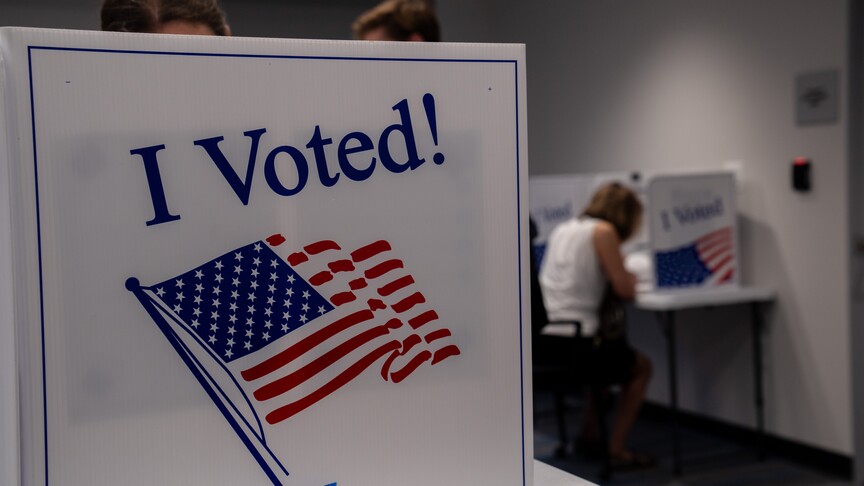
The U.S. Supreme Court on Monday denied an emergency request from the Trump administration to force California election officials to set aside approximately 20,000 mail‑in ballots that federal authorities suspect belong to non‑citizens. The decision, made by the country’s highest court, preserves the ballots pending additional eligibility verification and comes just a day before the November 2026 mid‑term elections.
Shifting the Balance of Electoral Authority
The Trump administration sought a judicial injunction to compel California voters to delay counting those ballots until the government could confirm the voters’ citizenship status. Federal authorities had identified more than 20,000 registered California voters whose citizenship status was under question. The administration argued that, for the integrity of the election, California should temporarily separate those ballot envelopes from the broader tally, pending federal verification.
In its ruling, the Supreme Court indicated that the application for an injunction was “denied,” thereby preventing the requested set‑aside that the Justice Department had proposed. The court’s refusal effectively returned the decision on whether to include the ballots to California election officials, who will need to continue with their standard verification procedures.
As a result of the Court’s decision, the ballots remain in the public domain for the upcoming votes. State officials will maintain oversight of the final hand‑count and will determine, through existing procedures, whether each voter is eligible to cast a valid ballot. The judiciary’s intervention stopped an attempt by the executive branch to override the state’s agency on voter standing
"The application for injunction pending appeal presented to Justice Kagan and by her referred to the Court is denied," said the court.
The Supreme Court’s statement was delivered after a brief hearing that saw a rapid exchange of arguments. The request was presented by the Department of Justice before Justice Kagan, who is a former associate justice appointed by President Barack Obama. No further details were released about the specific arguments presented or a rationale behind the denial beyond the procedural nature of the request.
The stakes of the decision extend beyond the immediate ballot count. The ruling reaffirms the principle that states have primary responsibility for the management of elections, a foundational aspect of the U.S. democratic system. At the same time, it underscores the Court’s vigilance in guarding against governmental actions that could undermine public trust in the election process. The outcome will be closely watched by advocacy groups, scholars, and voters alike, as it sets a precedent for future disputes over ballot eligibility.
Although the lawmakers and citizens across the country were already preparing for the mid‑term election day on November 8, the outcome introduces a new layer of uncertainty. California election officials must now plan how they will conduct the development of the final vote totals while also addressing the potential for legal challenges in the days that follow. The intact ballots will be subject to scrutiny, and any missteps in handling them could inflame accusations of partisan bias or administrative impropriety.
In the larger context of U.S. elections, the ruling reveals an underlying tension between federal oversight and state autonomy. As Dr. Angela Ramirez, a political science professor at Stanford University, noted in a recent commentary, the balance of power between federal agencies and state election commissions is constantly shifting, and the Court’s willingness to preserve state control in this case may influence the future of similar disputes. She added that “the judiciary’s role is to ensure that any intervention does not unfairly impinge on the voting rights of citizens.”
Finally, for the roughly 20,000 Californian voters whose ballots may be scrutinized, the decision offers a brief pause. While they await final eligibility confirmation, many anticipate it solidly supports the democratic process and protects the integrity of their votes. In turn, the Supreme Court’s action may help to reduce the possibility of large-scale disenfranchisement that could occur if the ballots were set aside outright.